In IT careers, progress is often imagined as gradual—years of experience, steady promotions, and incremental skill growth. But many careers don’t actually change that way.
They pivot.
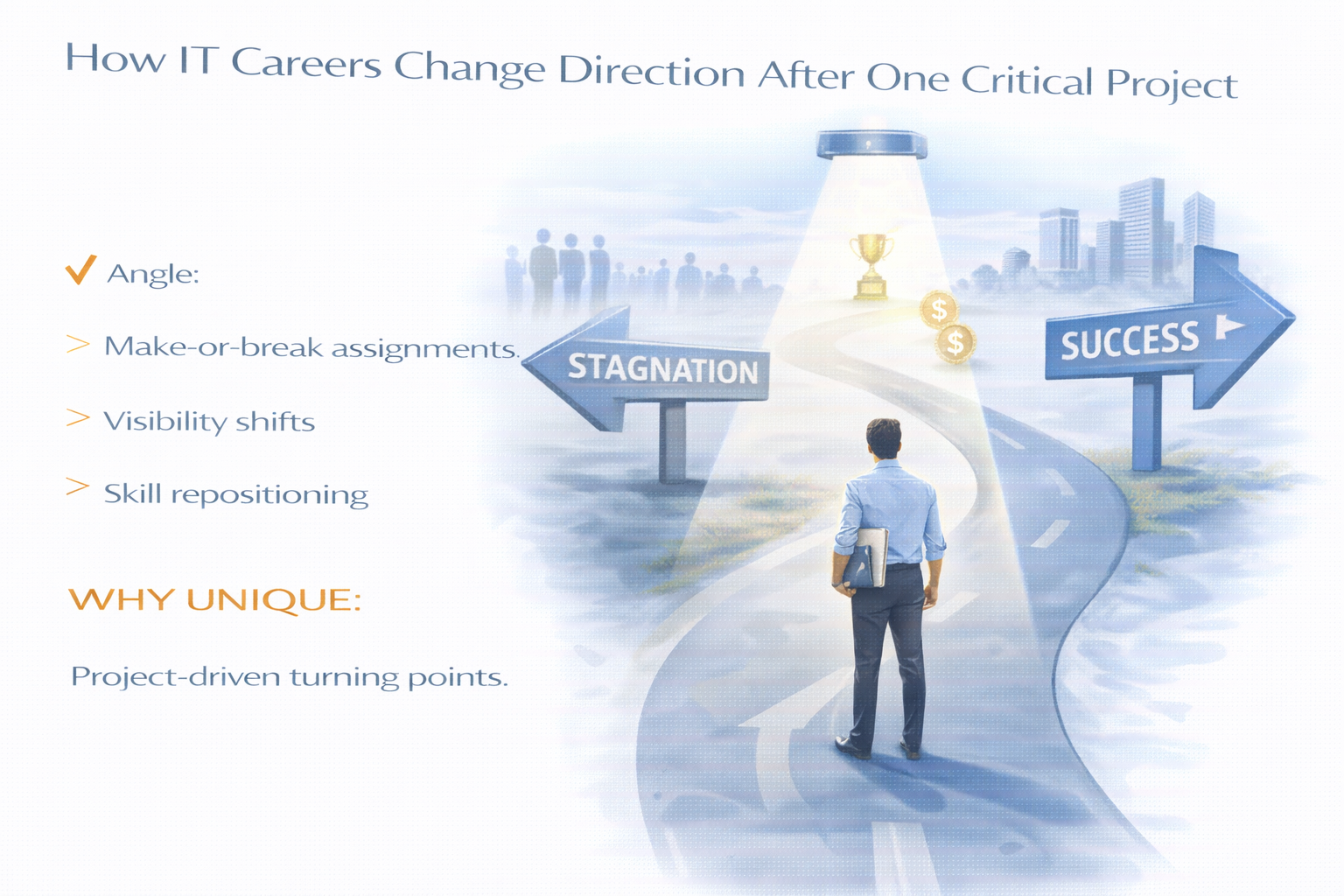
Often, the pivot happens after one critical project—an assignment that quietly repositions skills, visibility, and future opportunities.
This article explores project-driven turning points and why a single assignment can redirect an entire IT career.
Not All Projects Are Equal
Most projects maintain your current trajectory. They keep systems running, teams functioning, and careers stable.
Critical projects are different. They usually involve:
- High ambiguity
- Real business impact
- Cross-team visibility
- Personal accountability
These projects don’t just test skills—they reveal judgment.
Make-or-Break Assignments
A critical project often arrives disguised as inconvenience:
- A failing system no one wants
- A tight deadline with unclear scope
- A responsibility beyond your role
Accepting or avoiding such assignments becomes a fork in the road.
Those who step in gain exposure to complexity. Those who step back remain protected—but invisible.
Visibility Shifts After One Project
Before a critical project, professionals are known for:
- Reliability
- Technical execution
- Task completion
After a successful critical project, perception changes:
- “Can handle pressure”
- “Thinks beyond tasks”
- “Can be trusted with uncertainty”
This shift in visibility often matters more than years of routine performance.
Skill Repositioning Happens Fast
Critical projects force rapid skill realignment:
- From coding to system thinking
- From instructions to decisions
- From components to outcomes
Professionals don’t necessarily learn more—they learn differently. Their skills become contextual, strategic, and transferable.
Why One Project Has Such Power
Critical projects concentrate learning:
- Feedback is immediate
- Consequences are real
- Stakes are visible
This compression accelerates growth that would otherwise take years.
Missed Projects, Missed Trajectories
Many professionals miss turning points not because of lack of ability, but because they avoid risk:
- “It’s not my responsibility”
- “I’m not ready yet”
- “Someone else can handle it”
Each refusal preserves comfort—but delays directional change.
Choosing Projects Strategically
Career-aware professionals evaluate projects differently:
- Will this change how I’m perceived?
- Does this expose me to new decision layers?
- Will this expand or narrow my future options?
Not every project should be accepted. But avoiding all critical ones guarantees stagnation.
Final Thoughts
Many IT careers don’t grow steadily.
They turn—after one critical project.
The direction you move afterward depends less on how well you performed your tasks, and more on whether you stepped into the moment when it mattered.
Careers don’t just advance.
They pivot—project by project.