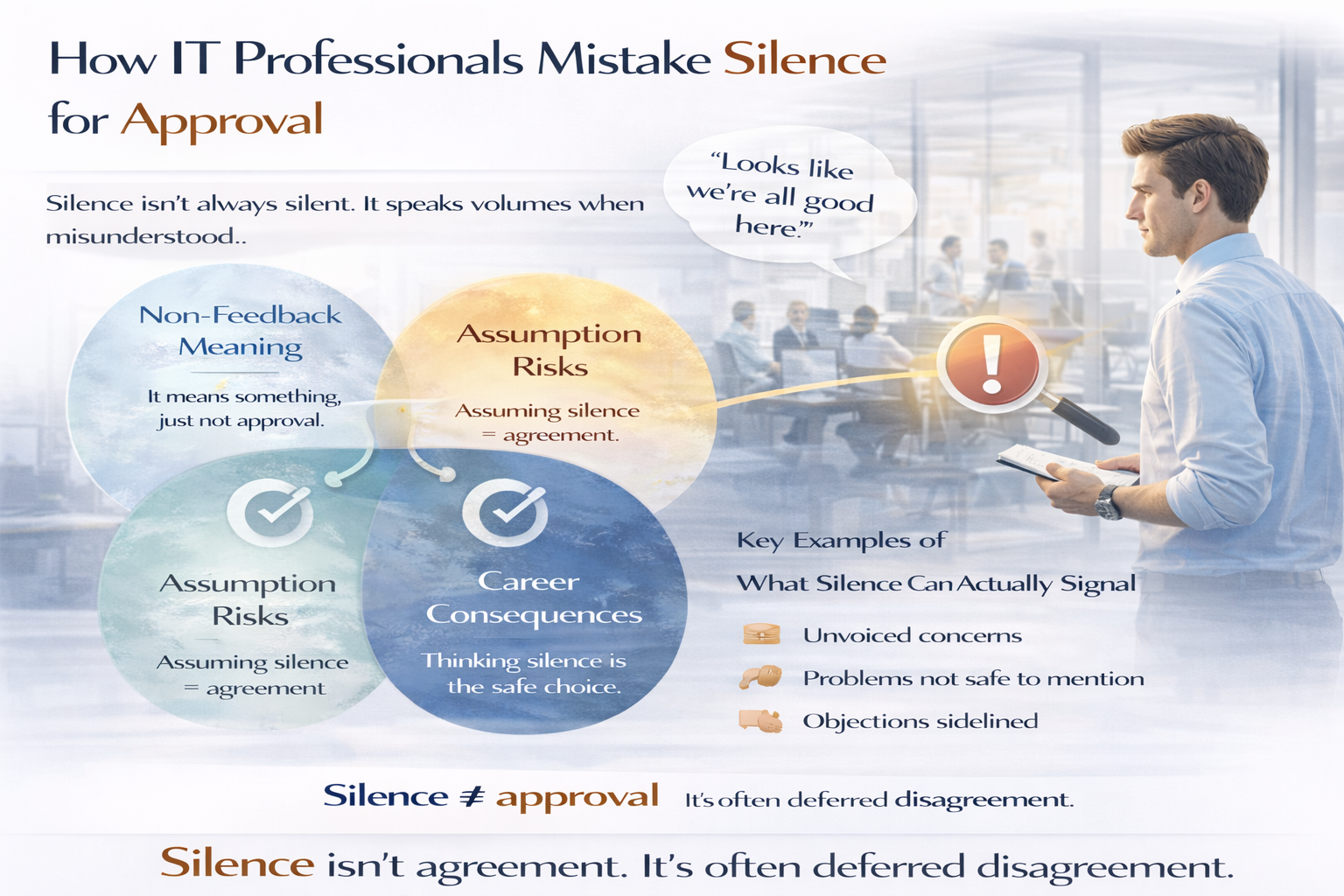
In many IT organizations, silence feels reassuring.
No complaints.
No escalations.
No negative feedback.
So professionals assume everything is fine.
This assumption quietly derails careers.
In complex organizations, silence is rarely neutral. It is often a signal — and frequently a warning.
Why Silence Feels Like Safety
Silence reduces anxiety.
It suggests:
- Work meets expectations
- Problems don’t exist
- Attention isn’t required
For busy professionals, this feels like success.
But silence often reflects avoidance, deprioritization, or disengagement — not approval.
The Many Meanings of Silence
Silence can signal very different things:
- Indifference toward the work
- Low strategic importance
- Uncertainty about value
- A decision postponed, not approved
Without interpretation, silence is ambiguous.
Treating it as positive is a risky default.
How Silence Replaces Feedback
Managers don’t always correct or praise.
Instead, they signal through omission:
- No follow-up questions
- No requests for iteration
- No inclusion in next discussions
Work that truly matters tends to generate friction.
Silence often means the opposite.
Assumption Risks in IT Careers
When professionals assume silence equals approval:
- They stop seeking clarity
- They double down on low-impact work
- They miss course-correction windows
Months later, they are surprised by outcomes:
- Missed opportunities
- Lack of recognition
- Sudden role changes
The signal was present.
It was just misread.
How Silence Quietly Shapes Careers
Silence compounds.
Over time:
- High-impact contributors get pulled into noise
- Low-impact work remains quiet
- Career momentum diverges
Professionals who equate silence with success slowly drift out of relevance.
Learning to Read Silence Correctly
Silence should trigger questions, not comfort.
Practical checks:
- Is this work referenced elsewhere?
- Does it influence decisions?
- Does it attract attention under pressure?
If not, silence may be a signal to realign.
Final Thought
In IT careers, feedback is not always spoken.
Silence is a message.
Those who treat silence as approval sleep through warning signs.
Those who treat it as a signal adjust early — and stay aligned with what actually matters.