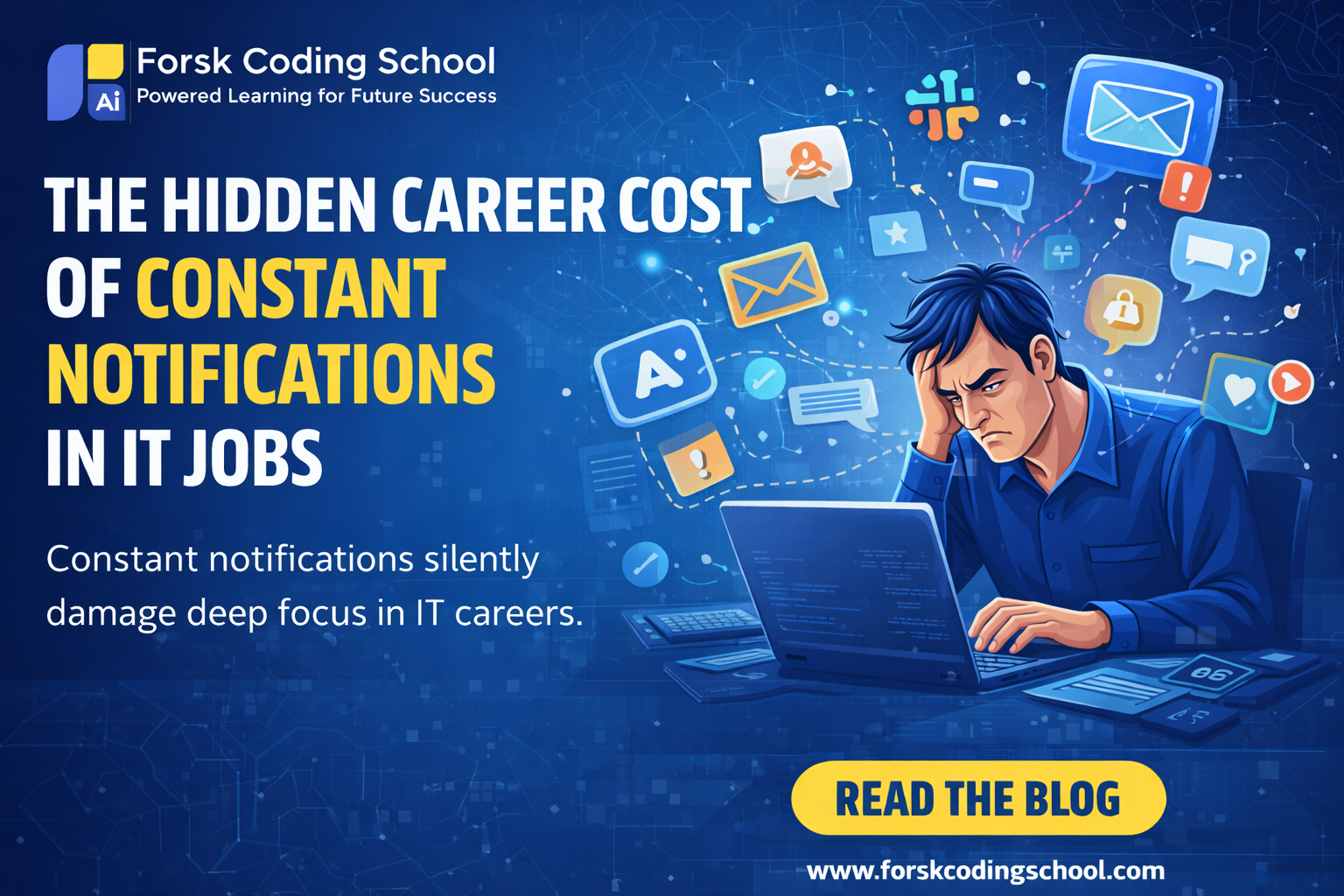
In today’s always-connected IT environment, notifications have become a normal part of work life. Slack pings, email alerts, Jira updates, calendar reminders, and mobile push notifications constantly compete for attention. Most professionals treat them as harmless background noise.
However, constant notifications quietly fragment attention, reduce deep thinking ability, and create long-term career costs that many IT professionals fail to notice.
The Notification Economy of Modern IT Work
Modern workplaces are designed for speed and responsiveness. Teams expect quick replies, instant updates, and real-time collaboration. While this improves communication, it comes with a cognitive trade-off.
Every notification creates what psychologists call an attention residue — a small portion of your focus remains stuck on the interruption even after you return to work.
Over time, this residue accumulates and reduces your ability to think deeply.
Attention Fragmentation: The Real Problem
The biggest damage from notifications is not the few seconds spent checking them. The real cost is attention fragmentation.
When developers are repeatedly interrupted:
- Logical flow breaks
- Working memory resets
- Problem-solving depth drops
- Re-focus time increases
Even brief interruptions can push complex technical thinking back by several minutes.
From Deep Thinking to Shallow Work
High-value IT work — such as system design, performance optimization, architecture planning, and complex debugging — requires sustained concentration.
Constant notifications slowly train the brain to operate in shallow-thinking mode.
Long-term effects include:
- Reduced patience for complex problems
- Preference for quick fixes over clean solutions
- Surface-level understanding of technologies
- Declining architectural thinking ability
This is where the real career risk begins.
The Long-Term Skill Depth Loss
Junior developers can survive on fragmented attention for some time. But senior roles demand deep focus and long cognitive immersion.
Professionals who remain in high-interruption environments often experience:
- Slower transition to senior roles
- Difficulty handling large systems
- Weak system design skills
- Increased dependency on trial-and-error coding
In many cases, the issue is not intelligence or effort — it is chronic attention fragmentation.
Why IT Professionals Are Highly Exposed
Compared to many other fields, IT professionals face an unusually high notification load due to:
- Multiple communication tools (Slack, Teams, email)
- Agile standups and frequent syncs
- On-call alerts and monitoring systems
- Remote collaboration expectations
- Multi-project ownership
Without deliberate control, the workday becomes a series of micro-interruptions.
Warning Signs of Notification Overload
You may be experiencing notification-driven productivity loss if:
- You check messages reflexively
- Deep work feels increasingly difficult
- You lose track of what you were doing after interruptions
- Complex tasks take longer than before
- Your day feels busy but not meaningful
Recognizing these patterns early is critical for long-term career growth.
How High Performers Defend Their Attention
Top IT professionals treat attention as a strategic asset. They do not eliminate communication — they structure it intelligently.
1. Turn Off Non-Essential Notifications
Keep alerts only for truly urgent channels.
2. Create Notification Check Windows
Review messages at scheduled intervals instead of constantly.
3. Protect Deep Work Hours
Block uninterrupted time for coding and architecture thinking.
4. Use Status Signals
Set Slack or Teams status to indicate focus time.
5. Reduce Tool Noise
Unsubscribe from low-value email threads and channels.
Final Thoughts
In the modern IT career landscape, constant notifications are not just a minor distraction — they are a hidden career tax. Over time, attention fragmentation reduces deep thinking ability, slows skill growth, and limits professional advancement.
At Jaipur Engineers and GrootLearning, we train students to build strong focus habits along with technical skills so they can thrive in real industry environments.
The future belongs to professionals who protect their attention in a world designed to steal it.