Choosing the right mobile development path is one of the biggest decisions for students entering the tech industry. With multiple options like Android, iOS, and Flutter, many beginners feel confused about which path offers better career opportunities.
If you are planning to enroll in mobile development courses, this guide will help you understand the differences, demand, and salary potential of each option.
Android vs iOS vs Flutter: Understanding the Basics
Before choosing a path, it is important to understand what each technology is used for.
Android Development
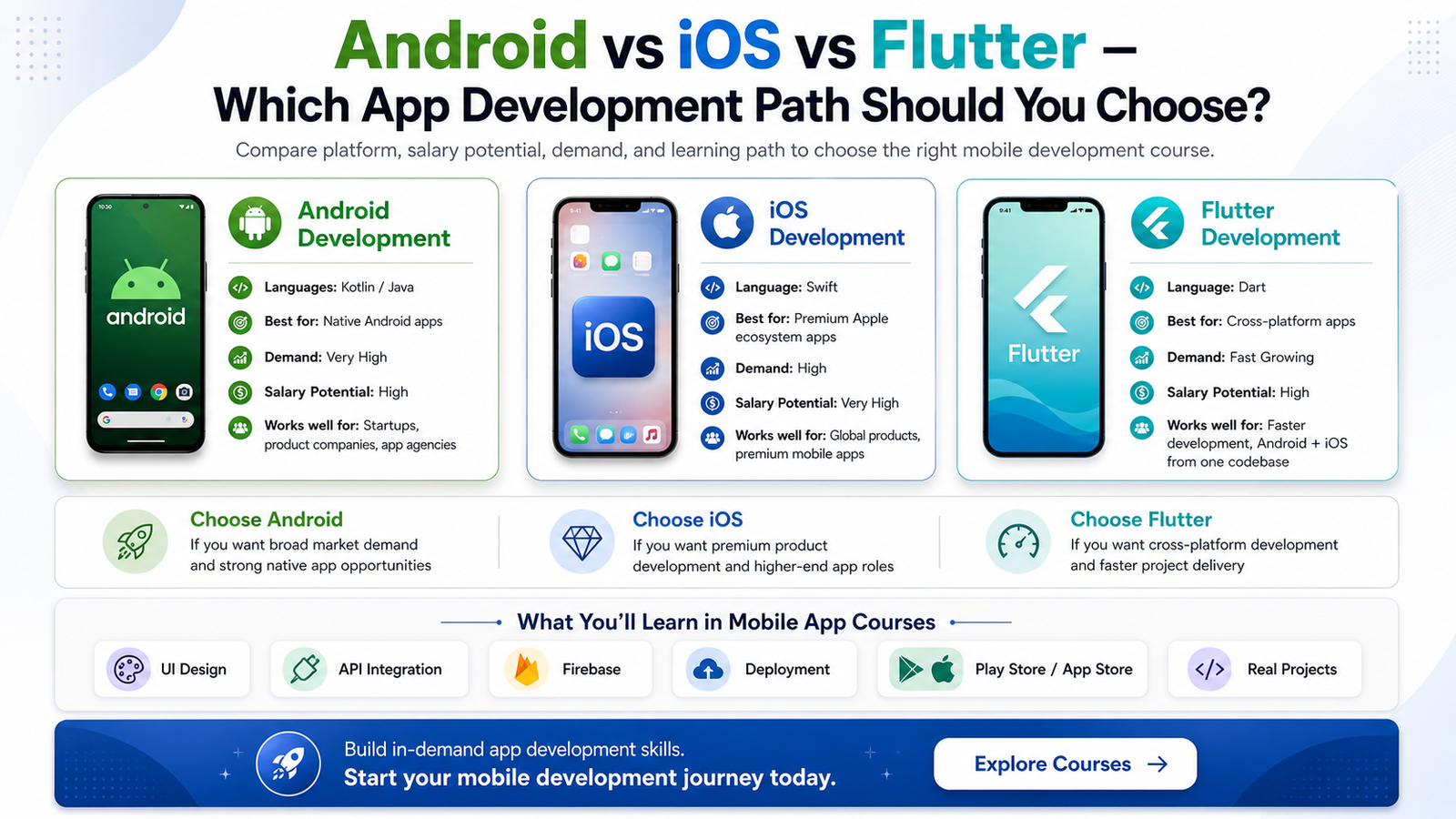
Android development focuses on building applications for Android devices using Kotlin or Java.
iOS Development
iOS development involves creating applications for Apple devices using Swift.
Flutter Development
Flutter is a cross-platform framework developed by Google that allows you to build apps for both Android and iOS using a single codebase.
Android vs iOS vs Flutter: Key Differences
Android Development:
- Large user base
- Open ecosystem
- Uses Kotlin/Java
iOS Development:
- Premium market
- Strong performance
- Uses Swift
Flutter Development:
- Single codebase
- Faster development
- Works on both platforms
Demand and Market Opportunities
- Android: High demand due to massive global users
- iOS: High-paying market with premium users
- Flutter: Growing demand due to cross-platform development
Companies are increasingly looking for developers who can build scalable mobile applications efficiently.
Salary Comparison
- Android Developer: Good starting salary with steady growth
- iOS Developer: Higher average salary due to niche ecosystem
- Flutter Developer: Competitive salary with rising demand
Salary also depends on skills, projects, and experience.
Which Path Should You Choose?
Choose Android Development if:
- You want wide opportunities
- You prefer open-source ecosystem
Choose iOS Development if:
- You want premium clients
- You prefer Apple ecosystem
Choose Flutter if:
- You want faster development
- You want to work on both platforms
Why Mobile Development Courses Matter
A structured mobile development course helps you:
- Learn step-by-step
- Build real-world apps
- Understand industry practices
Without proper guidance, learning app development can be confusing.
The Right Learning Approach
- Start with fundamentals
- Choose one platform first
- Build real projects
- Expand to other platforms later
Final Thoughts
There is no single “best” option between Android, iOS, and Flutter. The right choice depends on your goals, interest, and career vision.
If you focus on practical skills and real-world projects, you can build a successful career in mobile app development regardless of the path you choose.