Switching to a tech career without a coding background may seem difficult, but the truth is—many successful professionals today started from non-IT fields like B.Com, BA, and BBA.
With the right roadmap and guidance, you can become job-ready even without prior technical knowledge.
Can Non-IT Students Really Enter Tech?
Yes. The tech industry values skills more than degrees.
Many roles today focus on practical knowledge rather than academic background. This means even if you are from a non-IT field, you can build a successful career by learning the right skills.
Step 1: Start with the Right Mindset
Before choosing any course, understand this:
- You don’t need a coding background
- You need consistency and practice
- You must follow a structured learning path
This mindset shift is the first step toward success.
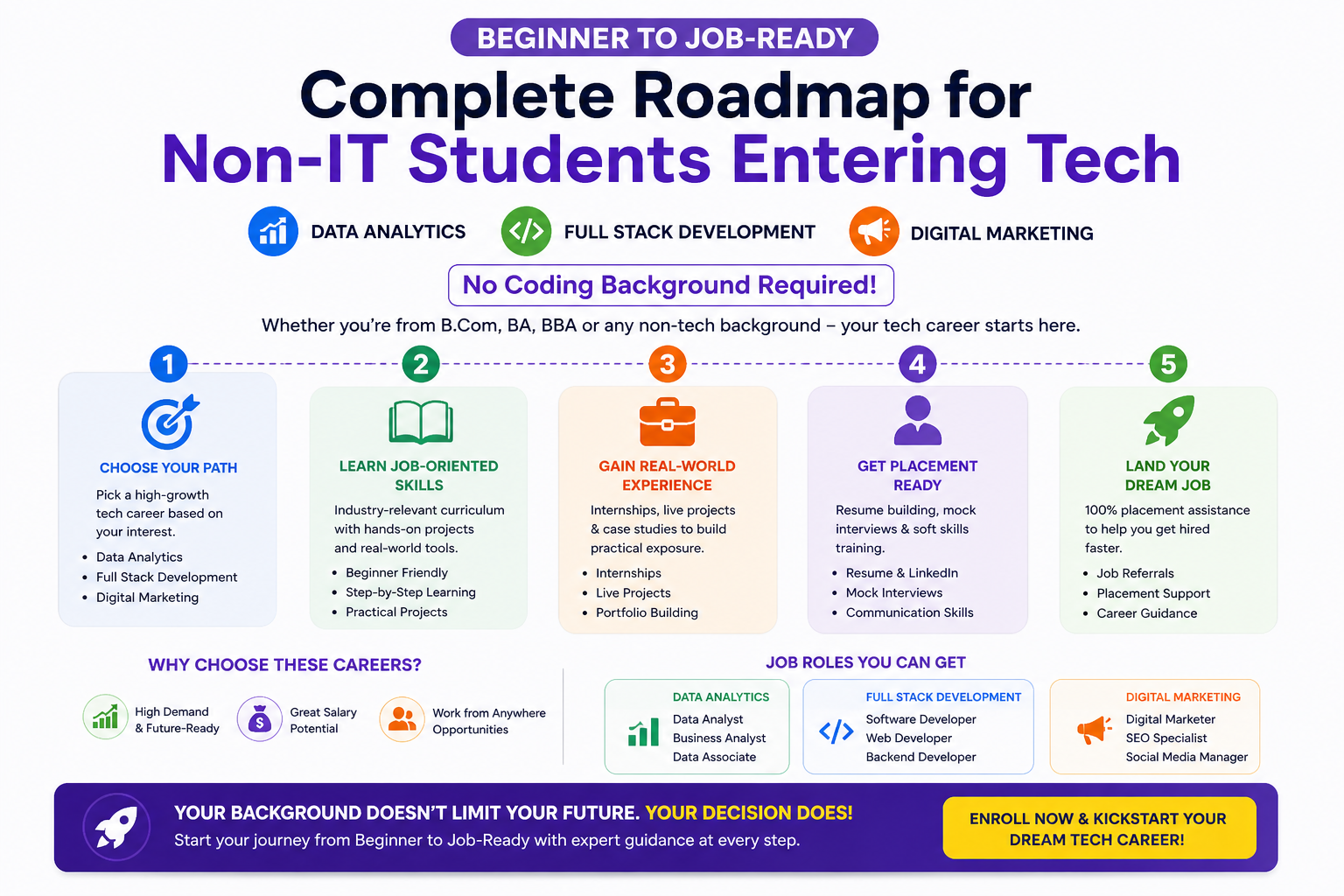
Step 2: Choose the Right Career Path
Depending on your interest, you can choose from multiple beginner-friendly fields.
Data Analytics
Best for students who like numbers and analysis.
You will learn:
- Excel
- SQL
- Power BI
- Python basics
This field is ideal for commerce and non-technical students.
Full Stack Development
Best for students interested in building websites and applications.
You will learn:
- Frontend (HTML, CSS, JavaScript)
- Backend (Node.js or Java)
- Databases
Even beginners can start with proper guidance.
Digital Marketing
Best for creative and marketing-oriented students.
You will learn:
- SEO
- Social media marketing
- Ads and analytics
This field requires no coding and offers quick career opportunities.
Step 3: Learn Through Practical Projects
The biggest mistake beginners make is focusing only on theory.
Instead, you should:
- Build real projects
- Practice regularly
- Apply what you learn
Projects help you gain confidence and create a strong portfolio.
Step 4: Gain Internship Experience
Internships are important because they:
- Provide real-world exposure
- Help you understand industry work
- Improve your confidence
Even short internships can make a big difference in your career.
Step 5: Prepare for Job Placement
Getting a job is not just about skills—it’s also about preparation.
You should focus on:
- Resume building
- Interview preparation
- Communication skills
This step ensures you are ready to crack job opportunities.
Common Mistakes to Avoid
- Jumping between multiple courses
- Following trends without understanding basics
- Ignoring practical learning
Avoiding these mistakes can save you months of time.
The Right Learning Approach
To become job-ready:
- Follow a structured roadmap
- Focus on one field at a time
- Build projects
- Take internships seriously
Final Thoughts
You don’t need a technical background to enter the IT industry. What you need is the right direction, consistent effort, and practical skills.
With the right roadmap, non-IT students can successfully transition into high-growth tech careers.
Start small, stay consistent, and focus on becoming job-ready—not just completing courses.