Early success in IT careers feels like validation. The first promotion, first big project win, or first recognition from leadership creates confidence and relief. It signals that the hard part is over.
Ironically, this moment is where many IT careers begin to stall.
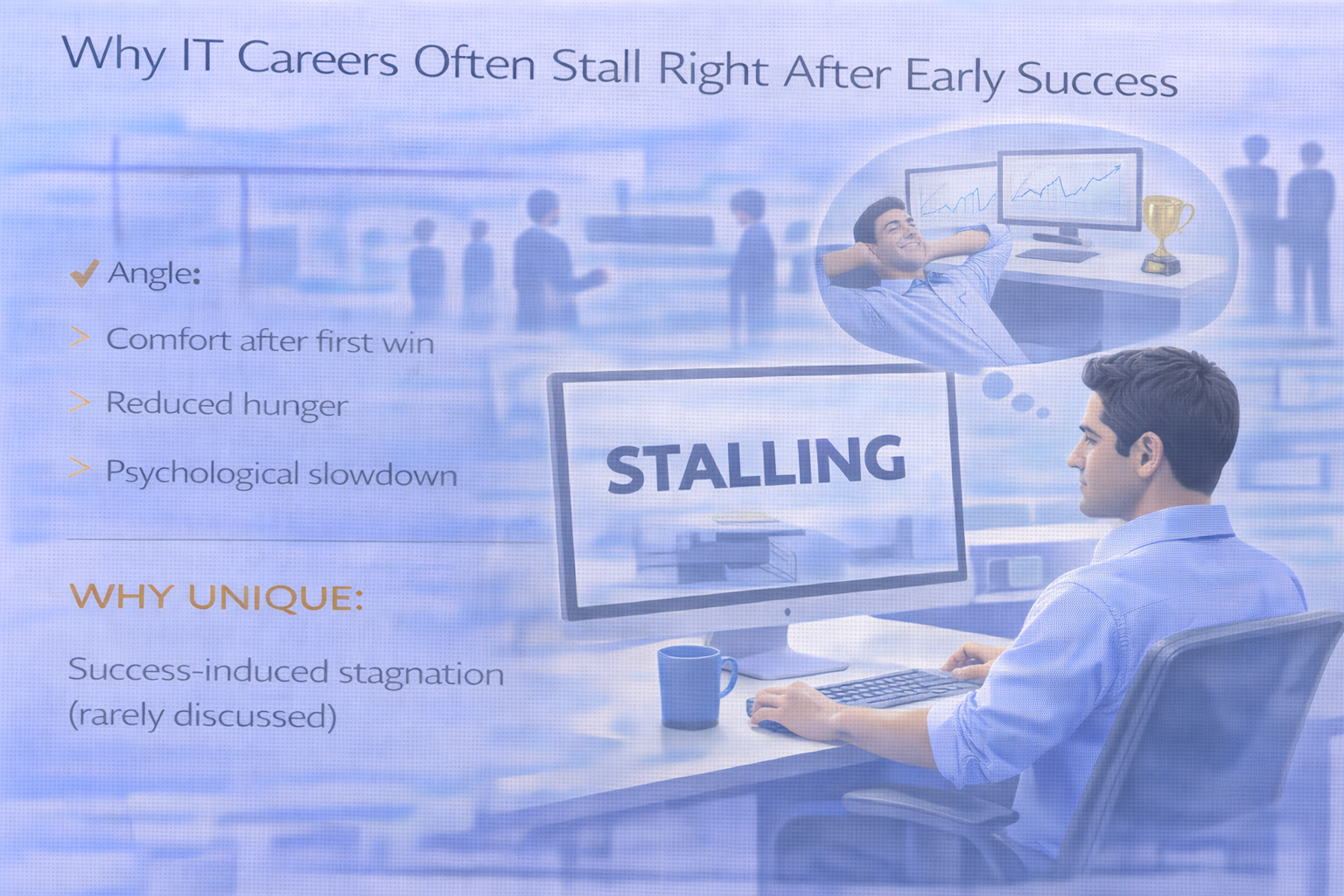
This blog explores a rarely discussed pattern: success-induced stagnation — how comfort after early wins reduces hunger, slows psychological momentum, and quietly caps long-term growth.
Comfort After the First Win: When Pressure Disappears
Early success removes pressure.
After the first major win, professionals often experience:
- Reduced fear of failure
- Increased job security
- Familiarity with expectations
- A sense of having “made it”
While comfort feels deserved, it also removes urgency.
The drive that fueled learning and risk-taking weakens because the immediate threat of failure is gone.
Reduced Hunger: When Motivation Shifts
Before early success, motivation is external and intense:
- Proving capability
- Earning trust
- Establishing credibility
After success, motivation subtly shifts to:
- Maintaining status
- Avoiding mistakes
- Preserving reputation
This shift matters.
Growth requires hunger — a willingness to look inexperienced again, to struggle, and to take risks. Early success often replaces hunger with protection.
Psychological Slowdown: When Identity Freezes Growth
Early success creates identity.
Professionals become known as:
- The high performer
- The fast learner
- The reliable problem solver
Once identity forms, behavior changes.
People avoid situations that threaten this identity. They choose familiar problems over uncertain ones. Learning slows not because of lack of ability, but because psychological safety becomes more important than expansion.
Why This Stall Is Hard to Notice
Success-induced stagnation is subtle.
Signs include:
- Continued good performance
- Positive feedback without escalation
- Stable roles with no scope expansion
- Learning that feels comfortable
Because nothing is “wrong,” professionals delay corrective action.
By the time growth feels slow, habits are already entrenched.
Breaking the Success Plateau
Careers restart growth when professionals:
- Reintroduce discomfort intentionally
- Take roles where they are no longer the best
- Trade short-term comfort for long-term range
- Measure growth by learning, not validation
Success should be a launchpad — not a resting place.
Final Insight
Early success proves capability.
But long-term success requires staying hungry after winning.
IT careers stall not because professionals fail — but because they stop challenging themselves once success arrives.
The most dangerous moment in a career is right after the first big win.