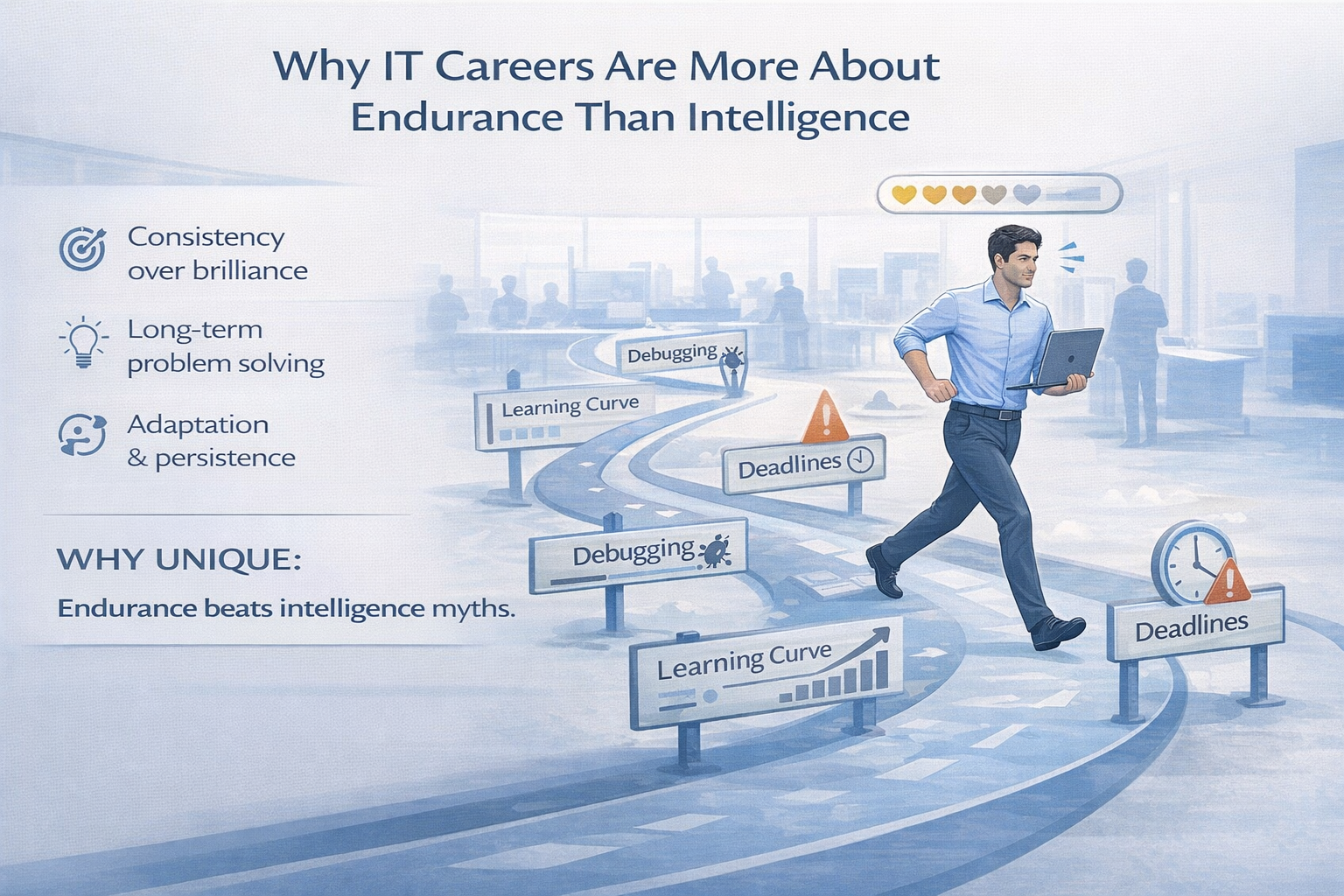
Why IT Careers Are More About Endurance Than Intelligence
The IT industry often celebrates intelligence—problem-solving speed, logical thinking, and technical brilliance. While intelligence matters, it is rarely the deciding factor in who builds a long, successful IT career.
What truly separates those who last from those who burn out is endurance.
This article reframes IT careers using a sports analogy: success is not about sprinting fast, but about running a marathon.
Intelligence Helps You Start, Endurance Helps You Stay
Many professionals enter IT with strong academic backgrounds or natural aptitude. Early success often comes quickly:
- Fast learning of programming languages
- Quick promotions in junior roles
- Recognition for technical sharpness
But intelligence mostly helps in the entry and early growth phase. As careers stretch across 10, 20, or even 30 years, different forces take over.
Long Career Cycles in IT
Unlike short-term professions, IT careers move in cycles:
- Technologies rise and fall
- Skills become obsolete
- Roles shift from execution to decision-making
Each cycle demands relearning, unlearning, and adaptation. High intelligence without endurance often fails here—because constant change is mentally exhausting.
Those who survive multiple cycles are not always the smartest; they are the ones who keep going.
Mental Stamina Beats Raw Talent
Mental stamina is the ability to:
- Stay calm during prolonged pressure
- Handle repeated failures and rejections
- Continue learning even when motivation is low
IT professionals face long debugging sessions, unclear requirements, late nights, production incidents, and constant evaluation. Without stamina, even brilliant minds wear down.
Endurance allows professionals to recover, reset, and return—again and again.
Staying Power Is the Real Competitive Advantage
Over time, careers reward:
- Consistency over bursts of brilliance
- Reliability over flashes of genius
- Presence over perfection
Many highly intelligent professionals exit IT not because they lack skill, but because they lose the will to continue under sustained stress.
Those with staying power quietly compound experience, judgment, and perspective—assets intelligence alone cannot replace.
The Sports Analogy: Marathon, Not Sprint
In sports, sprinters peak early. Marathon runners build careers through pacing, recovery, and discipline.
IT careers work the same way:
- Sprinting early can cause burnout
- Poor recovery leads to injuries (mental exhaustion)
- Long-term pacing creates sustainable growth
Endurance-focused professionals may appear slower initially, but they often finish stronger.
How to Build Endurance in an IT Career
Endurance is trainable:
- Set realistic career expectations
- Rotate intensity instead of pushing constantly
- Build habits, not motivation-dependent routines
- Accept plateaus as part of growth
Intelligence opens doors—but endurance determines how long you stay inside.
Final Thoughts
The IT industry does not reward the smartest person in the room forever. It rewards the one who can show up, adapt, and persist over decades.
Intelligence may win races.
Endurance wins careers.
If you want a long IT career, stop asking how fast you can go—and start asking how long you can last.