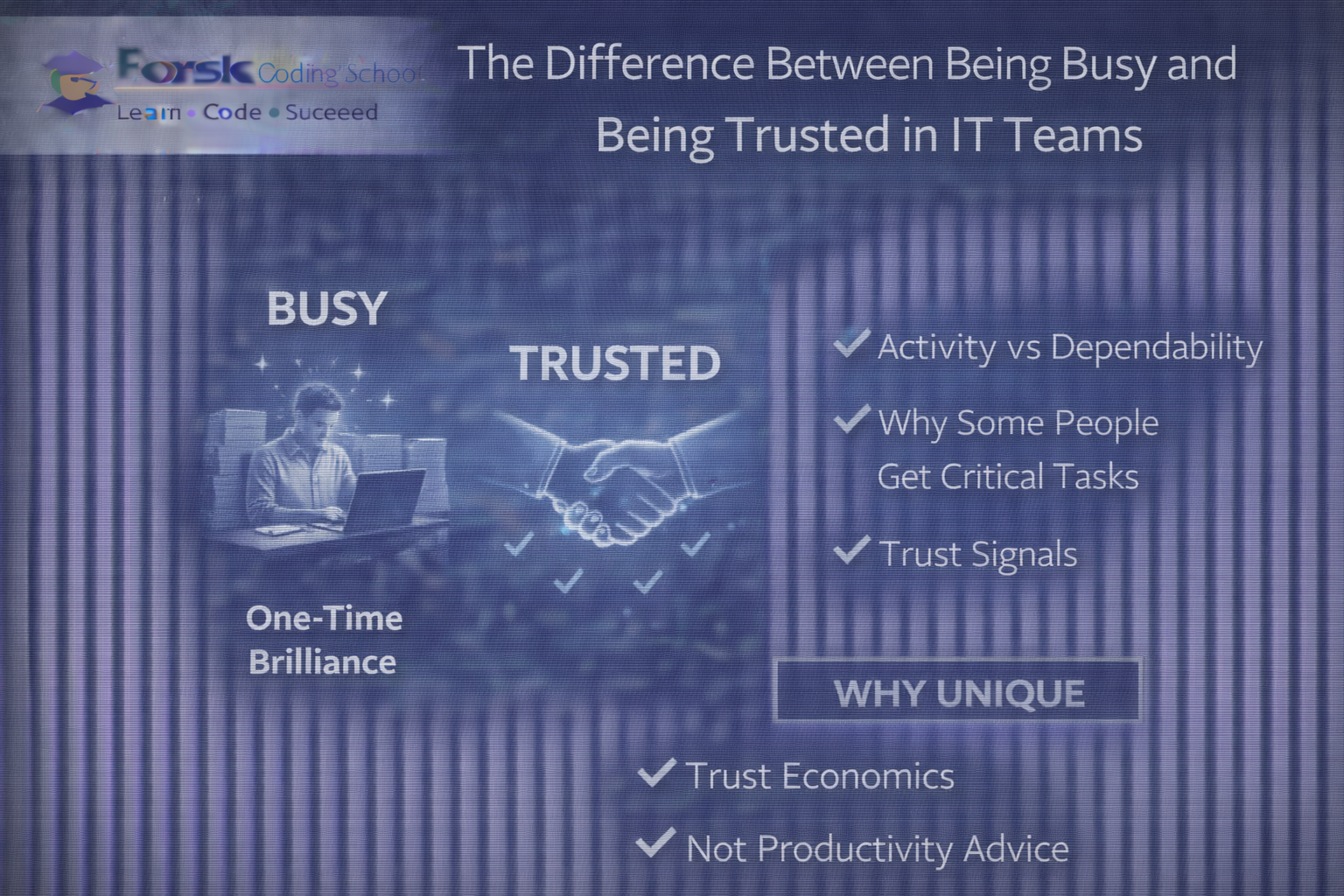
In IT teams, many professionals stay constantly busy—attending meetings, closing tickets, responding fast, and working long hours. Yet when critical systems break or high-stakes decisions arise, the same few people are trusted repeatedly. The difference is not effort. It is trust economics.
This article explains why activity does not equal dependability, and how trust is actually earned inside IT teams.
Activity vs Dependability
Being busy signals motion. Being trusted signals reliability. Teams do not assign critical work to whoever looks most active; they assign it to whoever reduces risk.
Busy professionals:
- React quickly
- Handle many tasks
- Optimize for visibility
Trusted professionals:
- Anticipate problems
- Communicate early
- Optimize for outcomes
Activity fills time. Dependability protects delivery.
Why Critical Tasks Go to the Same People
When stakes are high, managers ask simple questions:
- Who will not panic under pressure?
- Who communicates risks before deadlines?
- Who has delivered reliably before?
Critical tasks are risk-weighted. Trust lowers perceived risk, so trusted professionals get chosen—again and again.
The Hidden Cost of Being “Always Busy”
Constant busyness can signal poor prioritization. Teams notice when professionals:
- Accept too much work
- Miss dependencies
- Deliver late surprises
Over time, busyness increases uncertainty. Trusted professionals create the opposite effect—they make timelines predictable.
Trust Signals Teams Actually Track
Trust is built through quiet, repeatable signals:
- Meeting commitments consistently
- Documenting decisions and handoffs
- Escalating issues early, not heroically
- Owning outcomes beyond assigned tasks
None of these require long hours. They require judgment.
Dependability Compounds Faster Than Speed
Speed impresses once. Dependability compounds.
Each reliable delivery adds to a mental ledger. Over time, this ledger determines:
- Who gets autonomy
- Who is consulted early
- Who is considered leadership-ready
Busy professionals often plateau. Trusted professionals expand scope.
How to Shift From Busy to Trusted
The shift is subtle but powerful:
- Commit less, deliver more
- Replace urgency with clarity
- Make others’ work easier, not louder
Trust grows when your presence reduces anxiety.
Final Thought
In IT teams, being busy keeps you occupied. Being trusted moves your career forward. Critical work follows dependability, not activity. Professionals who understand trust economics stop chasing busyness and start building reliability—and opportunities follow quietly.