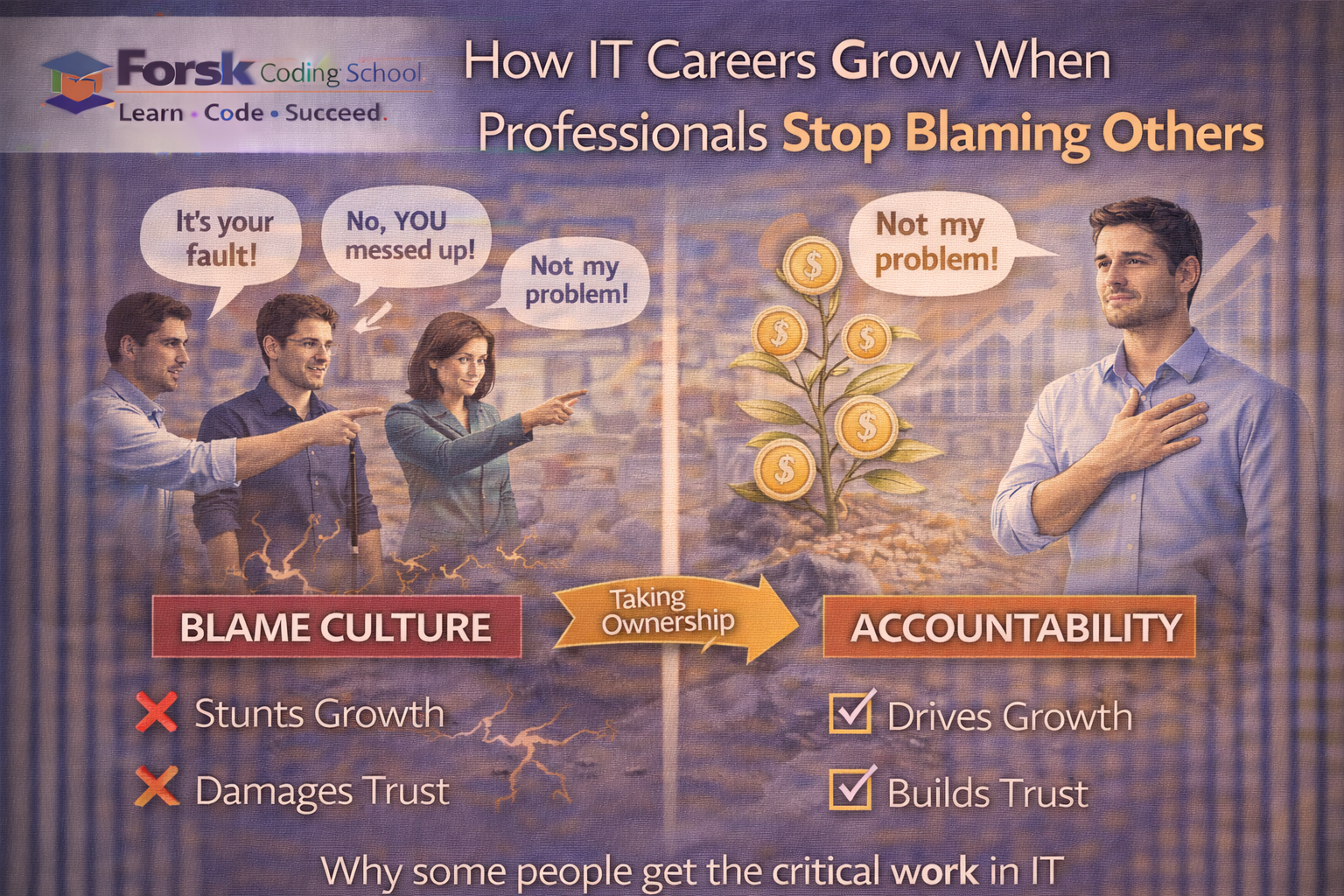
In the IT industry, career growth is rarely blocked by a lack of intelligence or technical skill. More often, it is slowed down by mindset. One of the most damaging habits professionals develop—sometimes without realizing it—is the tendency to blame others for failures, delays, or missed opportunities. Teams, managers, clients, tools, or even market conditions become easy targets. While blame may offer temporary emotional relief, it quietly blocks long-term career growth.
The Blame Culture Problem in IT
Blame culture is common in IT environments because projects are complex and dependencies are high. When deadlines slip or bugs appear, it feels natural to point fingers. However, professionals who constantly explain outcomes using external reasons slowly lose credibility. Leaders notice patterns. They may not confront it openly, but they start trusting such individuals less with critical responsibilities.
Blame culture also damages collaboration. When people focus on protecting themselves instead of solving problems, innovation slows down. Teams become defensive rather than proactive, and learning stops at excuses.
Accountability as a Career Accelerator
Accountability does not mean taking responsibility for everything that goes wrong. It means owning your role in the outcome. Professionals who say, “Here’s what I could have done better,” stand out immediately. This mindset signals maturity, reliability, and leadership potential.
In IT careers, accountability is often rewarded more than raw skill. A developer who owns bugs, fixes them, and improves systems earns more trust than someone who writes brilliant code but avoids responsibility. Over time, trust becomes the currency that decides who gets promoted, who leads projects, and who gets opportunities.
From Victim Thinking to Ownership Thinking
Victim thinking sounds logical on the surface:
- “The requirements were unclear.”
- “The client kept changing things.”
- “The senior didn’t guide me properly.”
Ownership thinking reframes the same situations:
- “How can I ask better questions next time?”
- “How can I design systems that adapt to change?”
- “How can I learn independently instead of waiting?”
This shift does not happen overnight, but once it does, growth becomes faster and more stable.
Why Leaders Trust Ownership-Driven Professionals
Leaders look for people who reduce problems, not multiply them. When professionals stop blaming others, they naturally move toward solutions. They communicate risks early, document assumptions, and take initiative. These behaviors make managers confident that work will move forward even in uncertainty.
Such professionals are often given larger responsibilities—not because they are perfect, but because they are dependable.
Long-Term Career Impact
Over time, accountability compounds. Professionals who practice ownership:
- Learn faster from mistakes
- Build stronger professional reputations
- Develop leadership readiness early
- Handle pressure with clarity
Blame, on the other hand, creates invisible career ceilings. Skills may improve, but trust stagnates.
Final Thought
IT careers grow when professionals stop asking, “Who is at fault?” and start asking, “What can I control?” Accountability is not about self-blame—it is about growth ownership. Those who master this mindset naturally move into leadership roles, because leadership begins where excuses end.