Getting an IT job is supposed to bring relief and confidence. For many freshers, it does—briefly. But after the initial excitement fades, a different feeling quietly appears: confusion.
Many IT freshers feel lost even after getting a job. They have employment, a salary, and a team—yet they feel unsure, directionless, and disconnected. This feeling is more common than people admit.
This blog explains why this happens, how identity confusion develops, and why the real issue is not capability—but the absence of a clear career map.
The Shock After the “Achievement” Phase
For years, the goal was simple:
- Get a degree
- Get placed
- Get a job
Once the job is achieved, many freshers suddenly ask:
- What am I actually building?
- Where is this role taking me?
- What should I become next?
This mental gap creates discomfort.
Identity Confusion in Early IT Careers
From Student Identity to Professional Identity
As students, identity is clear:
- Learn syllabus
- Pass exams
- Complete assignments
In IT jobs, identity becomes blurred:
- Titles are unclear
- Roles change frequently
- Expectations are unspoken
Freshers struggle to answer:
“What kind of IT professional am I becoming?”
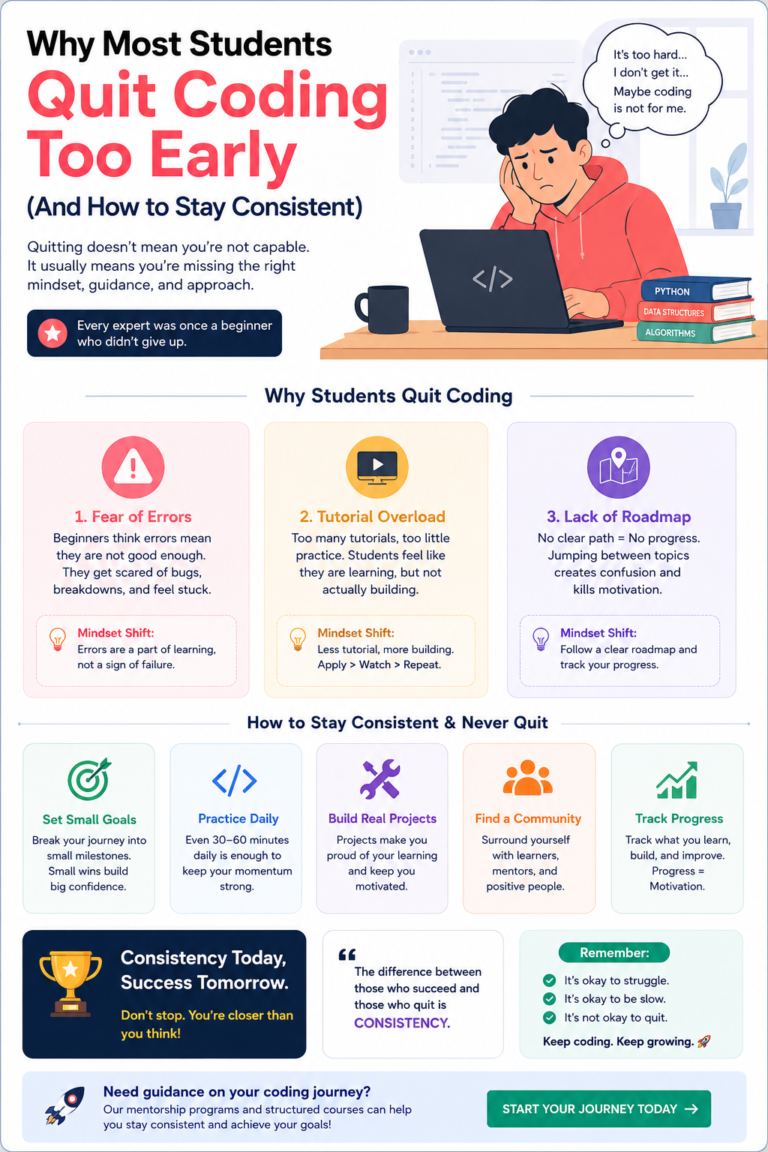
Lack of Direction Is Often Misread as Incompetence
Many freshers assume:
- “I feel lost, so I must be weak”
In reality:
- They were never shown a long-term path
- They were taught tools, not trajectories
Feeling lost does not mean failure. It means missing guidance.
The Missing Career Map Problem
IT Jobs Don’t Come With a Roadmap
Most IT roles:
- Focus on immediate tasks
- Don’t explain future growth paths
- Assume individuals will figure things out
Without a map, even capable people feel stuck.
Why Salary Doesn’t Fix the Confusion
Money solves security—not meaning.
Freshers still ask:
- What skills should I prioritize?
- Which direction has long-term value?
- How do I avoid becoming irrelevant?
Without answers, anxiety grows quietly.
Comparison Makes the Feeling Worse
Social media and peers amplify confusion:
- Someone else seems more confident
- Someone else seems to be growing faster
But most people are equally unsure—just quieter about it.
What Actually Helps Freshers Find Direction
1. Understanding Career Phases
Early IT careers are about:
- Exploration
- Exposure
- Building foundations
Clarity comes later—not immediately.
2. Guidance Over Motivation
Freshers don’t need pressure.
They need:
- Context
- Examples
- Honest conversations
Guidance reduces confusion faster than motivation.
3. Building a Personal Career Map
A simple map includes:
- Skills to deepen
- Roles to explore
- Strengths to observe
This creates psychological stability.
A Message for Parents and Mentors
Feeling lost after getting a job is not a red flag.
It is a transition phase.
With the right guidance, this phase becomes the foundation for a strong career.
Final Takeaway
Many IT freshers feel lost not because they lack ability—but because they lack direction.
Jobs provide tasks.
Careers need maps.
Once freshers understand this, confusion turns into clarity.
Feeling lost is often the first sign that a real career journey has begun.