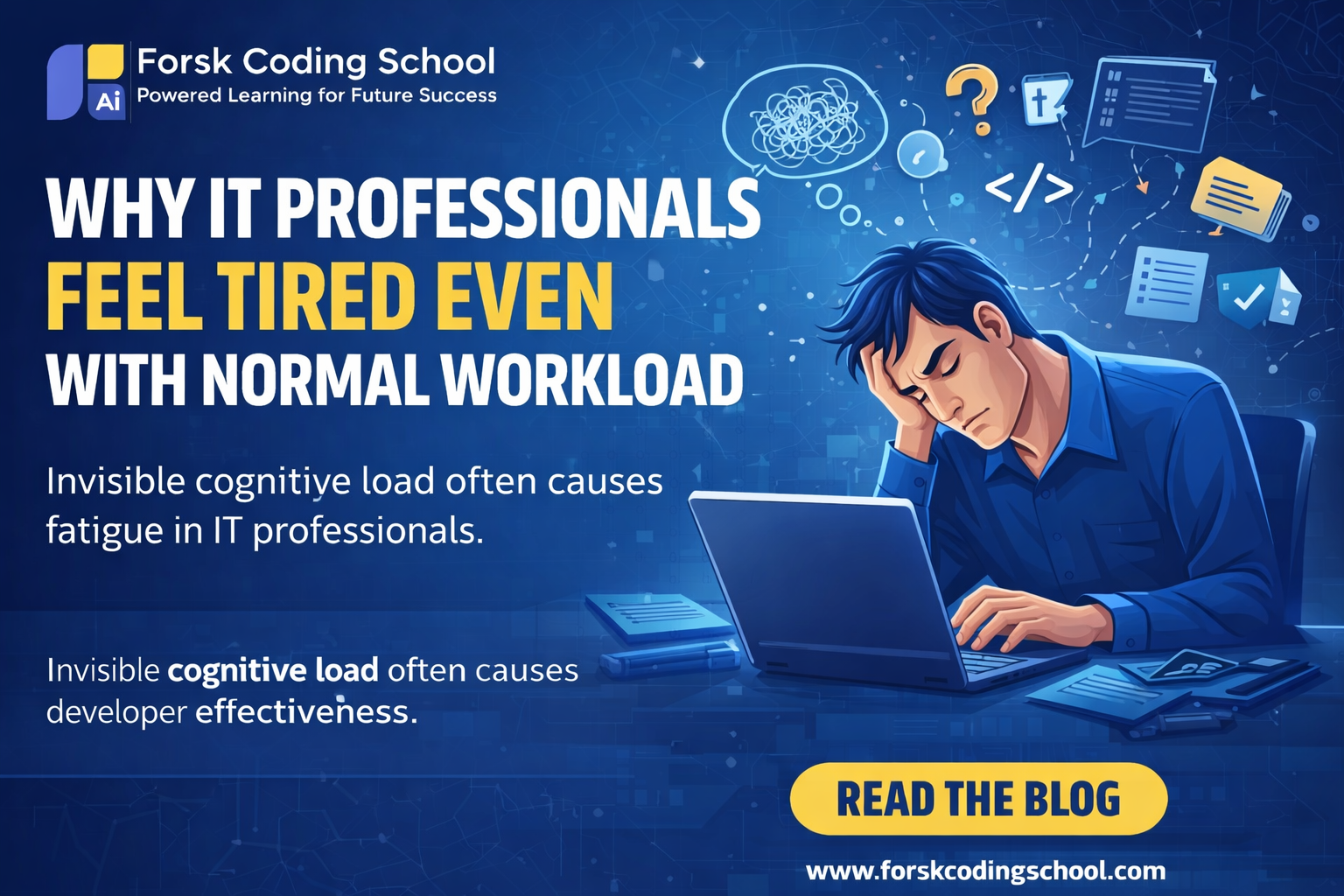
Many IT professionals experience a strange pattern: the workload appears manageable, deadlines are not extreme, and working hours are reasonable — yet mental fatigue keeps increasing. This invisible exhaustion often confuses developers, students, and engineers.
The real cause is rarely physical overwork. Instead, it is usually decision fatigue, mental clutter, and continuous cognitive load quietly draining energy throughout the day.
The Myth of “Normal” Workload
In IT, workload is often measured in hours or number of tasks. But cognitive science tells us that mental energy is consumed not just by how much you work, but by how many decisions your brain must make.
Two developers may work the same hours, yet one feels fresh while the other feels mentally drained. The difference is cognitive load, not time spent.
Decision Fatigue: The Hidden Energy Leak
Every day, IT professionals make hundreds of micro-decisions:
- Which bug to fix first
- How to structure a function
- Which tool or library to use
- How to respond to messages
- What to prioritize next
Each decision consumes mental energy. As the day progresses, decision quality drops and fatigue rises — even if the workload looks “normal.”
Signs of Decision Fatigue
- Taking longer to make simple choices
- Increased procrastination
- More second-guessing while coding
- Preference for easy or familiar solutions
- Mental exhaustion by evening
Many professionals mistake this for laziness, but it is actually cognitive depletion.
Mental Clutter: Too Many Open Loops
Another major source of invisible tiredness is mental clutter — when too many tasks, reminders, and worries occupy your working memory.
In IT roles, clutter often comes from:
- Unfinished tickets
- Pending code reviews
- Multiple learning goals
- Constant notifications
- Context switching between projects
Your brain keeps these “open loops” active in the background, quietly consuming energy even when you are not actively working on them.
Why IT Work Feels Especially Draining
Compared to many other professions, IT work demands sustained logical thinking and precision. Activities like debugging, system design, and architecture planning are cognitively expensive.
Additionally, modern IT culture adds:
- Always-on communication tools
- Rapid technology changes
- Continuous upskilling pressure
- Agile and sprint-based workflows
This creates continuous low-level cognitive stress that accumulates into fatigue.
Invisible Exhaustion vs Burnout
It is important to distinguish normal burnout from invisible cognitive exhaustion.
Burnout usually comes from long-term overwork and emotional stress.
Invisible exhaustion happens even with reasonable hours because the brain is overloaded with decisions, inputs, and context switching.
Most mid-level developers today are facing the second problem.
How High Performers Maintain Mental Energy
Top IT professionals do not rely only on motivation — they design their work to reduce unnecessary cognitive load.
1. Reduce Daily Micro-Decisions
Standardize tools, workflows, and coding patterns where possible.
2. Externalize Your Task Memory
Use task managers or notes instead of holding everything in your head.
3. Create Clear Work Priorities
Start the day knowing exactly what matters most.
4. Build Focus Rituals
Have fixed deep-work hours with minimal interruptions.
5. Limit Parallel Learning
Avoid learning too many technologies at the same time.
Final Thoughts
If you often feel tired despite having a “normal” workload, the problem is probably not your stamina — it is your cognitive load.
In today’s IT ecosystem, managing mental energy is becoming as important as learning new technologies. Professionals who understand decision fatigue and mental clutter early will learn faster, perform better, and grow more sustainably.
At Jaipur Engineers and GrootLearning, we emphasize structured learning, focused practice, and cognitive clarity so students can build strong, sustainable IT careers.
Smart professionals don’t just manage time — they manage mental energy.