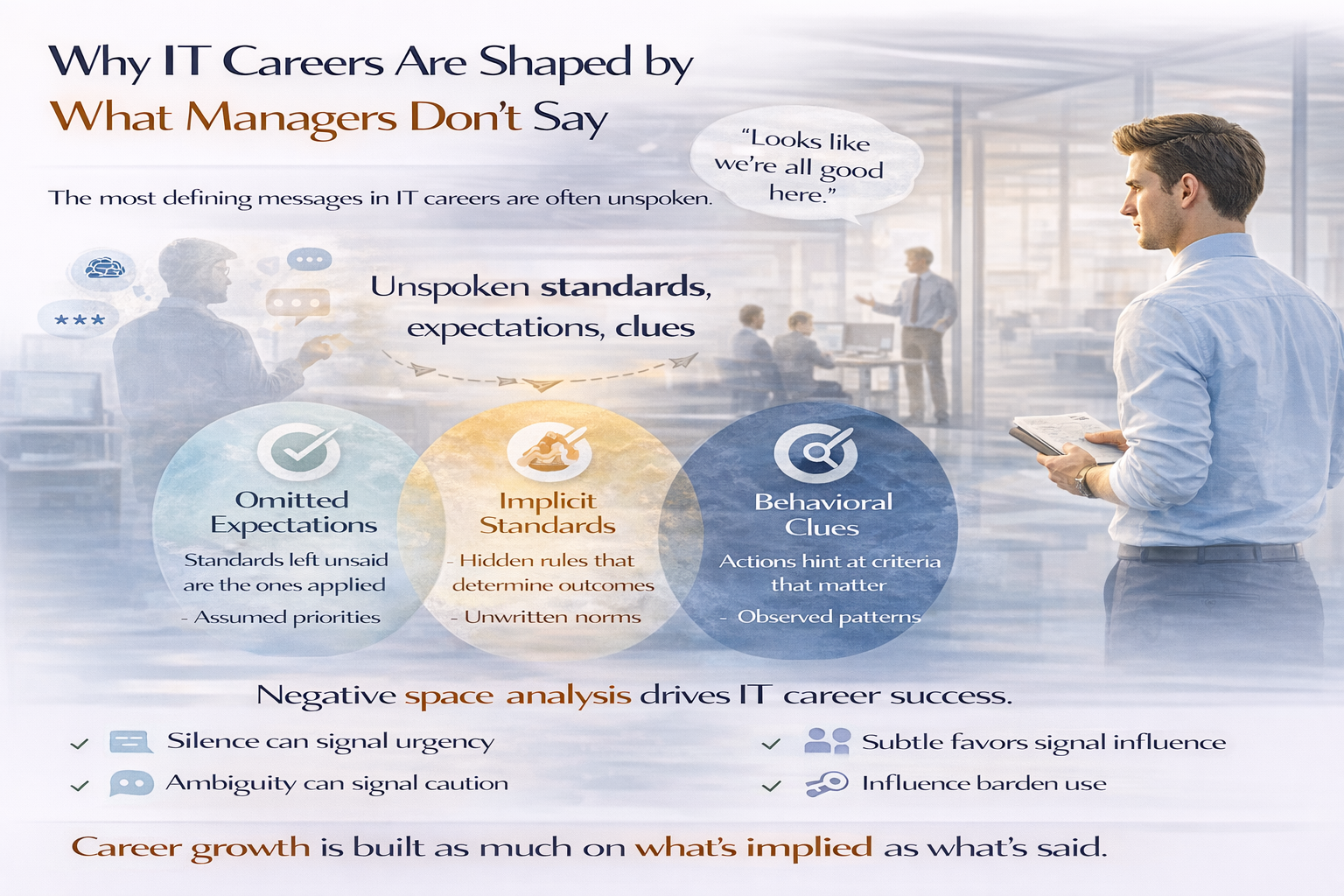
In most IT organizations, managers influence careers far more through omission than instruction.
What they don’t say often matters more than what they do.
Unspoken expectations.
Implicit standards.
Behavioral clues left unexplained.
These quiet gaps shape careers — especially for professionals who wait for clarity.
Omitted Expectations Are Still Expectations
Managers rarely list everything they expect.
Instead, expectations are implied:
- Who is expected to take initiative
- Who should escalate ambiguity
- Who owns outcomes without being asked
When these expectations go unsaid, professionals who wait for direction fall behind those who infer them.
Implicit Standards Replace Written Rules
Performance frameworks describe minimums.
Real standards are observed:
- What quality level gets accepted quietly
- What level gets questioned
- What triggers rework
Managers enforce these standards through reaction, not documentation.
Missing the reaction means missing the rule.
Behavioral Clues That Signal Advancement
Managers signal trust and trajectory through behavior:
- Delegating ambiguity instead of tasks
- Asking for judgment, not updates
- Involving someone early, not after decisions
These behaviors indicate how a manager sees a professional’s ceiling.
They are rarely explained — only demonstrated.
Why Silence from Managers Is Misleading
Managers are busy.
They optimize attention toward what matters most.
When managers stop:
- Following up
- Asking questions
- Challenging assumptions
It may signal declining priority — not satisfaction.
Negative Space Analysis in Careers
Negative space is what is missing — and meaningful.
In IT careers, this includes:
- Feedback that never comes
- Responsibilities that never expand
- Conversations you’re never invited into
Absence is data.
Ignoring it delays course correction.
How to Respond to What Isn’t Said
Professionals don’t need more communication.
They need better interpretation.
Practical approaches:
- Compare your experience with peers who advance
- Observe how managers react under pressure
- Track what behavior gets rewarded without comment
Inference closes the gap that silence creates.
Final Thought
Managers rarely announce career limits.
They imply them.
IT professionals who listen only to words miss half the message.
Those who learn to read what managers don’t say navigate careers with far greater accuracy.