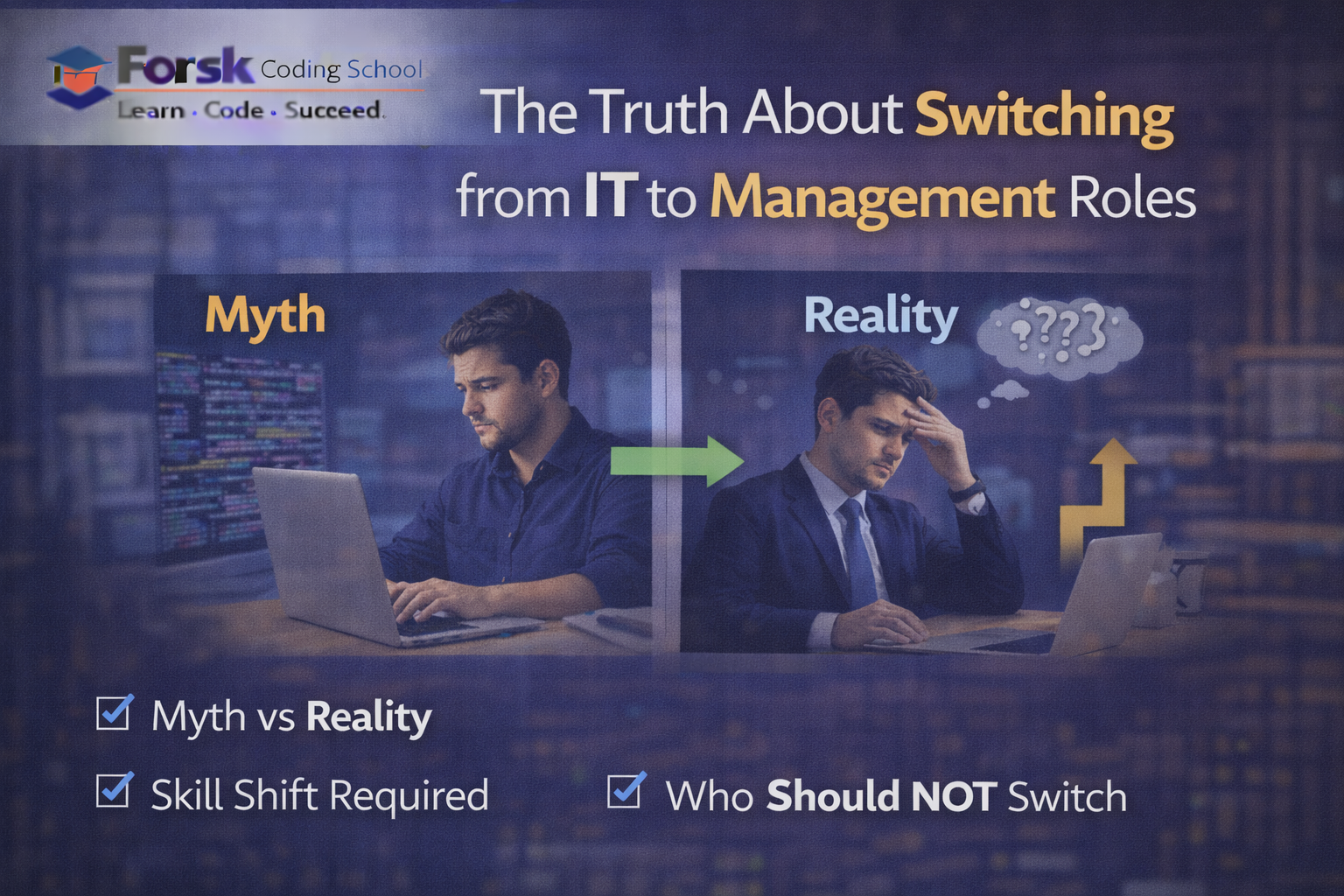
For many IT professionals, management roles look like the natural next step. Fewer technical problems, higher authority, better pay, and more influence—it often feels like an upgrade. But the reality is far more complex.
Switching from IT to management is not a promotion by default. It is a career shift that requires a completely different skill set, mindset, and tolerance for ambiguity. This blog breaks common myths, explains the real skill shift involved, and highlights who should not make this move.
The Common Myth: Management Is an Easy Upgrade
One of the biggest misconceptions in IT careers is:
“After a few years of coding, management is the next logical step.”
In reality, management is not a reward for technical experience. It is a different profession altogether.
Many professionals move into management expecting:
- Less stress
- Fewer technical challenges
- Clear authority
They often discover the opposite.
The Reality of Management Roles
From Solving Problems to Owning Outcomes
In IT roles, success is often measurable:
- Code works
- Systems perform
- Tasks are completed
In management, success is indirect:
- Teams perform
- Conflicts are resolved
- Decisions have long-term impact
You stop fixing problems yourself and become responsible for others fixing them.
Ambiguity Becomes the Norm
Managers operate with:
- Incomplete information
- Conflicting priorities
- People-related uncertainties
If you prefer clear requirements and logical certainty, management can feel uncomfortable.
The Skill Shift Required
Technical Skills Lose Center Stage
While technical understanding helps, management success depends more on:
- Communication
- Decision-making
- Conflict resolution
- Emotional intelligence
Strong engineers don’t automatically become strong managers.
Accountability Multiplies
Managers are accountable for:
- Team output
- Deadlines
- Morale
- Stakeholder expectations
Mistakes are more visible and harder to isolate.
Who Should NOT Switch to Management
1. Those Who Love Deep Technical Work
If your satisfaction comes from:
- Designing systems
- Solving complex technical problems
- Continuous hands-on learning
Management may feel draining instead of rewarding.
2. Those Seeking Less Work or Pressure
Management roles often come with:
- Longer hours
- Mental load beyond office time
- Responsibility without direct control
It is not an escape from stress—it is a different kind of stress.
3. Those Uncomfortable With People Problems
People issues are unpredictable and emotional. If you avoid difficult conversations, management will amplify discomfort.
When Switching to Management Makes Sense
Management is a good fit if you:
- Enjoy mentoring and guiding others
- Think in outcomes, not tasks
- Are comfortable making imperfect decisions
- Want to influence direction, not just execution
In such cases, management can be fulfilling and impactful.
Alternative Growth Paths in IT
Management is not the only way to grow.
Strong alternatives include:
- Technical Architect
- Principal Engineer
- Staff Engineer
- Consultant
These roles offer growth without abandoning technical depth.
Final Takeaway
Switching from IT to management is not an easy upgrade—it is a fundamental career change.
It rewards different strengths and demands different sacrifices. Before switching, professionals must be honest about what they enjoy, what they tolerate, and how they want to create value.
In IT careers, growth is not about climbing the same ladder—it’s about choosing the right one.
Management is not for everyone—and that’s a strength, not a weakness.