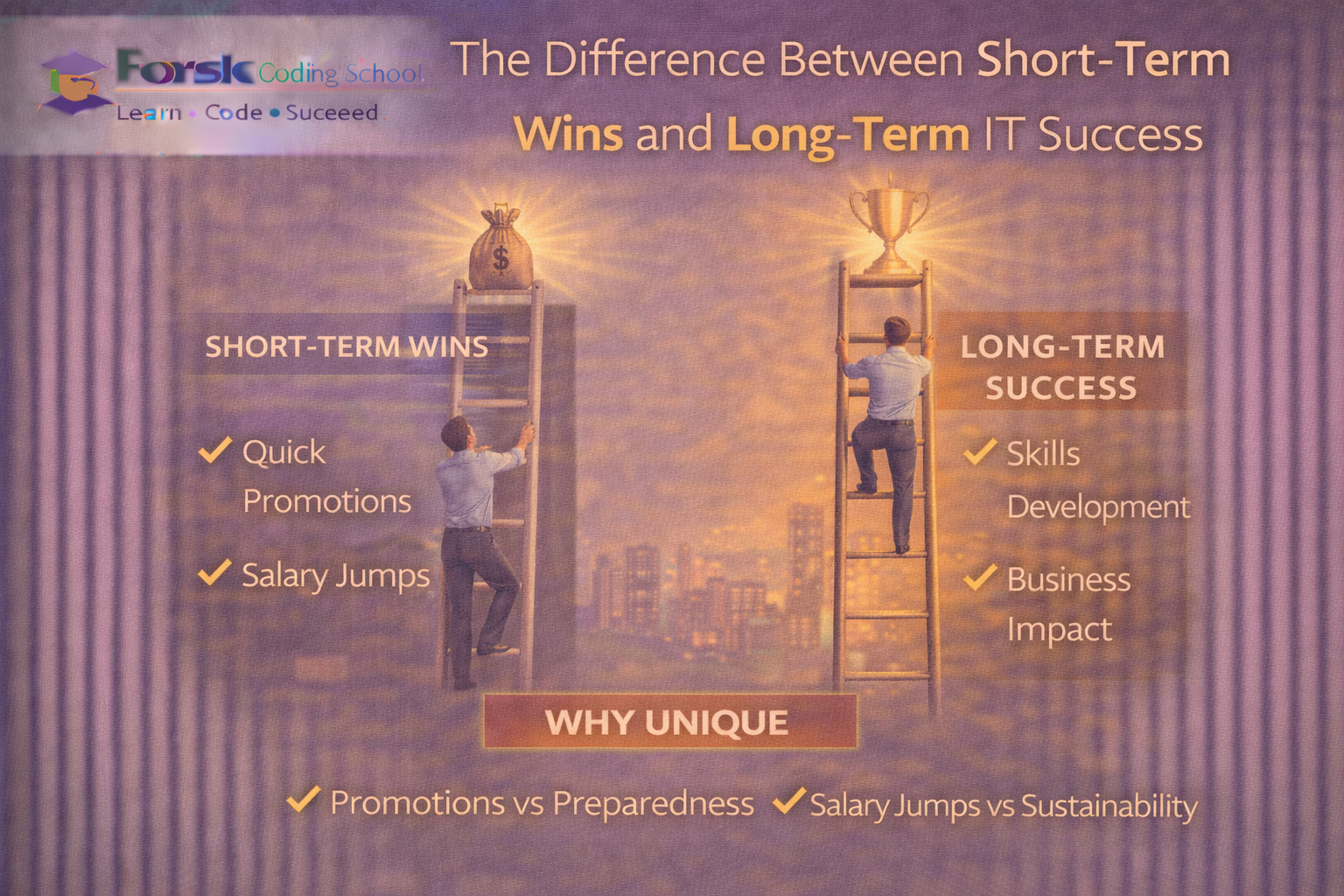
The Difference Between Short-Term Wins and Long-Term IT Success
In IT careers, short-term wins are highly visible. Promotions, salary hikes, new titles, and quick job switches feel like success. Long-term success, however, is quieter and harder to measure. Many professionals experience early wins but struggle later, while others grow steadily without dramatic milestones.
The difference lies in tactical gains versus strategic readiness.
Short-Term Wins Feel Like Progress
Short-term wins usually come from external validation. They include:
- Early promotions
- Fast salary jumps
- High-visibility projects
- Job switches for better packages
These wins are not wrong. They provide motivation and financial relief. The risk appears when professionals confuse momentum with maturity.
Promotions vs Preparedness
A promotion changes responsibility overnight, but preparedness develops gradually. When growth outpaces readiness, professionals operate on pressure instead of confidence.
Common signs include:
- Managing work you don’t fully understand
- Avoiding deep technical accountability
- Relying on authority instead of judgment
Prepared professionals earn promotions. Unprepared professionals survive them.
Salary Jumps vs Sustainability
Salary increases raise expectations permanently. The question is not whether you deserve the salary—but whether you can sustain the value expected at that level.
When compensation rises faster than capability:
- Stress increases
- Learning becomes reactive
- Job security weakens
Sustainable success aligns compensation with long-term contribution.
Why Long-Term Success Looks Slower
Long-term IT success is built on foundations:
- System understanding
- Decision-making quality
- Reputation for reliability
- Health and learning sustainability
These do not show up immediately. They compound quietly and protect careers during downturns, layoffs, or market shifts.
Tactical Thinking vs Strategic Thinking
Tactical thinking asks: What benefits me now?
Strategic thinking asks: What prepares me for the next 5–10 years?
Professionals who prioritize strategy may delay gratification—but avoid career shocks later.
How to Balance Wins With Longevity
The goal is not to reject short-term wins, but to contextualize them:
- Use promotions to expand depth, not ego
- Use salary jumps to buy stability, not stress
- Use visibility to learn systems, not chase praise
This balance separates durable careers from fragile ones.
Final Thought
Short-term wins make IT careers exciting. Long-term success makes them survivable and fulfilling. Professionals who understand the difference stop chasing milestones and start building readiness. Tactical wins fade. Strategic success endures.