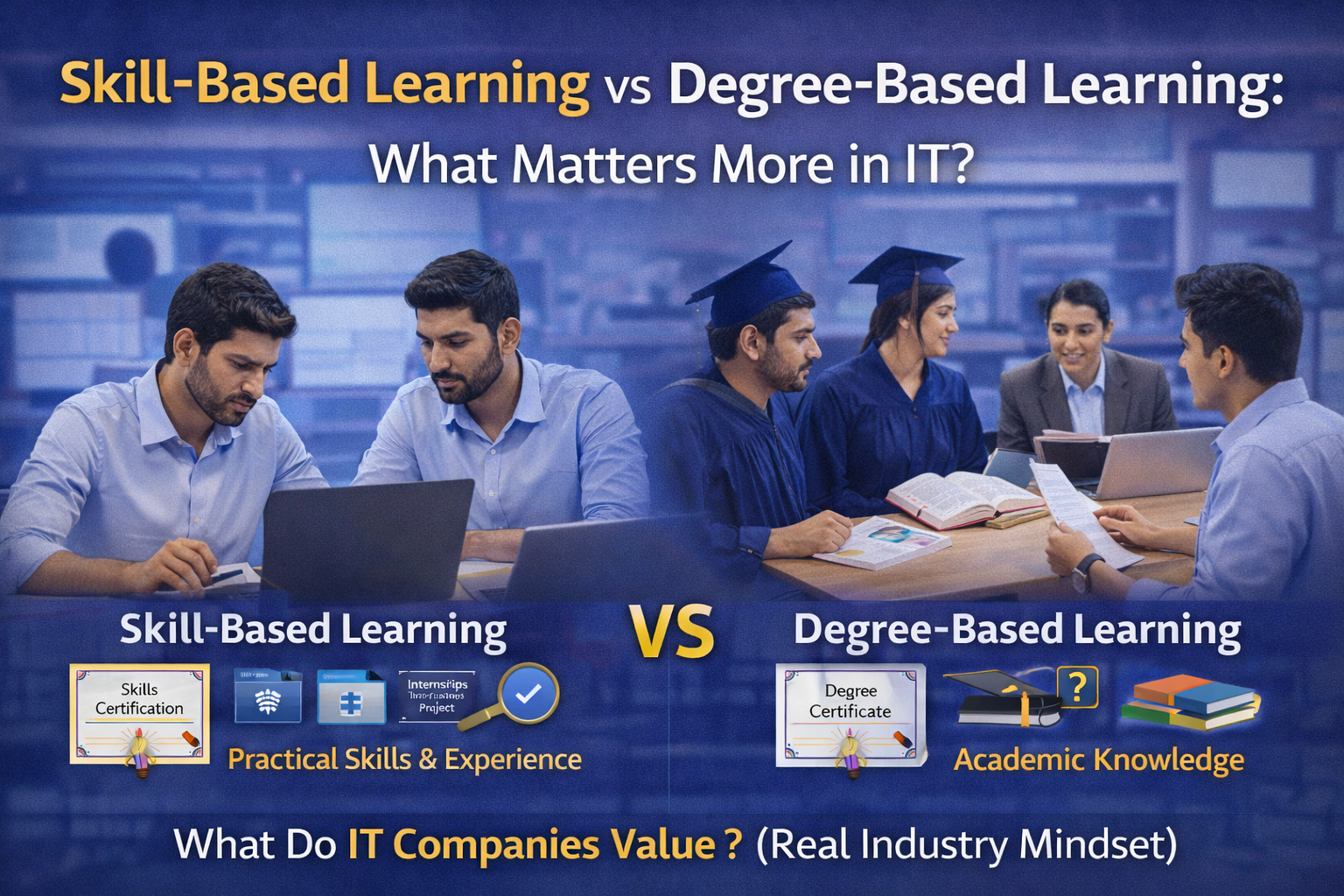
For years, students and parents believed that a college degree alone guarantees a good IT job. However, the IT industry has changed rapidly. In 2026, companies are no longer impressed by degrees without skills. Today, skill-based learning in IT has become more important than degree-based learning.
If you are confused about degree vs skills in software jobs, or wondering what really matters for a successful IT career, this blog will give clear industry insight, real case examples, and clarity for both students and parents.
Understanding Degree-Based Learning
Degree-based learning focuses on:
- Academic syllabus
- Theory-heavy subjects
- Exams and grades
- Fixed curriculum
A degree is important because it:
- Provides foundational knowledge
- Makes students eligible for many companies
- Is required for certain government and enterprise roles
However, a degree alone does not ensure job readiness.
What is Skill-Based Learning in IT?
Skill-based learning focuses on:
- Practical programming skills
- Hands-on projects
- Industry tools and workflows
- Problem-solving ability
Skill-based learning prepares students to:
- Work on real software projects
- Understand company expectations
- Adapt to new technologies quickly
In IT, what you can do matters more than what you studied.
Industry Mindset: What IT Companies Actually Look For
In 2026, IT companies follow a skill-first hiring approach.
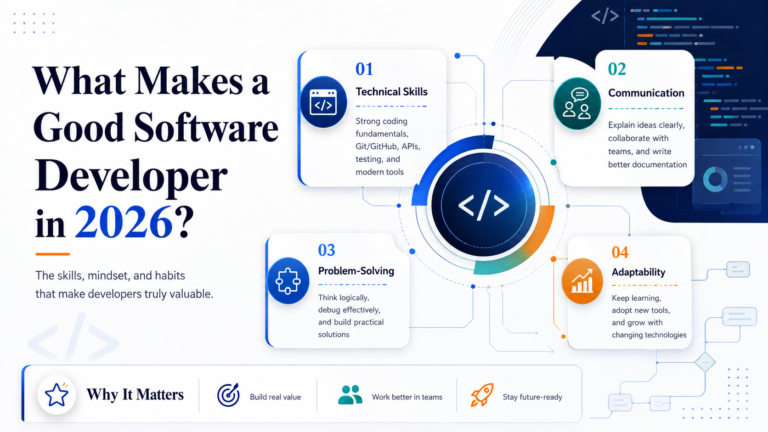
Recruiters focus on:
- Coding and problem-solving ability
- Project and internship experience
- Understanding of tools (Git, databases, frameworks)
- Communication and learning mindset
Degrees are used mainly as a screening requirement, while skills decide final selection.
Degree vs Skills: Real Case Examples
Case 1: Degree Without Skills
A student with a Computer Science degree but no projects struggles in interviews due to lack of practical exposure.
Case 2: Skills With Internship
A student with average academic scores but strong projects and internship experience gets hired quickly.
Case 3: Non-IT Background + Skills
A non-CS graduate with proper IT skills and live project experience enters the software industry successfully.
These cases clearly show that skills and experience outweigh marks and degrees.
Why Skill-Based Learning Wins in Software Jobs
Skill-based learning helps students:
- Clear technical interviews
- Perform confidently on the job
- Switch technologies easily
- Grow faster in their careers
Most IT roles involve solving real problems, not writing exam answers.
Role of Internships in Skill-Based Learning
Internships combine learning with real-world exposure.
Benefits of internships:
- Industry-level experience
- Resume and portfolio building
- Understanding team workflows
- Higher placement success
Internships convert skills into job-ready experience.
What Parents Need to Understand
Parents often prioritize degrees due to traditional thinking.
Reality parents should know:
- Companies test skills, not certificates
- Live projects matter more than marks
- Early internships improve job chances
A balanced approach of degree + skills gives the best results.
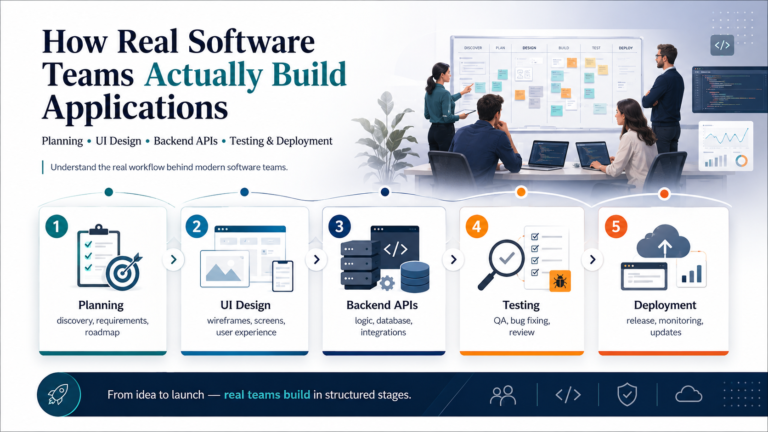
What Students Should Focus On (Clear Roadmap)
Step 1: Complete Your Degree
Do not ignore academics completely.
Step 2: Build Core IT Skills
Programming, databases, and problem-solving.
Step 3: Work on Projects
Projects prove your ability.
Step 4: Do Internships
Industry exposure is critical.
Step 5: Prepare for Interviews
Practice technical and communication skills.
How Skill-Based Training Institutes Help
Skill-based training institutes bridge the gap between college education and industry requirements.
Institutes like Forsk Coding School Jaipur focus on:
- Job-oriented IT training
- Live projects
- Internship integration
- Placement preparation
This approach aligns students with real industry expectations.
Final Thoughts
In the debate of skill-based learning vs degree-based learning, the clear winner in IT careers is skill-based learning—but not at the cost of a degree. The most successful professionals combine academic qualification with strong practical skills.
For students and parents planning an IT career in 2026, the right strategy is simple: earn the degree, build the skills, gain experience, and stay industry-ready.