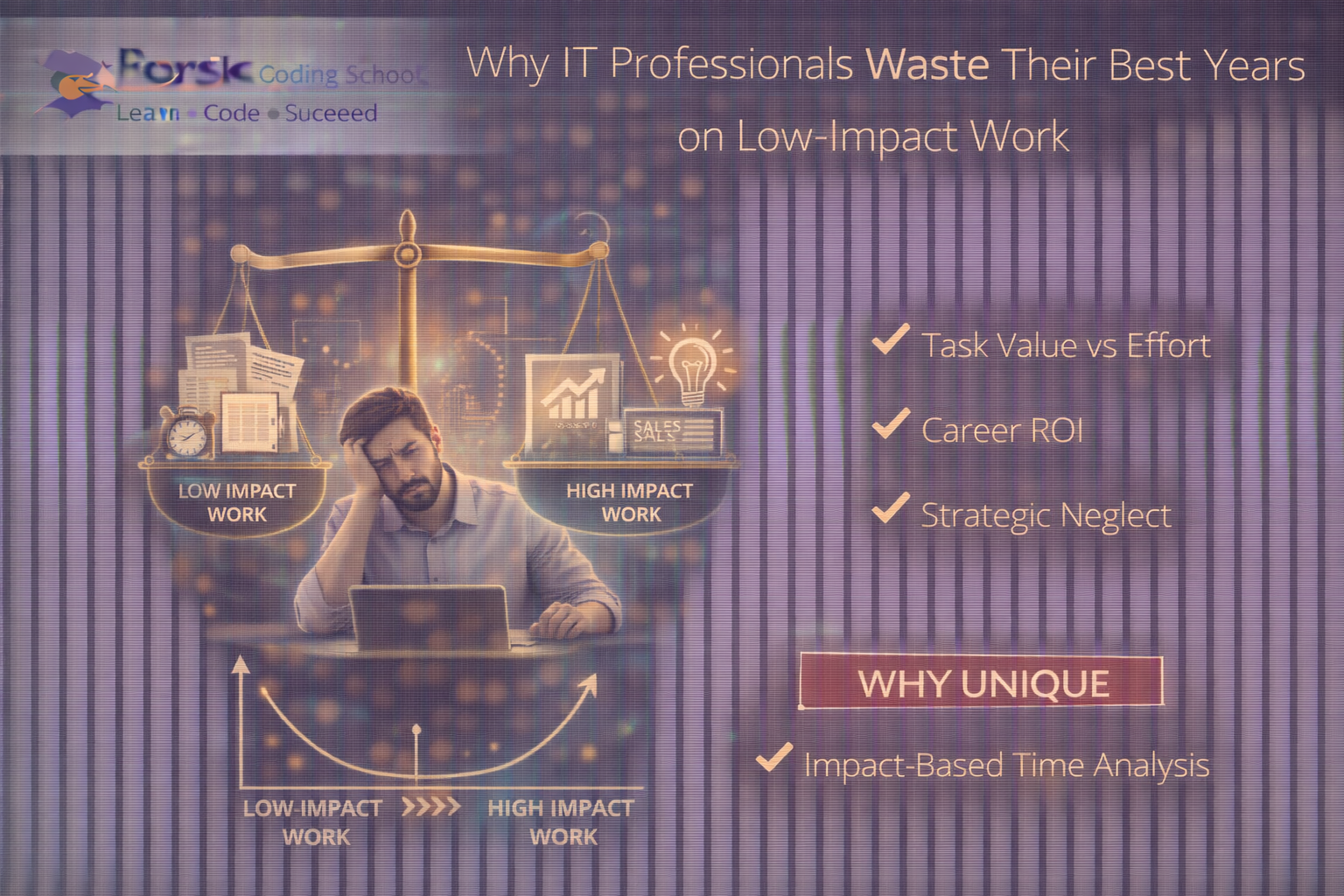
Many IT professionals work relentlessly during the most energetic and adaptable years of their careers. They deliver tasks, close tickets, meet deadlines, and stay busy for years. Yet when they look back, progress feels disproportionate to effort.
The problem is not laziness or lack of opportunity. It is low-impact work—effort spent on tasks that consume time and energy but create little long-term career value.
This blog explains why IT professionals waste their best years on low-impact work by examining task value vs effort, career ROI, and the role of strategic neglect. This is not about working less—it is about working on what compounds.
Task Effort vs Task Value
Not all work contributes equally to career growth.
Low-impact tasks:
- Keep systems running but do not improve capability
- Are easy to assign and easy to replace
- Reward compliance more than thinking
High-impact work:
- Improves decision-making ability
- Builds system-level understanding
- Creates leverage beyond the current role
Many professionals invest their highest effort in tasks with the lowest long-term value.
Career ROI: Effort Without Return
Career return on investment depends on what effort produces later.
Low-ROI work:
- Does not transfer across roles
- Teaches execution without judgment
- Stops paying dividends once the task ends
High-ROI work compounds by:
- Strengthening fundamentals
- Improving problem framing
- Increasing ownership scope
Busy years with low ROI feel productive—but leave little behind.
Why Low-Impact Work Is Hard to Escape
Low-impact work is deceptive because it:
- Creates constant urgency
- Feels responsible and safe
- Is often praised by management
Meanwhile, high-impact work:
- Requires thinking time
- Involves uncertainty
- Often goes unnoticed initially
Without intentional choice, professionals default to what is urgent—not what is valuable.
Strategic Neglect: The Missing Skill
Strategic neglect is the ability to consciously deprioritize work that does not compound.
This does not mean avoiding responsibility. It means:
- Saying no to repetitive low-learning tasks
- Limiting time spent on non-growth activities
- Protecting energy for high-impact learning and thinking
Careers accelerate when professionals neglect the right things.
How High-Impact Professionals Allocate Effort
They:
- Spend more time on fewer, harder problems
- Seek work that expands scope
- Invest in understanding systems, not just tasks
Their calendars look lighter—but their impact is heavier.
Long-Term Cost of Low-Impact Years
The real cost is not burnout—it is opportunity loss.
Years spent on low-impact work:
- Delay senior-level readiness
- Narrow future options
- Reduce adaptability
The best years are those when learning speed and energy are highest. How they are spent determines future ceilings.
Final Thoughts
IT professionals waste their best years on low-impact work when effort is disconnected from long-term value.
Career growth is not about doing more—it is about doing what compounds.
In IT, progress accelerates when effort is aligned with impact, not just activity.