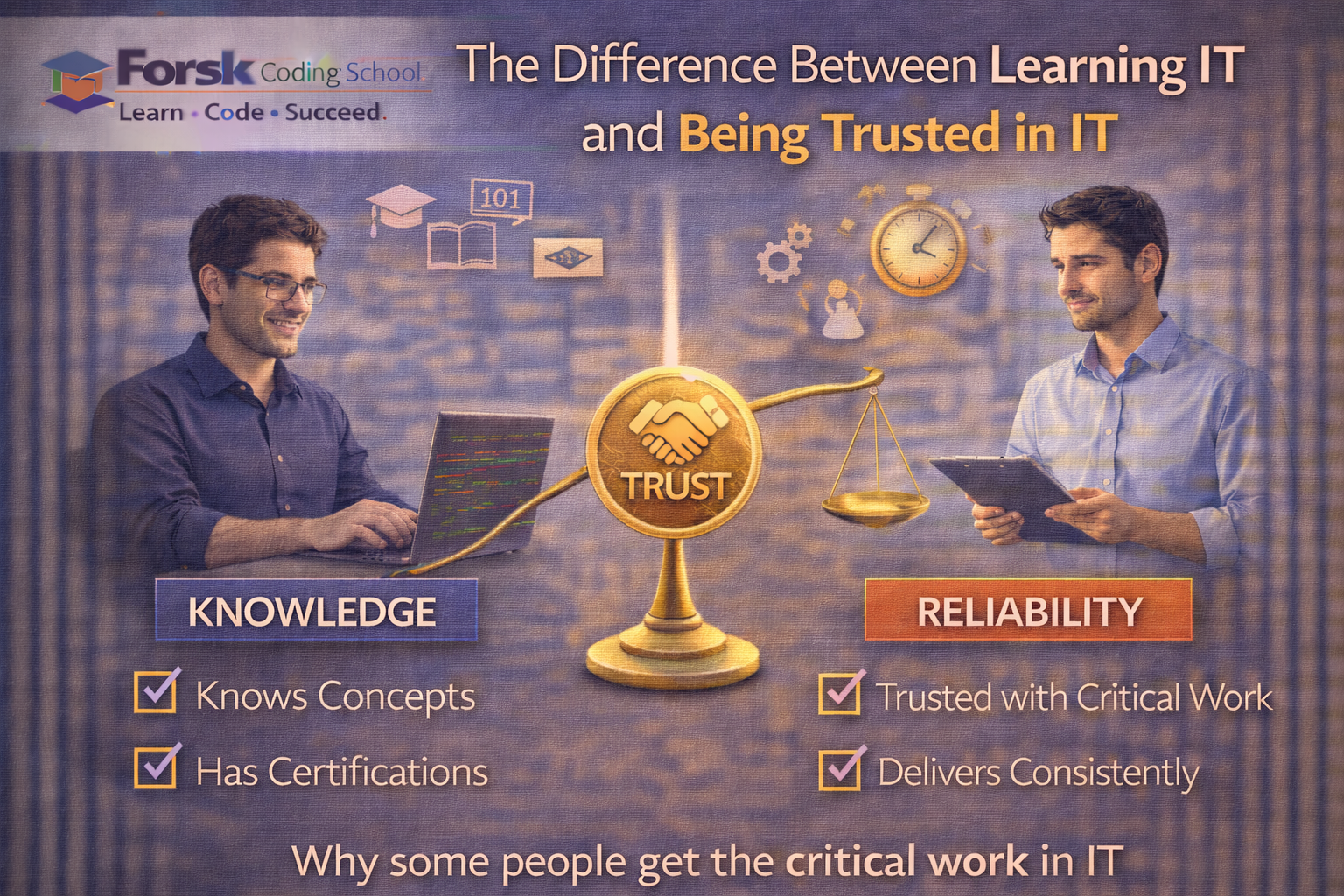
Many IT professionals spend years learning technologies, tools, and frameworks. They keep upgrading skills and adding certifications. Yet, inside real workplaces, they notice something confusing: some people get more important work, more freedom, and more influence—without being the most knowledgeable.
The reason is simple but rarely explained.
There is a big difference between learning IT and being trusted in IT.
This blog explains the gap between knowledge and reliability, why certain professionals are trusted with critical work, and how trust actually works in IT workplaces.
Learning IT: Knowledge and Capability
Learning IT focuses on:
- Tools and technologies
- Syntax and frameworks
- Courses and certifications
This stage is about capability—what you can do.
Learning is essential, but it only answers one question:
“Can this person do the task?”
Being Trusted in IT: Reliability and Judgment
Trust answers a different question:
“Will this person handle the responsibility properly?”
Trusted professionals are valued for:
- Consistency
- Judgment
- Ownership
- Predictability under pressure
Trust is about how you behave, not just what you know.
Knowledge vs Reliability in Real Workplaces
Knowledge Without Reliability
Some professionals:
- Know a lot
- Learn fast
- Speak confidently
But they:
- Miss deadlines
- Communicate late
- Escalate problems too late
Over time, they stop receiving critical work.
Reliability With Average Knowledge
Others may:
- Know fewer tools
- Learn at a steady pace
But they:
- Deliver consistently
- Communicate risks early
- Handle pressure calmly
They become the go-to people.
Why Some People Get Critical Work
Critical work is given to those who:
- Reduce uncertainty
- Protect outcomes
- Don’t create surprises
Managers value risk reduction more than brilliance.
Trust grows when someone repeatedly proves they are safe to rely on.
The Psychology of Trust at Work
Trust is built when people feel:
- Confident in your follow-through
- Safe from last-minute surprises
- Assured you’ll speak up early
This psychological comfort matters more than technical perfection.
Why Learning Alone Does Not Create Trust
Learning focuses inward:
- What do I know?
Trust focuses outward:
- How do others experience working with me?
Without reliability, knowledge stays underutilized.
How to Move From Learning to Being Trusted
- Deliver what you commit
- Communicate delays early
- Ask questions before problems grow
- Take ownership beyond tasks
These habits turn learners into trusted professionals.
What Parents and Freshers Should Understand
Parents often think:
- “My child knows IT, so they will succeed.”
But workplaces reward:
- Dependability
- Responsibility
- Emotional stability
Knowledge gets entry.
Trust drives growth.
Final Takeaway
Learning IT makes you capable.
Being trusted in IT makes you valuable.
Careers grow fastest not for those who know the most—but for those who can be relied on without worry.
In IT workplaces, trust is not given for intelligence—it is earned through reliability.