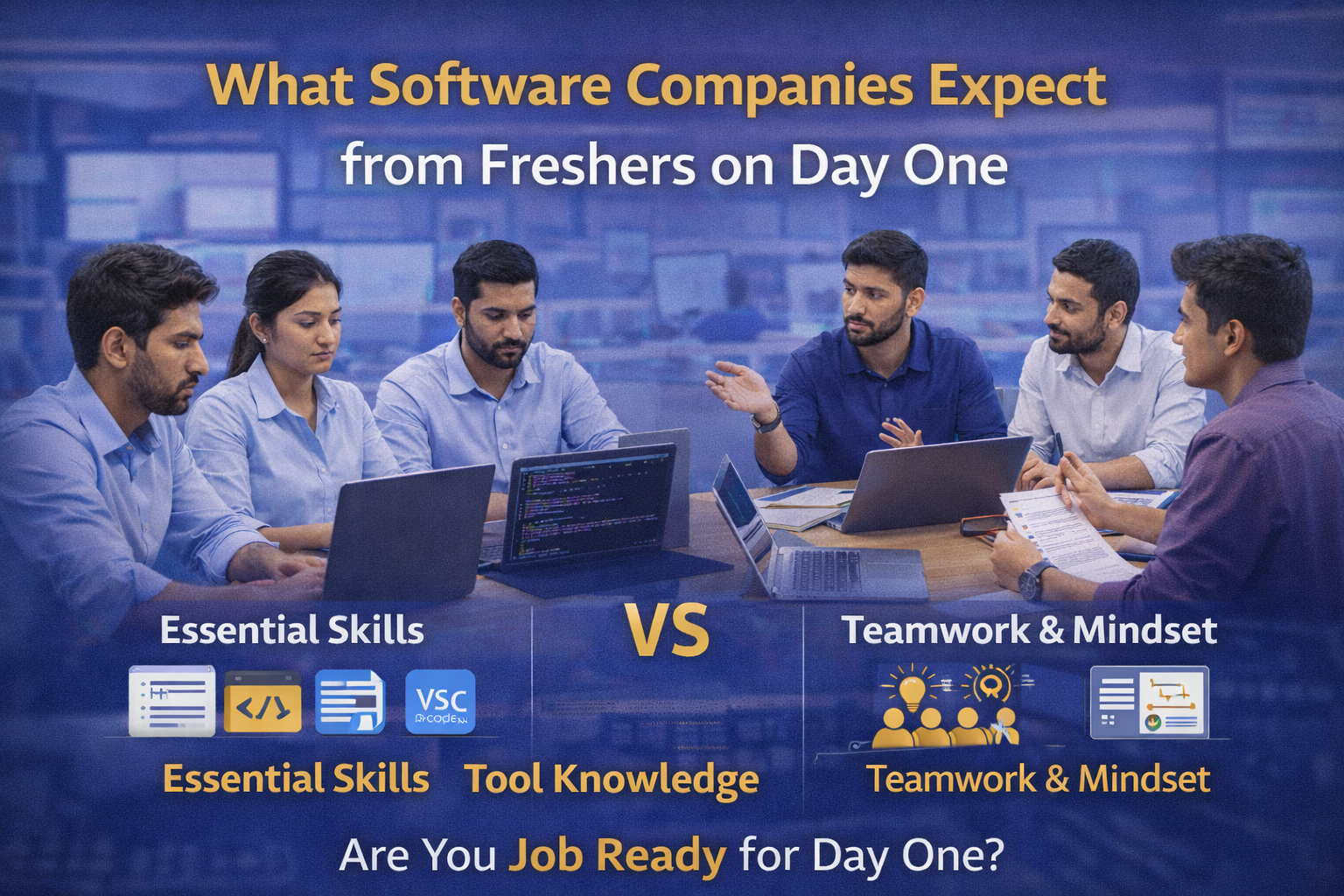
One of the biggest fears freshers have after getting an IT job is “Will I be able to perform from day one?”. In 2026, software companies no longer expect freshers to know everything, but they do expect the right skills, mindset, and basic readiness.
If you are searching for clarity on software fresher skills or want to understand IT industry expectations, this blog explains the real expectations of software companies, the tools freshers should know, the right mindset, and why live project exposure matters.
The Reality of Day-One Expectations in IT Companies
Contrary to common myths, software companies do not expect freshers to behave like senior developers on day one.
What companies actually expect:
- Willingness to learn
- Strong fundamentals
- Ability to understand tasks
- Discipline and professionalism
Freshers who meet these expectations grow quickly inside the company.
Core Skills Software Companies Expect from Freshers
These are the must-have skills every fresher should focus on.
1. Programming Fundamentals
Freshers should have basic command over at least one language:
- C / C++ (logic & DSA)
- Java (backend & enterprise)
- Python (automation, data, scripting)
Strong fundamentals matter more than advanced syntax.
2. Problem-Solving Ability
Companies value:
- Logical thinking
- Breaking problems into steps
- Debugging simple issues
They want freshers who try to solve problems, not panic.
3. Understanding of Software Basics
Freshers should understand:
- How applications work
- Basic database concepts
- APIs and data flow
- Version control basics
This helps them quickly adapt to real projects.
Tools Every Fresher Should Know (Minimum)
You don’t need to master every tool, but basic familiarity is expected.
Commonly used tools:
- Code editor (VS Code / IDE)
- Git & GitHub
- Database basics (MySQL / PostgreSQL)
- Debugging tools
- Issue tracking tools (Jira-like systems)
Knowing these tools makes onboarding much smoother.
Mindset Matters More Than You Think
Many freshers fail not because of lack of skills, but because of the wrong mindset.
Right mindset companies expect:
- Openness to feedback
- Willingness to learn new technologies
- Asking questions when stuck
- Responsibility toward tasks
A positive learning attitude is highly valued.
Why Live Project Exposure Is a Big Advantage
Freshers with live project experience adapt faster to company environments.
Benefits of live projects:
- Familiarity with real workflows
- Confidence in handling tasks
- Better communication with team members
- Less training time required
This is why companies prefer candidates who have completed internships or project-based training.
Common Mistakes Freshers Make on Day One
Avoid these mistakes:
- Pretending to know everything
- Fear of asking questions
- Ignoring basics
- Poor communication
- Lack of discipline
Awareness of these mistakes helps freshers perform better.
How Freshers Can Prepare Before Joining a Company
Step 1: Strengthen Fundamentals
Focus on one programming language and core concepts.
Step 2: Learn Basic Tools
Practice Git, debugging, and databases.
Step 3: Work on Live Projects
Even small real-world projects help.
Step 4: Develop the Right Attitude
Be curious, humble, and consistent.
Role of Job-Oriented Training
Job-oriented training programs help freshers bridge the gap between college learning and industry expectations.
Such programs focus on:
- Practical skills
- Live projects
- Internship exposure
- Industry tools
Institutes like Forsk Coding School Jaipur design training aligned with real IT industry needs.
Final Thoughts
On day one, software companies expect freshers to be prepared, adaptable, and willing to learn—not perfect. Strong fundamentals, basic tool knowledge, the right mindset, and live project exposure make a huge difference.
If you want to meet IT industry expectations and succeed as a fresher, start preparing early with skill-based learning and real project experience.