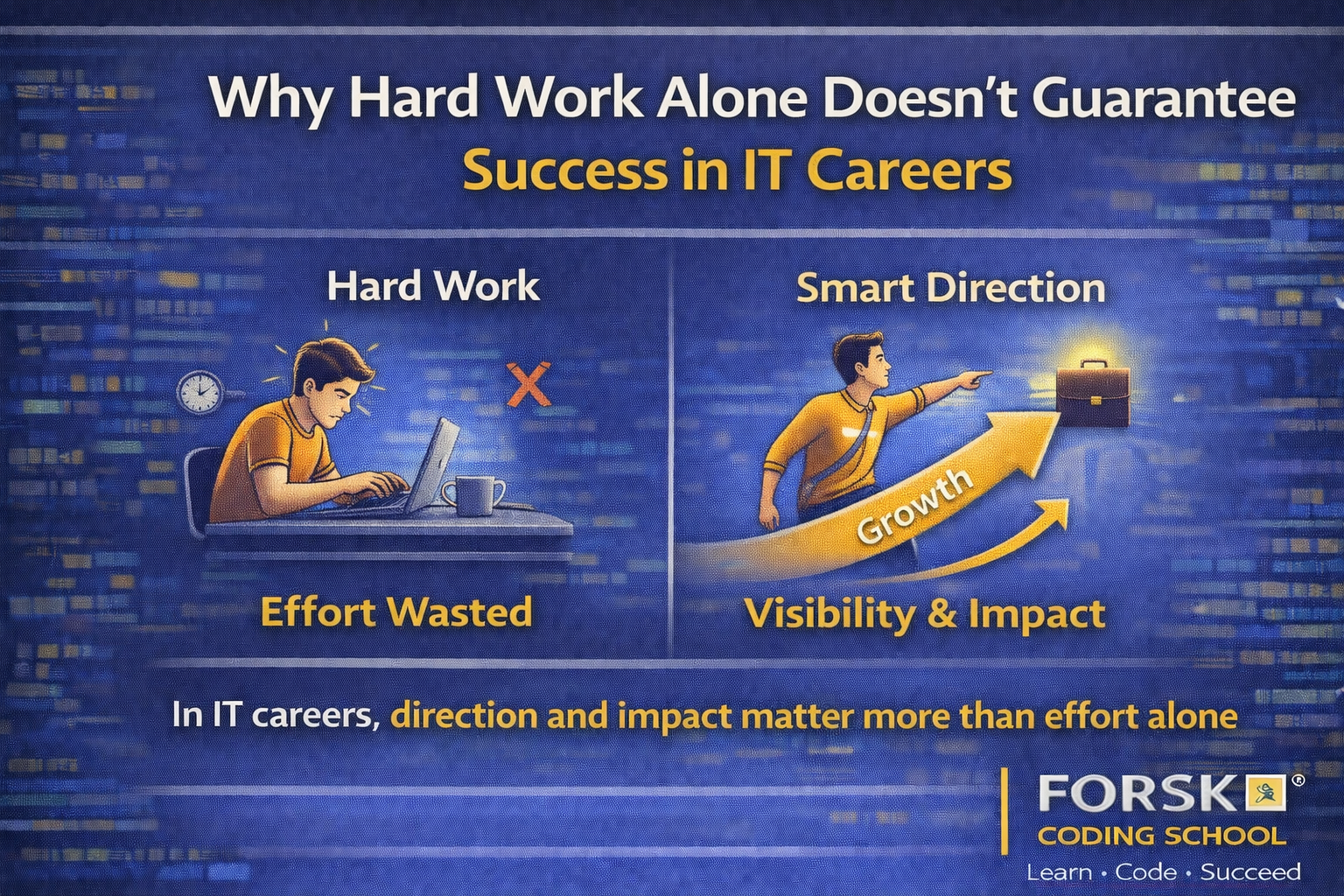
In colleges, toppers are seen as future leaders, while average students are often underestimated. But in real IT workplaces, this pattern frequently reverses. Many average students outperform academic toppers once they enter jobs.
This blog explains why this happens, what companies actually value, and how students can use this insight to build a strong IT career.
Academic Marks vs Workplace Reality
College success is based on:
- Exams
- Memory-based performance
- Syllabus boundaries
IT jobs demand:
- Problem solving
- Adaptability
- Continuous learning
Marks stop mattering the day work begins.
Why Average Students Adapt Faster
Average students often:
- Ask more questions
- Accept feedback easily
- Learn from mistakes
This adaptability helps them grow faster in real projects.
Ego vs Learning Mindset
Toppers sometimes struggle due to:
- Fear of looking wrong
- Overconfidence in theory
- Resistance to relearning
Average students usually focus on learning, not protecting image.
Real Skills Beat Perfect Scores
IT companies reward:
- Practical implementation
- Debugging ability
- Team collaboration
Hands-on skills outperform academic excellence.
Communication and Ownership Matter
Average students often:
- Communicate clearly
- Take responsibility
- Work well in teams
These traits directly impact promotions and trust.
What This Means for Students
Your college rank does not decide your IT future. What matters is:
- Skill depth
- Learning speed
- Professional attitude
Anyone willing to adapt can succeed.
Final Thoughts
IT careers reward growth mindset over grades. Average students who stay curious, flexible, and responsible often surpass toppers in long-term success.
Your progress matters more than your past performance.
The Difference Between a Job and a Career in IT
Many IT professionals start their journey with a simple goal: getting a job. While there is nothing wrong with this, problems begin when people spend years treating their IT role only as a job and not as a long-term career.
This blog explains the critical difference between a job mindset and a career mindset in IT—and why this difference decides growth, stability, and long-term success.
What Is a Job in IT?
A job-focused mindset usually means:
- Working only for salary
- Doing assigned tasks without curiosity
- Avoiding responsibility beyond the role
- Thinking short-term
A job helps you survive—but rarely helps you grow.
What Is a Career in IT?
A career-focused mindset means:
- Building skills deliberately
- Understanding long-term growth paths
- Taking ownership of outcomes
- Thinking beyond current designation
A career helps you compound skills and value over time.
Why Job Thinking Limits Growth
When professionals focus only on salary:
- Learning slows down
- Skill relevance drops
- Career stagnation begins
Short-term thinking creates long-term limits.
How Career Thinking Changes Everything
Career-focused professionals:
- Invest in the right skills
- Seek mentorship
- Understand industry demand
- Prepare for future roles
They grow even when companies change.
Real-Life Example
Two IT professionals join at the same time. One focuses only on pay hikes. The other focuses on skill depth and ownership. After 4–5 years, their career paths look completely different.
Growth favors long-term thinkers.
How to Shift from Job Mindset to Career Mindset
Start by:
- Setting a 3–5 year vision
- Choosing skills strategically
- Taking responsibility for learning
- Measuring progress beyond salary
Final Thoughts
Jobs pay bills. Careers build futures.