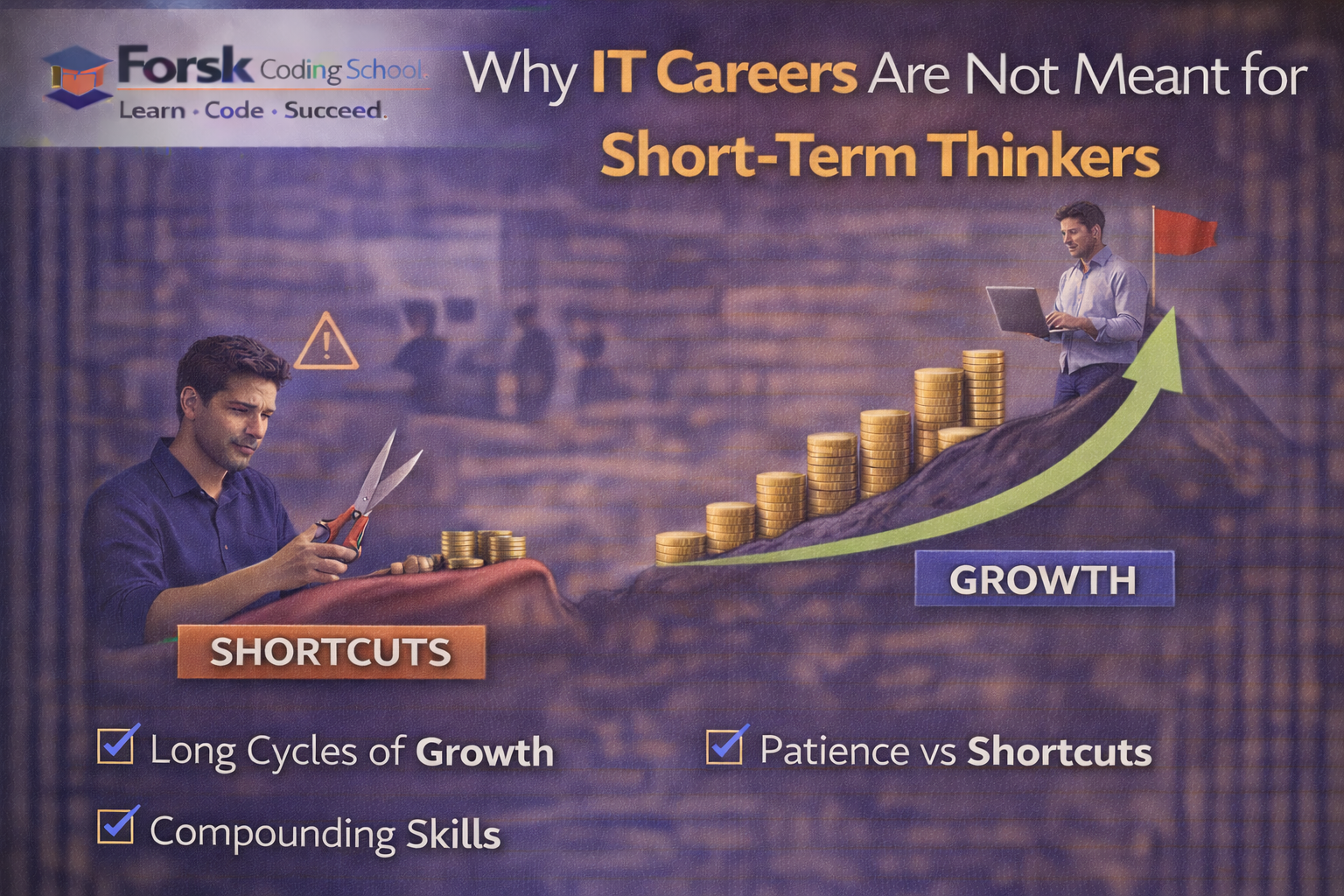
The IT industry often attracts people with promises of quick growth, high salaries, and fast success. Social media highlights overnight achievements, rapid promotions, and sudden breakthroughs. But this creates a dangerous misunderstanding.
The truth is simple: IT careers are not built for short-term thinkers.
Real IT growth happens over long cycles. Skills compound slowly, experience accumulates quietly, and meaningful progress requires patience. This blog explains why shortcuts fail, how compounding works in IT careers, and why long-term thinking is essential for sustainable success.
The Illusion of Fast Success in IT
Many professionals enter IT expecting:
- Quick promotions
- Immediate recognition
- Rapid salary jumps
When these don’t happen, frustration sets in.
But what looks like slow progress is often invisible foundation building.
IT Career Growth Happens in Long Cycles
Learning Before Earning
In IT, effort often comes years before visible rewards.
Early stages focus on:
- Understanding systems
- Making mistakes
- Building problem-solving ability
Results show later—not immediately.
Breakthroughs Are Delayed
Most strong IT professionals:
- Struggled silently for years
- Looked average early on
- Accelerated only after fundamentals settled
Short-term thinkers quit right before growth compounds.
The Power of Compounding Skills
Small Improvements Add Up
Consistent learning:
- Improves decision-making
- Increases adaptability
- Reduces relearning time
Each year builds on the previous one.
Compounding Is Invisible at First
Just like investments, skill compounding:
- Feels slow initially
- Accelerates later
- Rewards consistency
Those who stay patient benefit disproportionately.
Why Shortcuts Don’t Work in IT
Short-term strategies include:
- Chasing trends blindly
- Switching roles too quickly
- Learning tools without fundamentals
These create movement—but not progress.
Patience vs Shortcuts
What Patience Looks Like
Long-term thinkers:
- Stick with fundamentals
- Accept slow phases
- Improve depth over speed
What Shortcuts Lead To
Shortcuts often cause:
- Shallow skills
- Career instability
- Repeated restarts
Fast moves today often create slow careers later.
Realistic Expectations for IT Professionals
A healthy IT mindset understands:
- Growth is uneven
- Plateaus are normal
- Careers span decades
Success is measured in years, not months.
Who Thrives Long-Term in IT
Professionals who succeed:
- Think long-term
- Invest patiently
- Adapt without panic
- Avoid comparison traps
They don’t rush—they endure.
Final Takeaway
IT careers reward patience more than speed.
Those who chase short-term wins often burn out or stagnate.
Those who think long-term build resilient, adaptable, and rewarding careers.
In IT, time is not the enemy—impatience is.
A successful IT career is a long game, not a quick sprint.