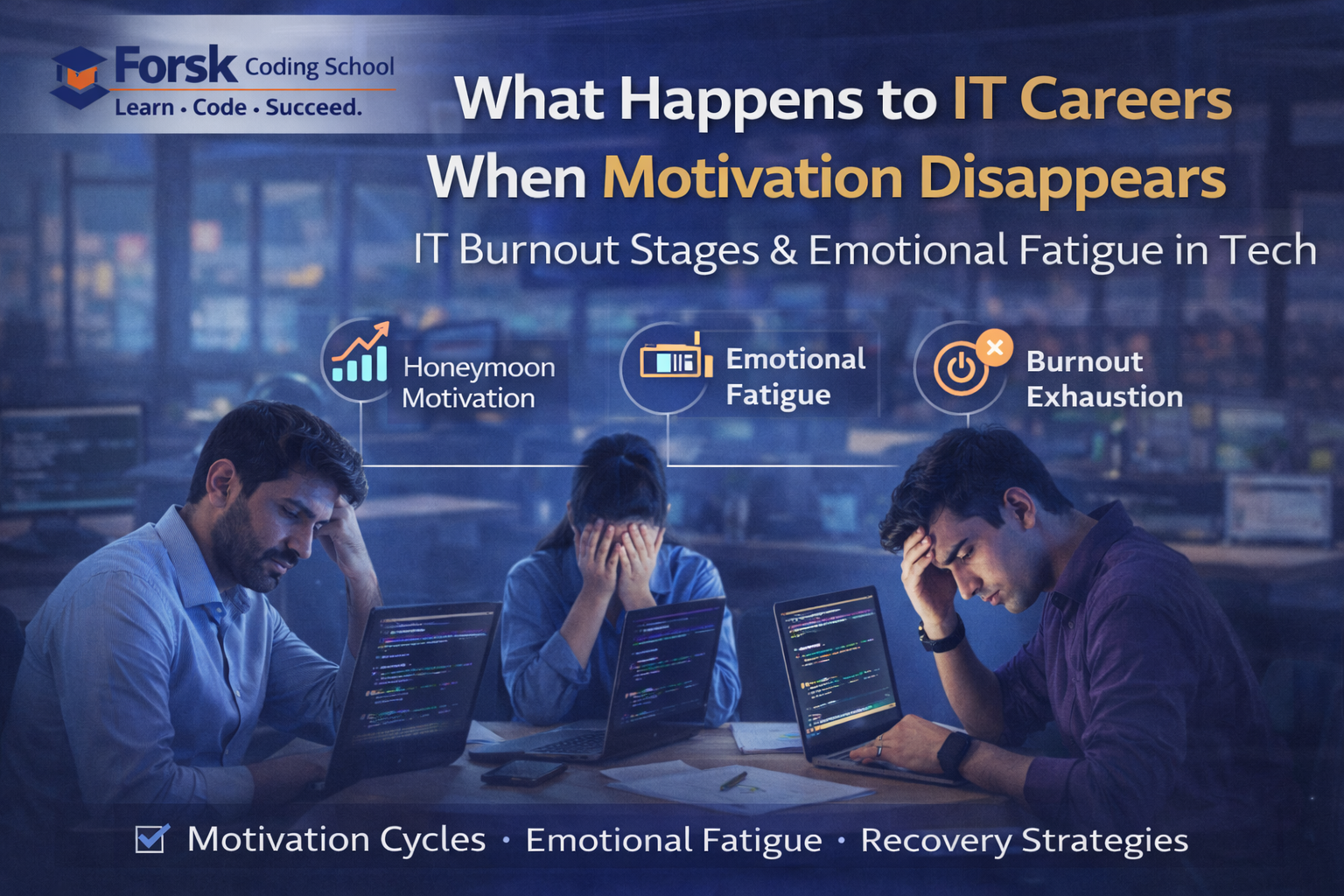
In the early years of an IT career, motivation feels automatic. New technologies excite you, problems feel like puzzles, and long hours seem justified by growth. But for many professionals, a phase arrives where that internal drive quietly fades. This loss of motivation is rarely sudden. It builds slowly through emotional fatigue, repeated pressure, and unmet expectations. Understanding what really happens to IT careers when motivation disappears is the first step toward long-term psychological longevity.
Motivation in IT Is Cyclical, Not Constant
Motivation in IT does not move in a straight line. It works in cycles. At the beginning of a project or role, learning and novelty create energy. Over time, repetition replaces curiosity, deadlines replace exploration, and responsibility increases without proportional control. This natural cycle is often misunderstood. Professionals assume something is “wrong” with them, when in reality they are experiencing a normal motivation dip.
The danger begins when these cycles are ignored. Continuous output without emotional recovery pushes professionals closer to burnout stages rather than renewal.
Early Signs of IT Career Motivation Loss
IT career motivation loss usually shows emotional symptoms before performance drops. Professionals start feeling mentally tired even after sufficient rest. Small issues trigger frustration. Learning new tools feels like a burden instead of an opportunity. Many still perform well, but the internal satisfaction is missing.
At this stage, most people push harder instead of pausing. They compensate with longer hours, caffeine, or constant upskilling, which accelerates emotional fatigue instead of solving it.
Understanding the Stages of IT Burnout
Burnout is not a single moment; it progresses through stages. The first stage is overcommitment, where professionals take pride in being constantly busy. The second stage is emotional exhaustion, where energy drops but expectations remain high. The third stage is detachment, where work feels meaningless and connection to outcomes disappears.
In advanced burnout stages, even high salaries and job security fail to restore motivation. This is where many IT careers stagnate or derail, not due to lack of skill, but due to depleted emotional reserves.
Emotional Fatigue vs Skill Fatigue
A critical misunderstanding in IT careers is confusing emotional fatigue with skill fatigue. Most professionals think they are tired because their skills are outdated. In reality, they are emotionally overloaded. Continuous problem-solving, production pressure, and accountability drain mental energy even if technical competence remains strong.
This is why switching technologies or companies without emotional recovery often fails. The environment changes, but the fatigue travels with the professional.
Impact on Long-Term Career Growth
When motivation disappears, decision-making quality declines. Professionals stop thinking long-term and start choosing short-term comfort. They avoid leadership roles, resist responsibility, or remain stuck in familiar tasks. Over time, this limits growth and reduces career optionality.
Ironically, the most capable professionals are often the ones who burn out silently, because they carry more responsibility without expressing emotional strain.
Recovery Strategies That Actually Work
Recovery does not mean quitting IT or taking a long break without direction. Effective recovery starts with redefining success. Instead of measuring value only by output or salary, professionals must reconnect with impact, learning quality, and autonomy.
Reducing cognitive overload is essential. This includes setting boundaries, limiting parallel projects, and allowing mental rest without guilt. Skill-building should shift from reactive learning to intentional learning aligned with long-term goals.
Mentorship also plays a crucial role. Talking to someone who has survived similar cycles normalizes the experience and restores perspective. Motivation often returns not as excitement, but as calm clarity.
Building Psychological Longevity in IT
Long IT careers are not built on constant hustle. They are built on sustainable rhythms. Professionals who last decades learn when to push and when to pause. They accept motivation dips as signals, not failures.
Psychological longevity comes from self-awareness, not constant ambition. When motivation disappears, it is not the end of an IT career. It is often an invitation to redesign it more sustainably.
Final Thoughts
IT career motivation loss is more common than openly discussed. Burnout stages develop quietly, but recovery is possible with the right mindset and strategies. Careers do not end when motivation fades; they end when fatigue is ignored. Those who learn to manage motivation cycles build not just successful careers, but resilient ones.