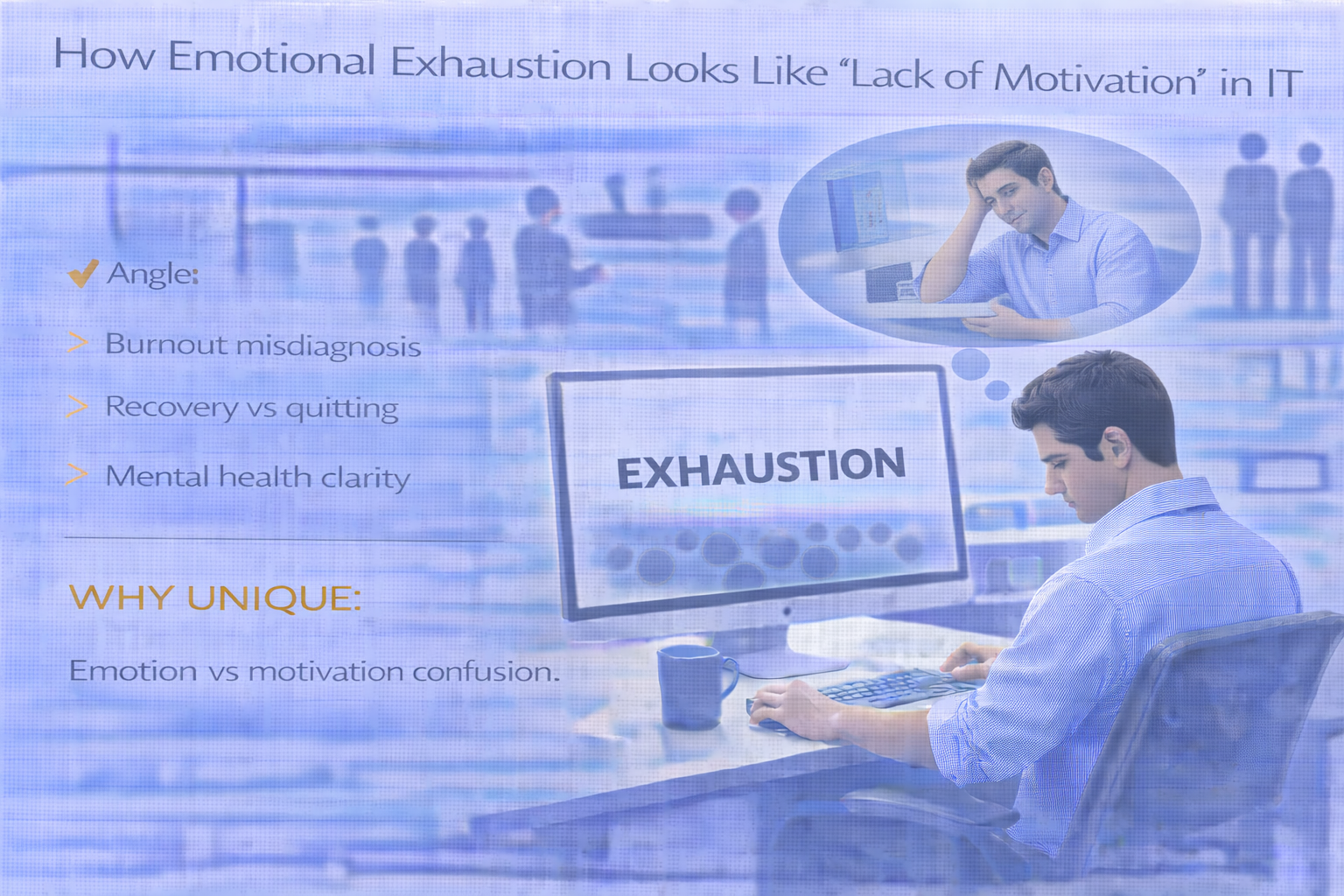
In the IT industry, motivation is often treated as a personal responsibility. When productivity drops or enthusiasm fades, professionals are quickly labeled as “unmotivated.” However, in many cases, what looks like lack of motivation is actually emotional exhaustion.
This blog explores how burnout is misdiagnosed as laziness, why recovery is often mistaken for quitting, and how mental health clarity can change IT career outcomes.
Burnout Misdiagnosis: When Exhaustion Is Mistaken for Apathy
Emotional exhaustion doesn’t announce itself loudly. It shows up quietly as:
- Reduced enthusiasm
- Difficulty concentrating
- Emotional numbness
- Avoidance of new tasks
In IT, these symptoms are often misread as:
- Loss of ambition
- Poor work ethic
- Disinterest in growth
The truth is that exhausted professionals don’t lack motivation—they lack emotional energy. Treating exhaustion as a motivation problem only deepens burnout.
Why Emotional Exhaustion Is Common in IT
IT careers demand constant cognitive effort:
- Continuous learning
- High problem-solving intensity
- Tight deadlines
- Always-on availability
Over time, this creates emotional overload. Unlike physical fatigue, emotional exhaustion isn’t fixed by short breaks or weekend rest. Without proper recovery, motivation appears to disappear.
Recovery vs Quitting: A Dangerous Confusion
Many IT professionals believe:
- “If I slow down, I’m falling behind”
- “Needing rest means I’m weak”
- “If I’m not motivated, maybe this career isn’t for me”
This mindset turns recovery into guilt. Instead of restoring energy, professionals consider quitting roles—or entire careers—when what they actually need is recovery.
Mental Health Clarity: Separating Emotion from Drive
Motivation is a result, not a resource. Emotional health fuels motivation.
When emotional exhaustion is addressed:
- Curiosity returns
- Learning feels lighter
- Initiative slowly rebuilds
- Confidence stabilizes
Mental health clarity helps professionals understand that loss of motivation is often a signal—not a failure.
How to Respond to Emotional Exhaustion in IT
Effective responses include:
- Reducing cognitive overload temporarily
- Setting boundaries around availability
- Taking low-pressure wins
- Seeking professional or peer support
Recovery restores motivation naturally. Forcing motivation without recovery accelerates burnout.
Final Thoughts
In IT careers, emotional exhaustion often disguises itself as lack of motivation. This confusion leads to unnecessary self-criticism and premature career decisions.
When professionals learn to distinguish between emotional depletion and motivational loss, careers become sustainable—not just successful.
Sometimes, the solution isn’t to push harder—it’s to recover smarter.