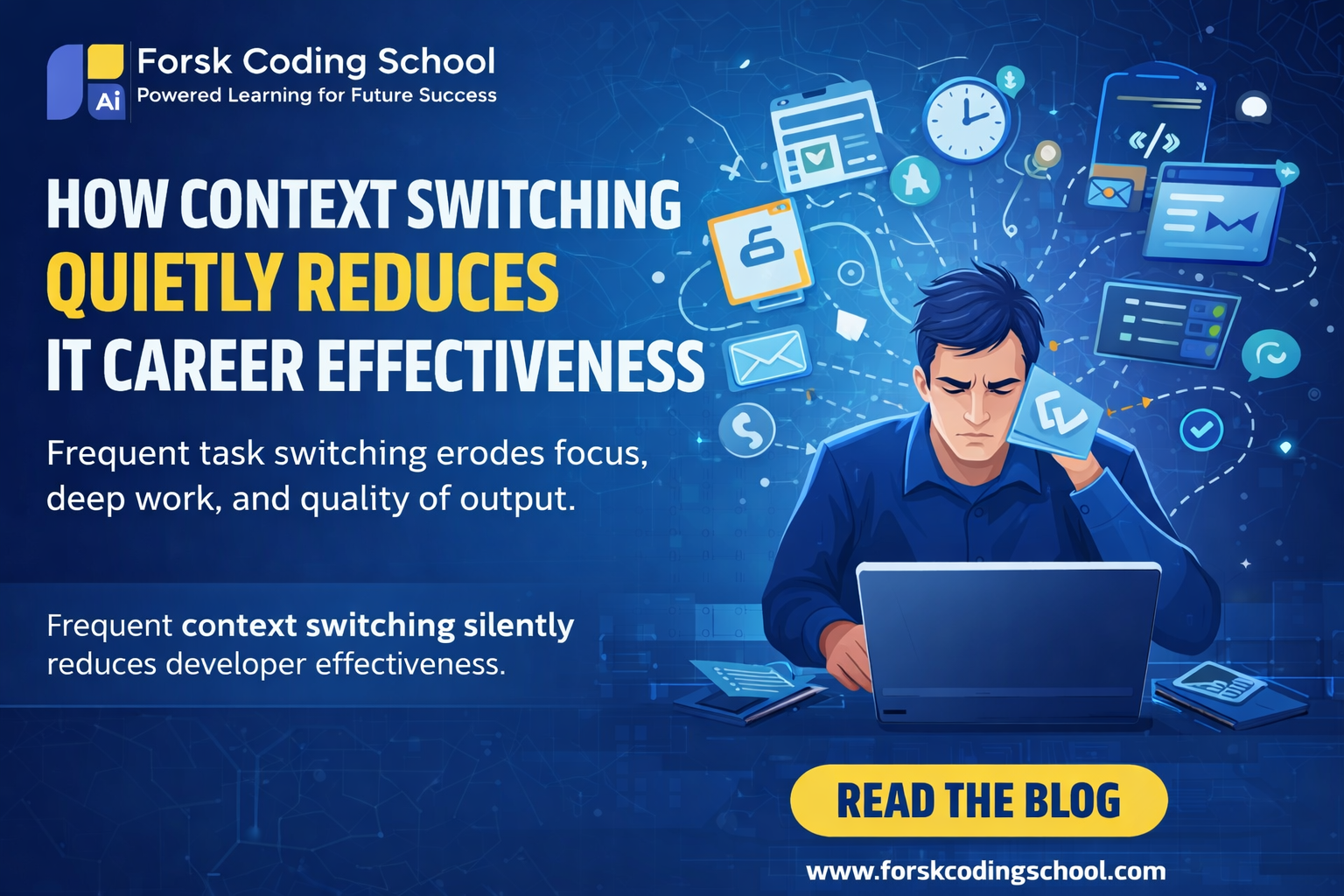
In modern IT environments, multitasking is often celebrated as a productivity skill. Developers reply to messages while coding, attend meetings between debugging sessions, and constantly switch between tools and tasks. On the surface, this looks efficient. In reality, context switching silently erodes performance, learning speed, and long-term career growth.
Most IT professionals do not fail because they lack skills — they struggle because their attention is fragmented.
What Is Context Switching?
Context switching occurs when your brain shifts from one task to another. Every time a developer moves from coding to Slack, from debugging to email, or from architecture thinking to meetings, the brain must unload and reload mental context.
This process has a hidden cognitive cost.
Research in cognitive science shows that after a switch, the brain takes time to regain full focus. During this recovery window, work quality drops and errors increase.
The Invisible Switching Tax
Unlike obvious distractions, context switching feels productive because you are still “working.” But behind the scenes, it creates a compounding productivity loss.
Common switching patterns in IT jobs include:
- Coding interrupted by team messages
- Frequent standups and sync meetings
- Handling multiple tickets simultaneously
- Jumping between different tech stacks
- Constant notification checking
Each switch may only cost a few minutes, but across a full day, the loss becomes massive.
How Deep Work Gets Destroyed
High-quality IT work — such as system design, debugging complex issues, and writing clean architecture — requires deep cognitive immersion.
When context switching increases:
- Problem-solving depth reduces
- Logical continuity breaks
- Code quality declines
- Learning becomes surface-level
Many professionals think they need better time management. In reality, they need better attention protection.
Quality Decline: The Hidden Career Risk
The biggest danger of excessive context switching is not just slower work — it is declining work quality.
Over time, professionals may notice:
- More bugs in their code
- Shallow understanding of frameworks
- Difficulty handling complex systems
- Increased rework and technical debt
This directly impacts career growth because senior roles demand sustained deep thinking, not fragmented execution.
Why Modern IT Work Makes It Worse
Today’s IT ecosystem is optimized for speed and communication, not cognitive depth. Tools like Slack, Teams, Jira, and email create an always-on work culture.
Additionally:
- Agile ceremonies increase interruptions
- Remote work increases message dependency
- Multiple project ownership increases switching
- Rapid tech changes increase cognitive load
Without conscious control, professionals operate in a permanent partial-attention mode.
Signs You Are Losing to Context Switching
You may be experiencing high switching costs if:
- You reread the same code multiple times
- Simple tasks take longer than expected
- You feel busy but not productive
- Deep work feels harder than before
- Learning new concepts takes more time
Recognizing these signals early can prevent long-term career slowdown.
How High Performers Minimize Switching
Top IT professionals treat attention as a protected resource. Instead of reacting constantly, they design their workflow intentionally.
Practical strategies include:
1. Batch Communication Windows
Check Slack, email, and messages at fixed times instead of continuously.
2. Protect Deep Work Blocks
Reserve uninterrupted time for coding, architecture, and learning.
3. Limit Work in Progress
Avoid handling too many tickets or tasks simultaneously.
4. Disable Non‑Critical Notifications
Reduce unnecessary cognitive interruptions.
5. Align Tasks by Cognitive Mode
Group similar work (coding, reviewing, meetings) together.
Final Thoughts
In the modern IT career landscape, the biggest productivity killer is not lack of effort — it is fragmented attention. Context switching quietly taxes your brain, slows your growth, and reduces the quality of your work.
At Jaipur Engineers and GrootLearning, we train students not just in technologies but in professional work habits that support deep focus and real industry performance.
If you want to grow faster in IT, start managing your attention as seriously as your time.