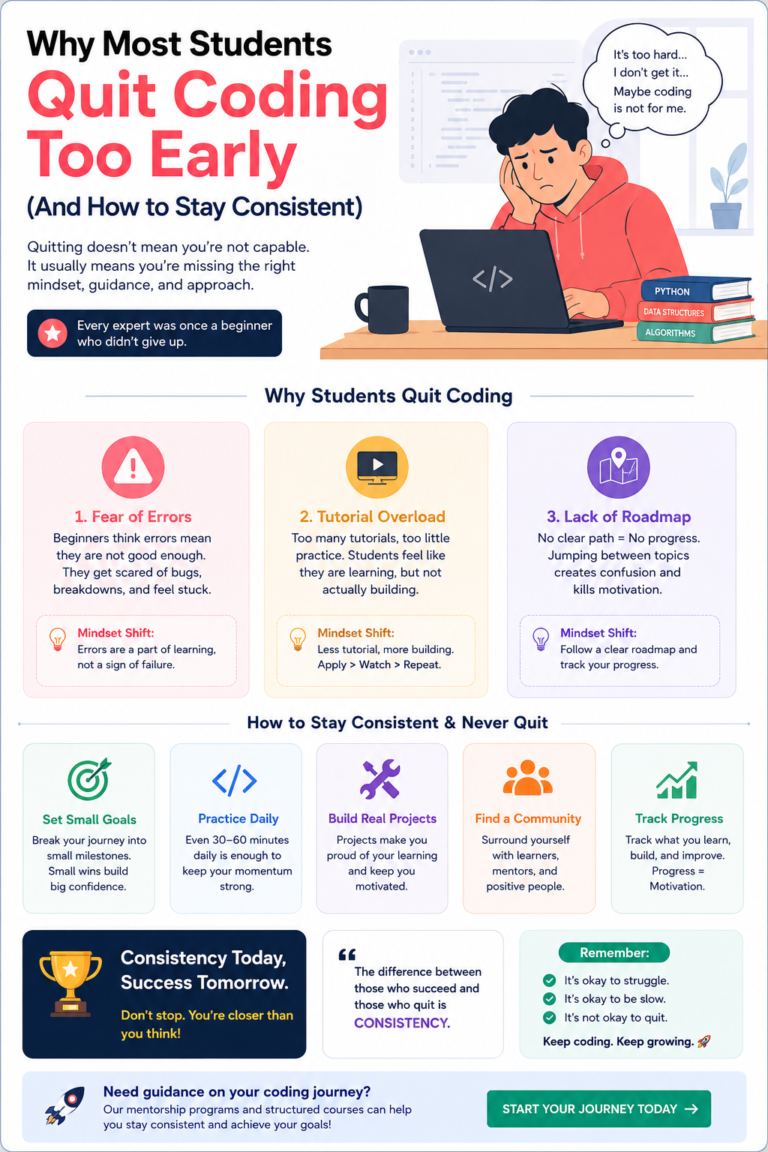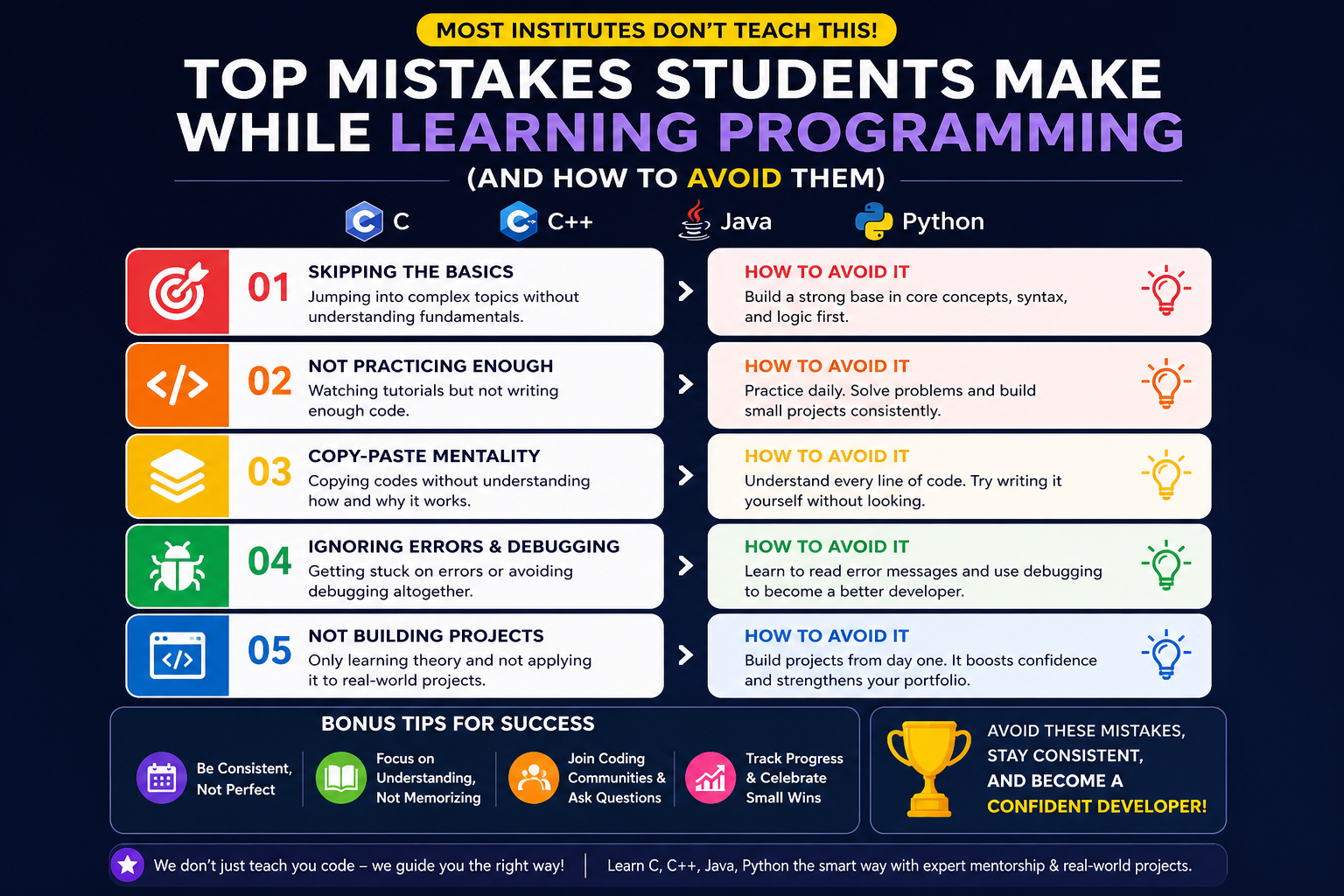
Most institutes don’t teach this—but the biggest reason students fail in programming is not lack of intelligence, it’s following the wrong approach.
Whether you are learning C, C++, Java, or Python, avoiding common mistakes can save you months of confusion and help you become job-ready faster.
Mistake 1: Learning Syntax Without Understanding Logic
Many students focus only on syntax instead of logic.
They memorize code but don’t understand how it works.
How to Avoid:
- Focus on problem-solving
- Practice writing logic before coding
- Understand “why” behind every concept
Mistake 2: Skipping Core Programming Fundamentals
Students often jump directly into advanced technologies without learning basics like:
- C Programming
- C++ (Data Structures basics)
- Java fundamentals
How to Avoid:
- Start with core programming
- Build strong foundation
- Practice basic problems daily
Mistake 3: Not Practicing Enough
Programming is a skill, not just theory.
Watching tutorials without practice leads to zero progress.
How to Avoid:
- Code daily
- Solve problems regularly
- Build small programs
Mistake 4: Ignoring Real Projects
Students focus only on courses and certificates but don’t build projects.
How to Avoid:
- Start with small projects
- Gradually build real-world applications
- Create a portfolio
Projects are proof of your skills.
Mistake 5: Jumping Between Technologies
Many beginners switch between:
- Python today
- Java tomorrow
- Web development next week
This creates confusion and no depth.
How to Avoid:
- Choose one path
- Stick to it for a few months
- Build consistency
Mistake 6: Not Understanding Industry Requirements
Students learn what is taught, not what industry needs.
How to Avoid:
- Focus on job-oriented skills
- Learn tools used in companies
- Understand real-world use cases
Mistake 7: Lack of Guidance
Without proper guidance, students waste time on the wrong path.
How to Avoid:
- Follow a structured roadmap
- Learn from mentors
- Avoid random learning
The Right Approach to Learning Programming
To become job-ready:
- Start with C, C++, or Java for fundamentals
- Practice consistently
- Build real projects
- Learn industry tools
- Prepare for interviews
Final Thoughts
Programming is not difficult—but the wrong approach makes it seem difficult.
If you avoid these common mistakes and follow a structured path, you can learn programming faster and build a successful career.
Focus on skills, practice, and real-world learning—not just completing courses.