In the IT industry, being busy is often seen as a badge of importance.
Back-to-back meetings. Tight deadlines. Constant learning. Continuous delivery.
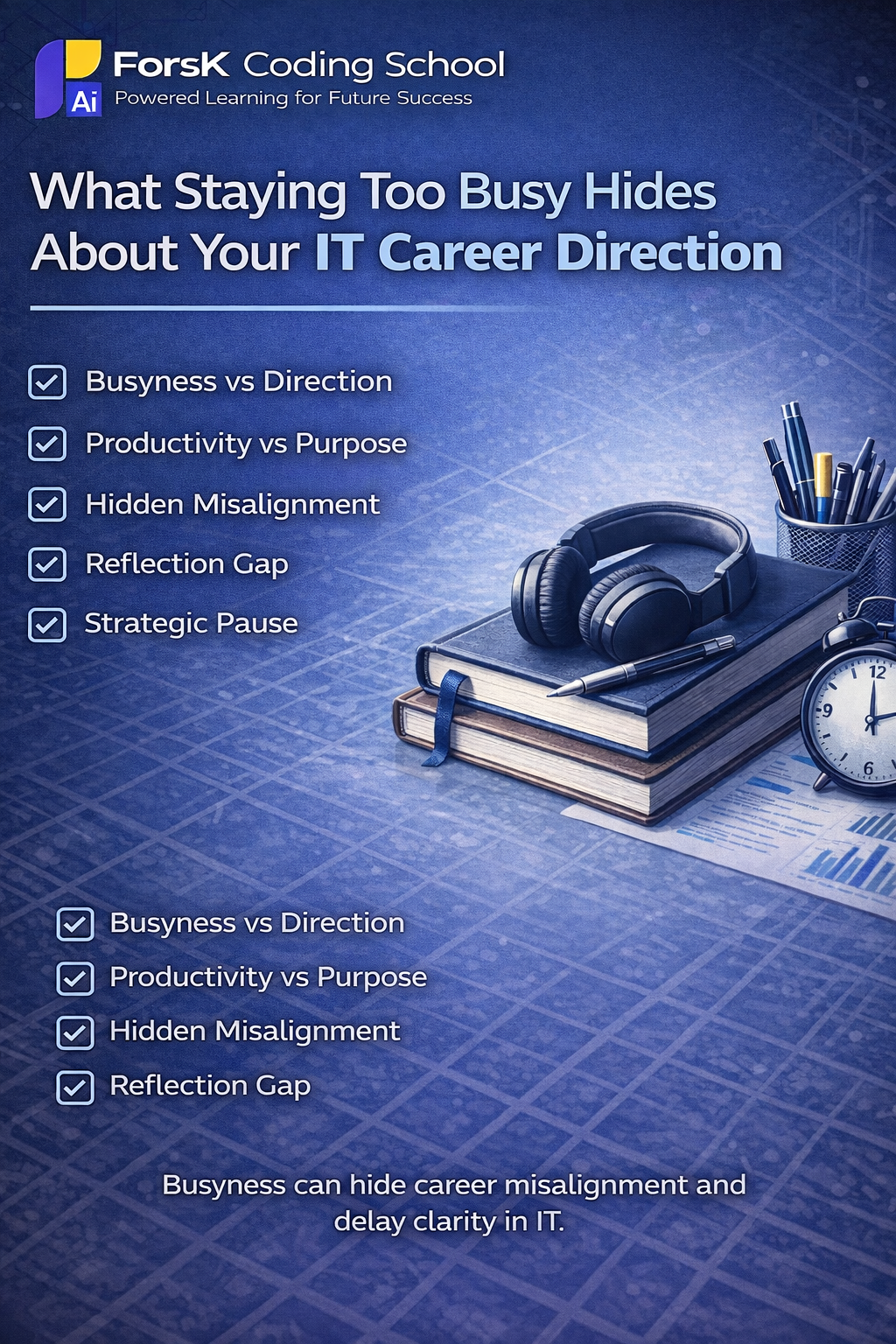
But busyness can hide something dangerous: lack of direction.
This blog explores how staying too busy can quietly prevent reflection, delay clarity, and mask misalignment in your IT career.
Busyness Feels Like Progress
When you are busy, you feel productive.
- Tasks are getting completed
- Skills are being used
- Problems are being solved
But activity is not the same as direction.
You can move fast—and still move in circles.
Busyness as Avoidance
Sometimes busyness becomes a shield.
It protects you from asking uncomfortable questions:
- Am I growing in the right direction?
- Do I actually enjoy this work?
- Is this role building long-term value?
When schedules are full, reflection disappears.
The Hidden Cost of No Pause
Without pauses:
- Skill gaps go unnoticed
- Burnout builds silently
- Misalignment compounds
- Years pass without strategy
Many mid-career professionals realize too late that they were “active” but not intentional.
Productivity vs Purpose
Productivity answers:
“What did I complete today?”
Purpose answers:
“Where is this taking me?”
Strong careers require both.
Signs Busyness Is Hiding Direction Loss
Watch for these signals:
- Constant urgency but no long-term plan
- Learning new tools without clear relevance
- Avoiding career reflection conversations
- Feeling tired but unsure why
These are not workload problems.
They are clarity problems.
How to Break the Cycle
- Schedule reflection time quarterly.
- Define one long-term capability you are building.
- Eliminate one activity that adds noise but no leverage.
- Reconnect tasks to long-term goals.
Small pauses create large course corrections.
Final Thoughts
Staying busy can feel safe.
But clarity requires stillness.
In IT careers, direction is rarely lost suddenly.
It fades quietly behind full calendars.
If you slow down intentionally, you don’t lose momentum.
You gain control.