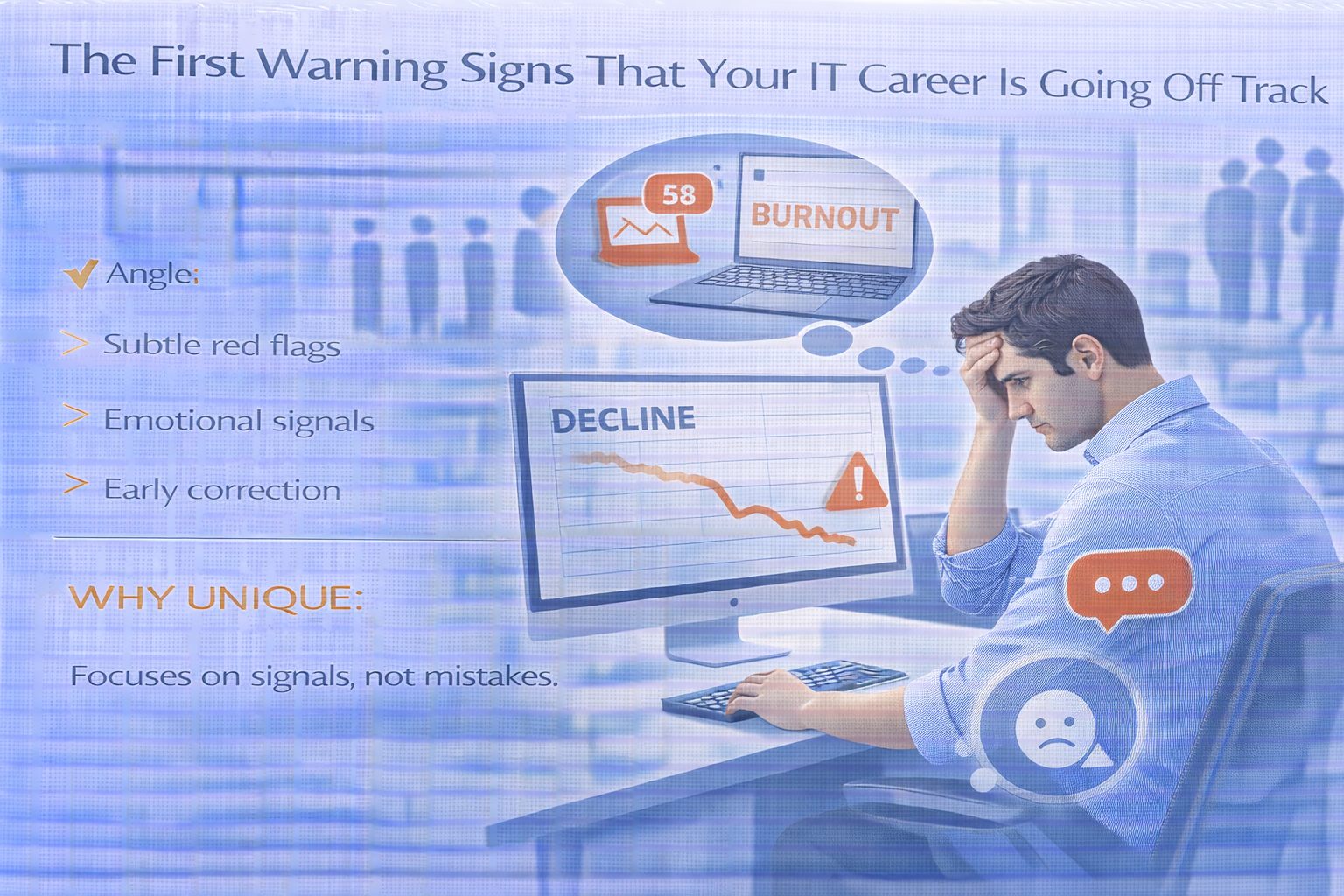
Most IT careers don’t derail because of a single bad decision. They drift off course quietly—through subtle changes in motivation, emotion, and behavior that are easy to dismiss.
This article focuses on signals, not mistakes—the early warnings that appear long before visible career damage occurs.
Career Trouble Starts Emotionally, Not Professionally
The first signs of career misalignment are rarely technical. They are emotional.
Common early signals include:
- Persistent boredom, even on important tasks
- Irritation toward work that once felt engaging
- Relief when meetings or responsibilities are canceled
These emotions are often rationalized as stress or burnout, but they frequently indicate something deeper: loss of direction.
Subtle Red Flags in Daily Work
Early warning signs hide in routine behavior:
- Avoiding challenging tasks
- Repeating the same type of work without growth
- Losing curiosity about how systems really work
None of these look dangerous individually. Together, they signal that learning has slowed and comfort has taken over.
Emotional Signals That Are Easy to Ignore
IT professionals are trained to ignore emotions in favor of logic. This becomes a weakness in career management.
Watch for:
- Feeling anxious before work without a clear reason
- Comparing your progress constantly with others
- Feeling “behind” but unable to explain why
These emotions are feedback—not weakness.
Why These Signals Are Missed
Early signals are subtle and non-urgent.
- Salary continues
- Performance reviews remain acceptable
- Titles don’t change
This creates a false sense of safety. By the time technical gaps appear, emotional disengagement has already done damage.
The Power of Early Correction
Careers are easiest to correct early.
Small adjustments at this stage can prevent major disruption later:
- Reintroducing deliberate learning
- Choosing discomfort over routine
- Seeking new problem domains
Early correction feels unnecessary—until it becomes impossible.
Signals vs Mistakes
Mistakes are visible and dramatic.
Signals are quiet and persistent.
Professionals who build long, healthy IT careers learn to respond to signals long before mistakes force change.
Final Thoughts
Your IT career rarely goes off track suddenly.
It whispers before it screams.
The professionals who last are not those who avoid mistakes—but those who listen carefully to early signals and adjust before drift becomes damage.