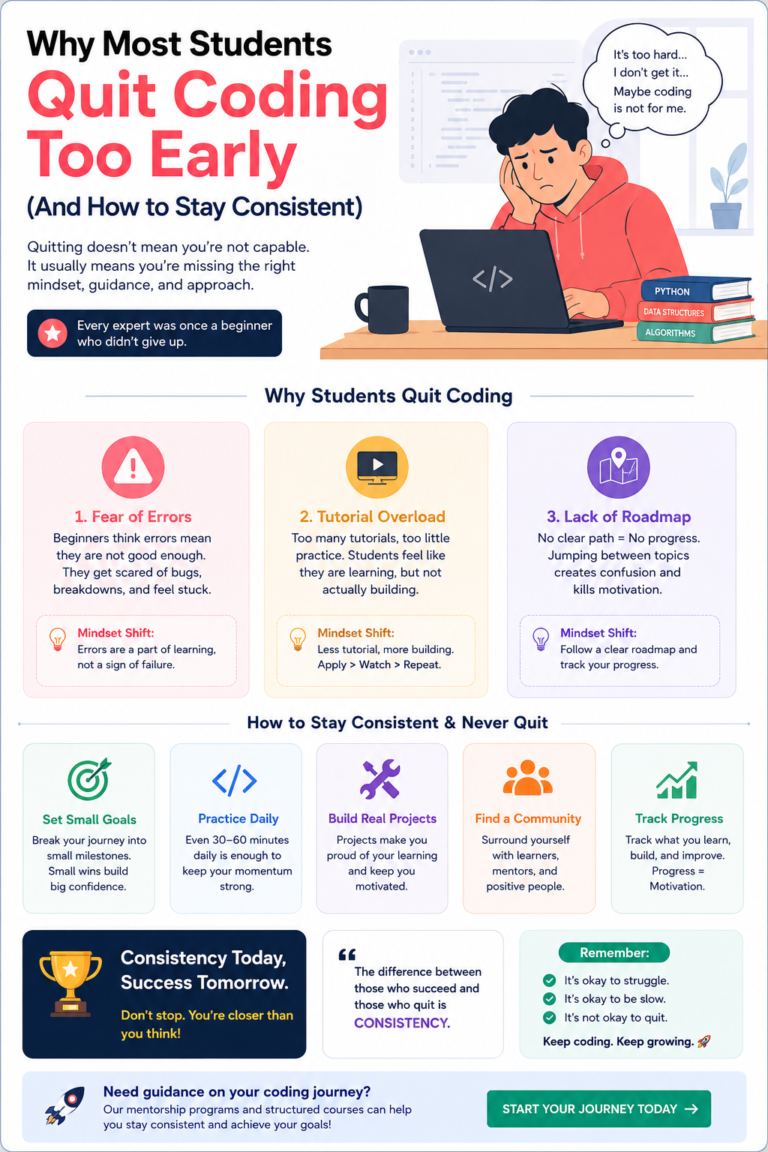
For many IT freshers, landing the first job feels like the hardest part of the journey. But the real emotional challenge often begins after joining the first project. Excitement quickly turns into confusion, self-doubt, and panic. Questions like “Am I good enough?”, “Why don’t I understand anything?”, and “Did I choose the wrong career?” become common.
If this sounds familiar, you are not alone. This panic is normal, predictable, and temporary. This blog explains why first-project shock happens, how expectations clash with reality, and why confusion does not mean failure.
The First Project Shock Is Real
Most freshers expect their first project to:
- Match what they learned in college or training
- Be slow and guided step by step
- Give time to adjust and learn
Instead, they face:
- Existing codebases
- Tight deadlines
- New tools and processes
- Unfamiliar terminology
This sudden gap between expectation and reality creates shock.
Expectation vs Reality in IT Projects
What Freshers Expect
Freshers often expect:
- Clear instructions
- Complete explanations
- Small, easy tasks
What Actually Happens
In real projects:
- Context is assumed
- Documentation may be limited
- Learning happens while delivering
This mismatch makes freshers feel lost—even if they are capable.
Why Confusion Is Completely Normal
You Are Seeing the Real Industry for the First Time
Training environments simplify problems. Real projects don’t.
Confusion happens because:
- Systems are large
- Decisions were made before you joined
- Not everything is explained again
Feeling confused means you have entered real engineering, not that you are failing.
Everyone Felt This Once
Seniors who look confident today:
- Were confused in their first project
- Googled basic things
- Felt afraid of asking questions
They survived because confusion fades with exposure.
Why Panic Sets In So Fast
Freshers panic because:
- They compare themselves with seniors
- They fear being judged
- They assume they should already know everything
This mental pressure is often stronger than the technical difficulty.
Common Emotional Traps Freshers Fall Into
1. “I’m the Only One Struggling”
False. Most freshers struggle silently.
2. “I Learned Nothing in Training”
Training builds foundations—not full readiness.
3. “If I Ask Questions, I’ll Look Dumb”
Asking questions is expected at this stage.
What Freshers Should Focus on Instead of Panicking
Learn How the System Works
Understanding flow matters more than understanding everything.
Ask Better Questions
Instead of saying “I don’t understand anything”, ask:
- “Where does this data come from?”
- “What happens after this step?”
Give Yourself Time
Confidence in IT projects comes from:
- Repetition
- Exposure
- Small wins
Not from instant clarity.
A Message Every IT Fresher Needs to Hear
Your first project is not a test of intelligence.
It is a transition phase.
Confusion means you are learning.
Panic means you care.
Neither means you are unfit for IT.
Final Takeaway
Most IT freshers panic after joining their first project because reality hits faster than preparation.
This confusion is normal, temporary, and shared by almost everyone who came before you.
If you stay curious, ask questions, and give yourself time, the panic will slowly turn into clarity.
Every confident IT professional you see today once survived their first project shock.