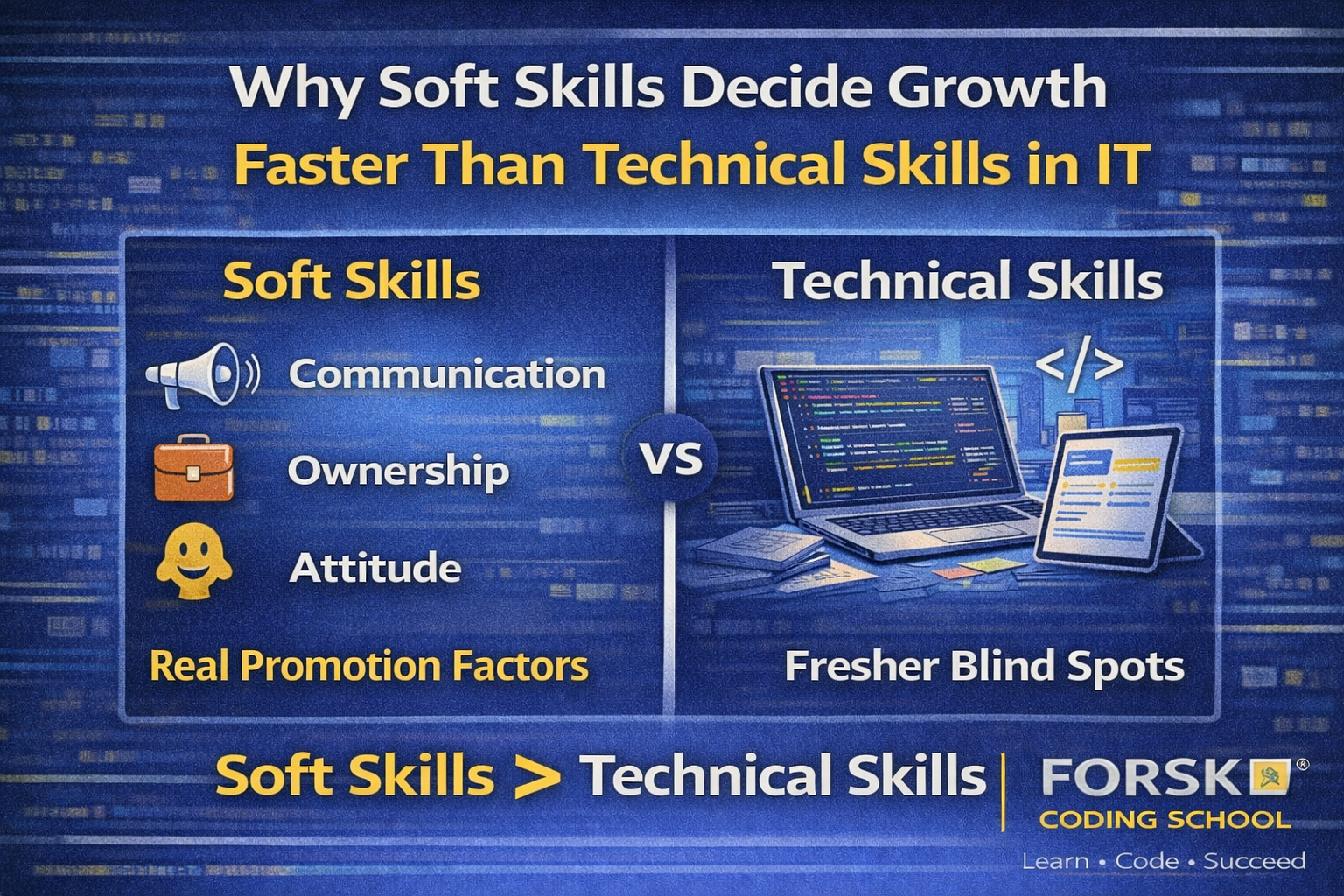
Most students entering the IT industry believe that technical skills alone decide success. Coding languages, tools, and frameworks become the center of attention. While technical skills are essential to enter IT, career growth inside the industry is decided much faster by soft skills.
This blog explains why soft skills play a bigger role in promotions, leadership opportunities, and long-term stability—especially for freshers.
The Biggest Misunderstanding About IT Careers
Freshers often assume:
- Good coding guarantees growth
- Communication is optional
- Hard work alone is visible
In reality, IT companies reward not just what you do, but how you do it.
What Soft Skills Mean in IT Jobs
Soft skills in IT include:
- Clear communication
- Ownership of work
- Professional attitude
- Adaptability
- Team collaboration
These skills decide how effectively your technical knowledge is used.
Communication: The Fastest Growth Multiplier
In real IT jobs, professionals must:
- Explain problems clearly
- Discuss solutions with teams
- Communicate delays and risks
- Coordinate with non-technical stakeholders
Strong communication builds trust quickly and increases responsibility.
Ownership Separates Performers from Dependents
Employees who grow faster:
- Take responsibility instead of excuses
- Solve problems independently
- Care about outcomes, not just tasks
Ownership is a major promotion factor.
Attitude Matters More Than Talent
Managers promote people who:
- Accept feedback positively
- Stay calm under pressure
- Show learning mindset
- Support team success
Negative attitude blocks growth—even with strong technical skills.
Real Promotion Factors in IT Companies
Promotions are influenced by:
- Reliability
- Communication
- Problem ownership
- Team impact
Technical skills are expected—but behavior decides advancement.
Common Fresher Blind Spots
Freshers often ignore:
- Professional behavior
- Time management
- Listening skills
- Workplace communication
These blind spots slow growth more than technical gaps.
Why Parents Should Care About Soft Skills
Parents often focus only on courses and marks. However, soft skills determine stability, leadership, and long-term success in IT careers.
Balanced development creates confident professionals.
Final Thoughts
Technical skills help you enter IT, but soft skills decide how fast and how far you grow. Students who balance both outperform others in the long run.
To build a successful IT career, invest not just in coding—but in communication, ownership, and attitude.