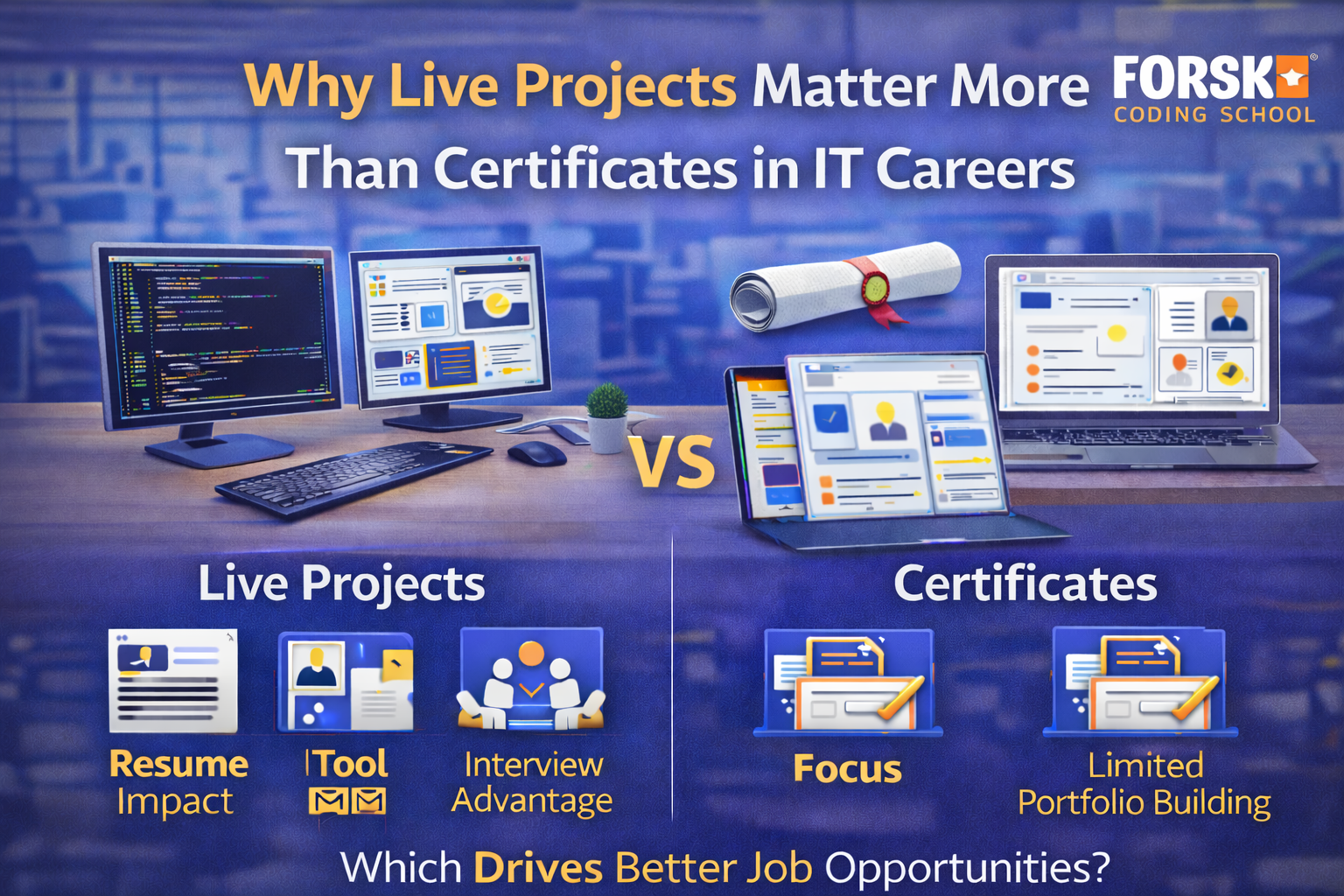
Why Live Projects Matter More Than Certificates in IT Careers
In today’s competitive IT job market, many students collect multiple certificates but still struggle to get shortlisted or clear interviews. In 2026, software companies are very clear about one thing: certificates alone do not prove your ability to work in real projects. What truly matters is hands-on experience through live projects.
If you are searching for answers around live projects in IT or software training with projects, this blog explains why live projects have more value than certificates, how they impact your resume, help in interviews, and build a strong professional portfolio.
The Reality of Hiring in IT Careers (2026)
IT companies hire people who can solve real problems, not those who only know theory. Certificates show that you attended a course, but live projects show that you can apply your knowledge.
Recruiters often ask one simple question:
“What real project have you worked on?”
This question decides many hiring outcomes.
Why Certificates Alone Are Not Enough
Certificates usually:
- Focus on theoretical knowledge
- Test memory more than problem-solving
- Do not reflect real-world challenges
- Look similar on most resumes
While certificates are useful for learning basics, they do not differentiate you from thousands of other candidates.
What Are Live Projects in IT?
Live projects are real-world software projects that simulate actual industry requirements.
They involve:
- Real problem statements
- Proper planning and execution
- Coding, testing, and debugging
- Team collaboration
- Deployment and documentation
Live projects expose students to the actual working environment of software companies.
Resume Impact: Why Live Projects Stand Out
Recruiters scan resumes for practical experience.
How live projects improve your resume:
- Make your resume unique
- Show hands-on skills
- Demonstrate problem-solving ability
- Prove tool and technology usage
A resume with live projects always gets more attention than one filled only with certificates.
Interview Advantage: Talking About Real Work
During interviews, candidates with live project experience:
- Answer questions confidently
- Explain real challenges they faced
- Discuss design decisions
- Show debugging and optimization skills
Interviewers prefer candidates who can explain what they actually built, not just what they studied.
Portfolio Building: Proof of Your Skills
A portfolio is a living proof of your ability.
Live projects help you build:
- GitHub repositories
- Project demos
- Case studies
- Technical documentation
A strong portfolio increases trust and shortens the hiring decision time.
Live Projects vs Dummy Projects
Dummy projects follow fixed steps and predictable outcomes. Live projects are different.
Live projects offer:
- Real client-like requirements
- Changing needs and problem-solving
- Team-based development
- Exposure to deadlines and responsibility
This experience prepares students for real IT jobs.
Role of Live Projects in Skill-Based Learning
Skill-based learning focuses on doing, not just learning.
Live projects help students:
- Apply programming concepts
- Understand industry workflows
- Learn tools like Git, APIs, databases
- Build confidence
This is why software training with projects is highly valued.
How Internships Strengthen Live Project Experience
Internships combine:
- Live project work
- Industry mentorship
- Professional environment
Students who complete internships with live projects face fewer placement rejections.
What Students Should Focus On
Instead of collecting certificates, students should:
- Choose project-based courses
- Work on real problems
- Maintain a project portfolio
- Practice explaining their work
This approach leads to better job outcomes.
How Training Institutes Add Value Through Projects
Good training institutes design programs around live projects and internships.
Institutes like Forsk Coding School Jaipur emphasize:
- Real-world project exposure
- Job-oriented software training
- Internship integration
- Portfolio and interview preparation
This makes students industry-ready.
Final Thoughts
In IT careers, what you can build matters more than what certificate you hold. Live projects prove your skills, strengthen your resume, boost interview confidence, and help you build a strong professional portfolio.
If you want to grow in IT in 2026, choose software training with live projects and focus on real-world experience over certificates.