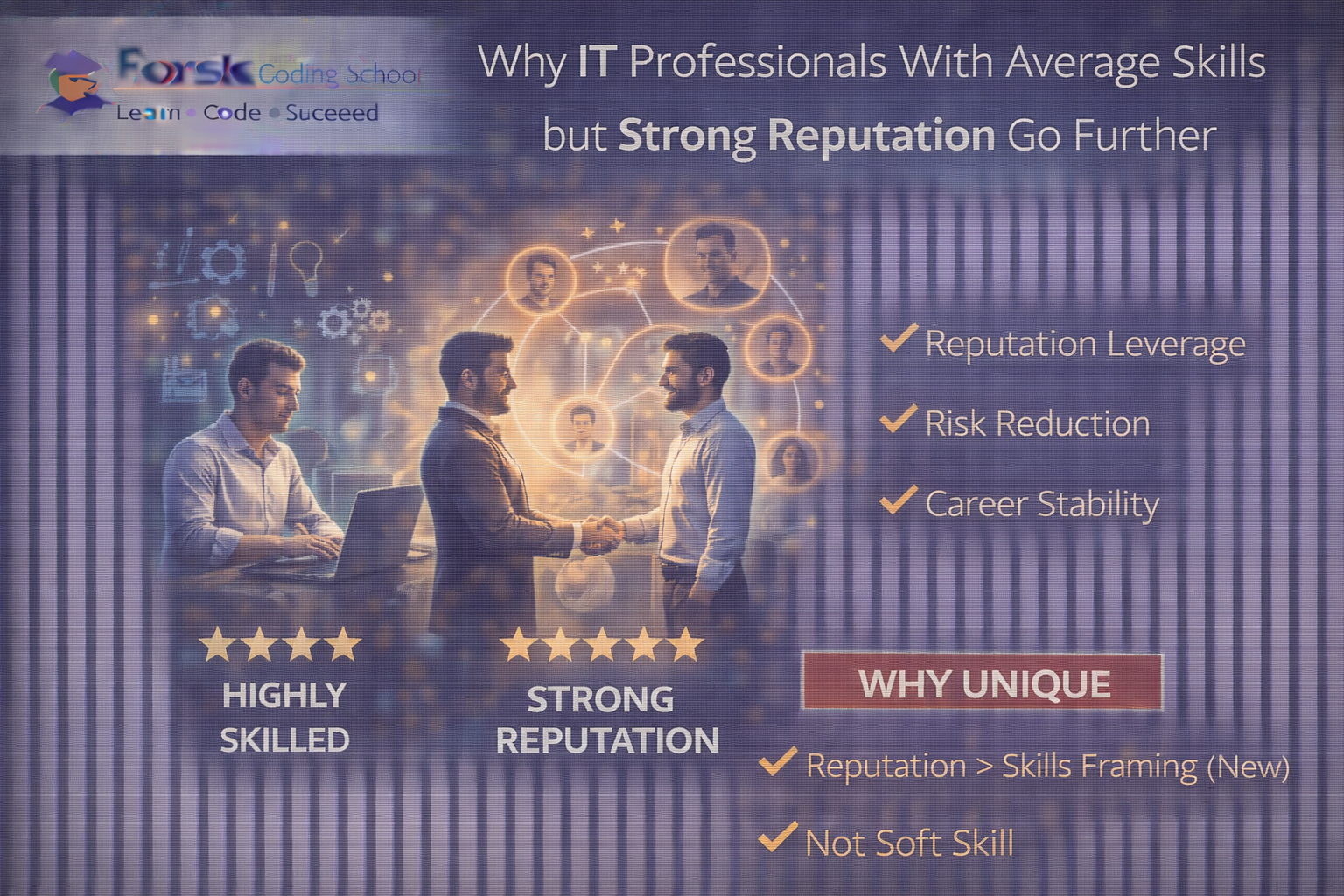
Why IT Professionals With Average Skills but Strong Reputation Go Further
In IT careers, skill level is often treated as the primary growth driver. However, real-world outcomes frequently contradict this belief. Many professionals with average technical skills but strong reputations progress further, faster, and more steadily than highly skilled peers with weak reputational signals.
This is not about lowering standards. It is about understanding reputation leverage inside IT systems.
Reputation Acts as Leverage
Reputation functions like leverage in a system. It amplifies how your skills are perceived and used. A professional known for reliability, clarity, and judgment is trusted with broader responsibility—even if their raw skills are not exceptional.
Teams prefer low-uncertainty contributors. Reputation reduces uncertainty.
Risk Reduction Is What Organizations Optimize For
Companies operate under risk constraints. Missed deadlines, miscommunication, and unpredictable behavior are costly.
Professionals with strong reputations:
- Communicate early
- Set realistic expectations
- Deliver consistently
This predictability lowers operational risk, making them safer choices for critical work.
Why High Skill Alone Isn’t Enough
Highly skilled professionals can still create friction when they:
- Miss commitments
- Escalate late
- Resist feedback
Teams hesitate to depend on people who increase volatility—regardless of talent.
Average-skilled but dependable professionals create stability, which organizations value deeply.
Reputation Creates Career Stability
During restructuring, pressure, or leadership changes, reputation becomes a decision shortcut. Leaders ask:
- Who can we rely on?
- Who keeps teams calm?
- Who reduces surprises?
These questions favor reputational strength over raw skill depth.
How Reputation Multiplies Opportunity
Strong reputation leads to:
- Inclusion in important discussions
- Broader scope without title change
- Informal leadership roles
Once reputation crosses a threshold, opportunities arrive proactively.
Skills Can Be Learned—Trust Takes Time
Organizations know skills can be trained. Trust takes longer and costs more to rebuild.
Professionals who build trust early create a durable advantage that skills alone cannot replace.
Final Thought
In IT careers, skills determine entry—but reputation determines trajectory. Professionals with average skills but strong reputations go further because they reduce risk, stabilize teams, and earn trust. Reputation is not a substitute for skill—but it is a powerful multiplier. Build both, but never underestimate the leverage of reputation.