Every appraisal season, the same confusion repeats itself in IT teams:
“I worked hard all year… so why did my performance review go wrong?”
Long hours, dedication, and effort don’t always translate into good ratings. This gap between effort and evaluation is the reason many capable professionals face IT performance review failure.
This blog explains the psychology of performance reviews, common appraisal mistakes in IT, and why hard work alone is often invisible during evaluations.
Hard Work vs Measured Performance
Most IT professionals assume:
“If I work sincerely, my appraisal will be good.”
But performance reviews are not effort-based systems. They are expectation-based systems.
Managers evaluate:
- Outcomes, not effort
- Business impact, not hours
- Reliability, not struggle
When effort is not aligned with expectations, reviews suffer.
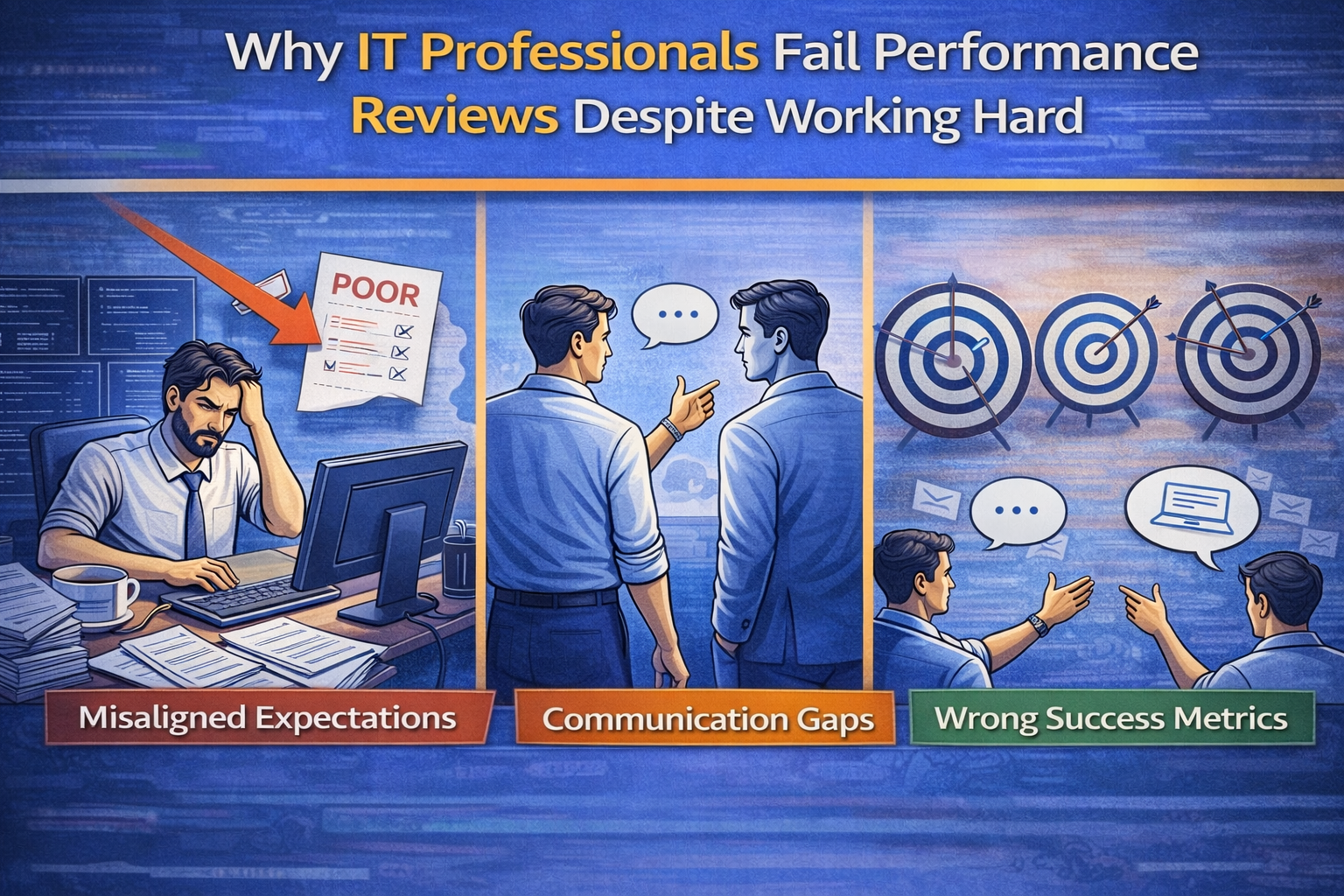
Misaligned Expectations: The Silent Career Killer
One of the biggest reasons for appraisal failure is working hard on the wrong things.
Common scenarios:
- You focus on technical perfection, manager expects delivery speed
- You solve problems quietly, manager expects visibility
- You help everyone, but neglect core responsibilities
If expectations are unclear, effort becomes misdirected.
Communication Gaps That Hurt Appraisals
Many professionals assume managers automatically know:
- What they are working on
- How difficult tasks are
- What problems they prevented
This assumption is dangerous.
Lack of communication leads to:
- Invisible achievements
- Misjudged priorities
- Missed credit
In performance reviews, what isn’t communicated doesn’t exist.
Wrong Success Metrics Professionals Use
Employees often measure success by:
- Number of tasks completed
- Hours worked
- How busy they felt
Managers measure success by:
- Impact on project goals
- Risk reduction
- Quality of decisions
- Dependability under pressure
This mismatch creates the illusion of unfair reviews.
Why Being Busy Doesn’t Save You
Many appraisal failures come from confusing activity with value.
Being busy:
- Looks productive
- Feels exhausting
But reviews reward:
- Results
- Consistency
- Ownership
Busyness without outcomes weakens your case during evaluations.
Performance Review Psychology (What Managers Actually Think)
During reviews, managers subconsciously ask:
- Can I trust this person with bigger responsibility?
- Do they reduce my workload or increase it?
- Do they communicate problems early?
These questions matter more than raw effort.
Common Appraisal Mistakes in IT
Some frequent mistakes include:
- Waiting till review time to highlight work
- Avoiding feedback conversations during the year
- Assuming effort will be noticed automatically
- Not documenting impact
Appraisals are built over months—not in one meeting.
How to Avoid Performance Review Failure
To improve outcomes:
- Align work with manager expectations
- Communicate progress regularly
- Track impact, not just tasks
- Ask for feedback early
Performance reviews reward clarity and alignment, not silent effort.
Final Thoughts: Work Smart for Reviews, Not Just Hard
Hard work is important—but it’s not the evaluation metric.
If you want strong appraisals:
- Understand how success is defined
- Make your impact visible
- Reduce ambiguity for your manager
Performance reviews don’t fail people.
Misalignment does.
Key Takeaway
In IT careers:
- Effort without alignment leads to disappointment
- Communication turns work into recognition
- Understanding review psychology protects growth