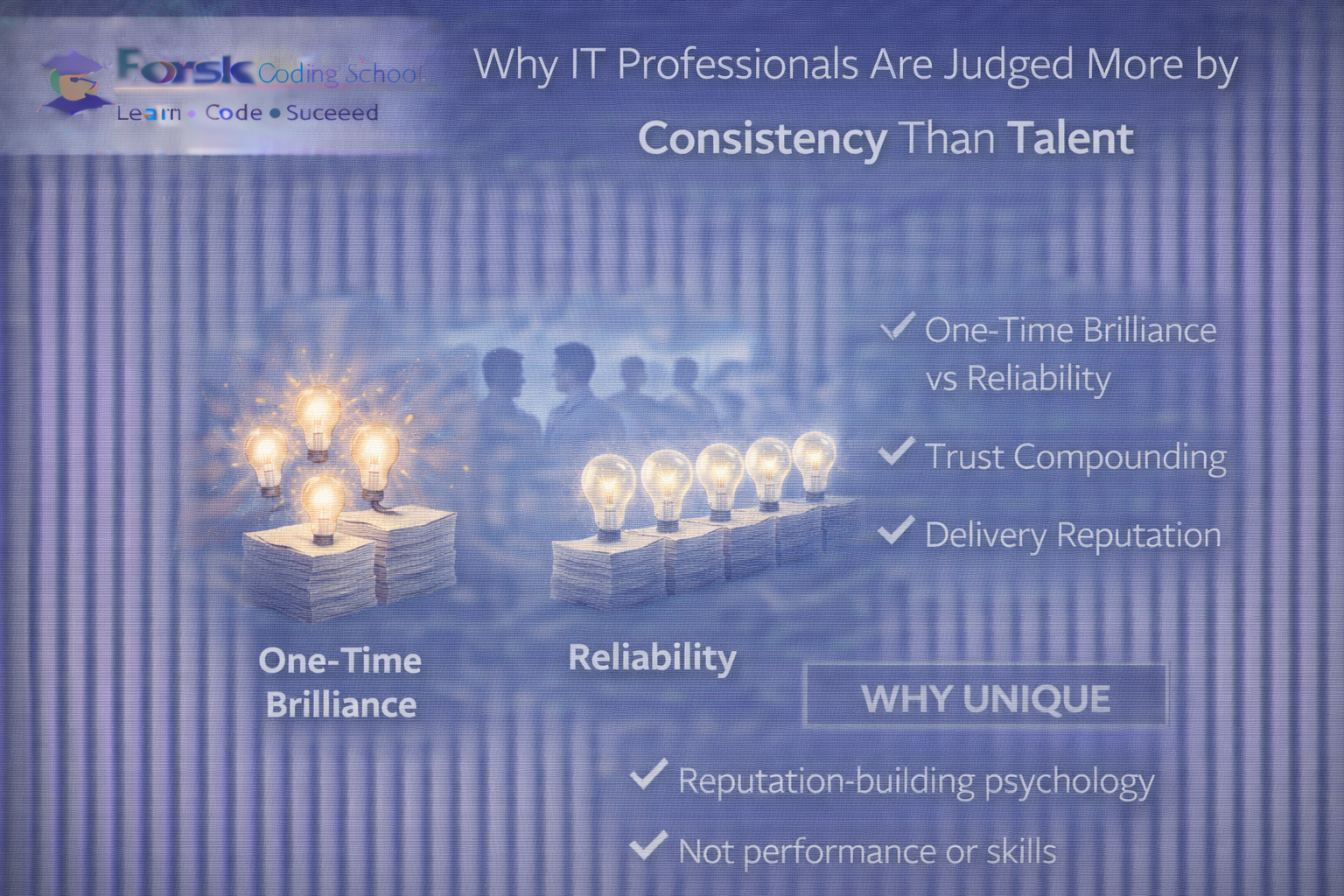
Why IT Professionals Are Judged More by Consistency Than Talent
In IT careers, talent attracts attention—but consistency builds trust. Many professionals assume that one-time brilliance, exceptional problem-solving, or standout technical skills will define their reputation. In real teams, however, judgment forms around a quieter metric: how reliably someone delivers over time.
This is not motivation content or growth advice. It is a consistency lens on how IT professionals are actually evaluated.
One-Time Brilliance vs Reliable Delivery
Brilliant moments are memorable, but unreliable patterns are decisive. A professional who solves one complex issue but misses deadlines, communication, or follow-through creates uncertainty.
Teams prefer professionals who:
- Deliver predictable quality
- Meet commitments consistently
- Handle routine work without drama
Reliability reduces coordination cost—and that matters more than flashes of brilliance.
Consistency Is How Trust Compounds
Trust in IT teams compounds the same way interest does—slowly, through repeated proof. Every delivered task, honest update, and calm response adds a small unit of trust.
Over time, this compounding leads to:
- Larger scopes of responsibility
- Less supervision
- Early inclusion in critical discussions
Talent opens doors. Consistency keeps them open.
Why Inconsistent Talent Loses Leverage
Inconsistency forces teams to hedge. Managers add buffers, double-check work, or reassign critical tasks. Even highly talented professionals lose leverage when outcomes vary.
In contrast, consistent performers become default choices for important work—not because they are the smartest, but because they are dependable.
Delivery Reputation Beats Potential
Delivery reputation answers simple questions:
- Will this be done on time?
- Can we trust the quality?
- Will risks be communicated early?
These answers matter more than potential, especially under pressure. During tight deadlines or incidents, teams choose reliability over experimentation.
Consistency Reduces Organizational Friction
Organizations reward those who make work smoother. Consistent professionals:
- Reduce surprises
- Stabilize workflows
- Help others plan confidently
This friction reduction is often invisible—but highly valued.
How Consistency Is Built
Consistency is not about perfection. It comes from:
- Realistic commitments
- Early communication
- Learning from small failures
- Steady improvement
These habits are quiet, repeatable, and powerful.
Final Thought
In IT careers, talent may get noticed—but consistency determines judgment. Professionals who deliver reliably build trust, reputation, and long-term opportunity. One-time brilliance fades quickly. Consistency compounds—and decides who is trusted when it matters most.