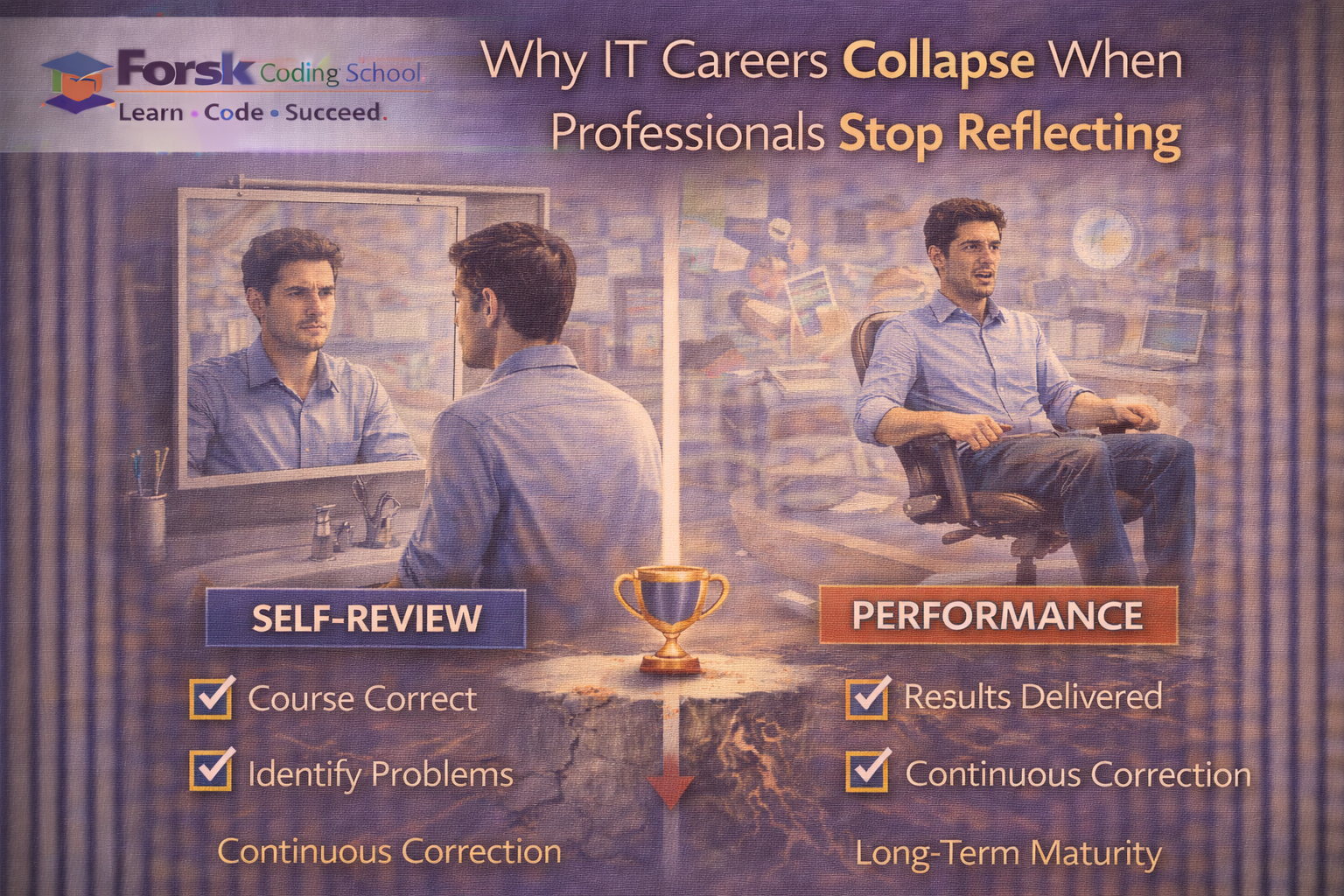
In the early years of an IT career, growth often feels automatic. New skills, new tools, and new responsibilities create visible progress. However, many professionals reach a stage where growth silently stalls—or worse, collapses. The root cause is rarely technology. It is the moment professionals stop reflecting on themselves, their work, and their direction.
Reflection Is the Engine of Long-Term Growth
Reflection is the habit of reviewing actions, decisions, and outcomes with honesty. In IT, where change is constant, reflection acts as a correction mechanism. Without it, professionals continue repeating outdated behaviors while believing they are moving forward.
Those who reflect ask questions like:
- What am I repeatedly struggling with?
- What feedback am I ignoring?
- Which skills am I avoiding?
Without these questions, careers drift silently.
Career Drift: The Invisible Danger
Career drift happens when professionals remain busy but directionless. They switch projects, companies, or technologies without clarity. On paper, everything looks fine—but internally, relevance weakens.
Many IT careers collapse not due to failure, but due to lack of course correction. Years pass, but depth does not grow.
Why Experience Alone Is Not Enough
Experience without reflection becomes repetition. Professionals may spend years doing the same level of work, making the same mistakes, and facing the same limitations. The industry moves ahead, but they stay frozen.
Reflection converts experience into wisdom. Without it, seniority loses value.
Continuous Correction Builds Career Stability
Strong IT professionals treat their careers like systems that need monitoring. They regularly adjust:
- Skills based on market demand
- Communication based on feedback
- Work habits based on outcomes
This continuous correction prevents sudden career collapse and creates resilience against industry shifts.
Reflection Is a Maturity Skill
Long-term success in IT is less about speed and more about alignment. Mature professionals pause, review, and recalibrate. They are not afraid to admit stagnation because awareness gives them control.
Those who stop reflecting often blame the market, age, or competition—without realizing the real issue is internal blindness.
Final Thought
IT careers collapse quietly when reflection stops. Growth slows, relevance fades, and frustration increases. Professionals who build a habit of honest self-review protect their careers from drift and create long-term maturity. Reflection is not weakness—it is strategic strength.