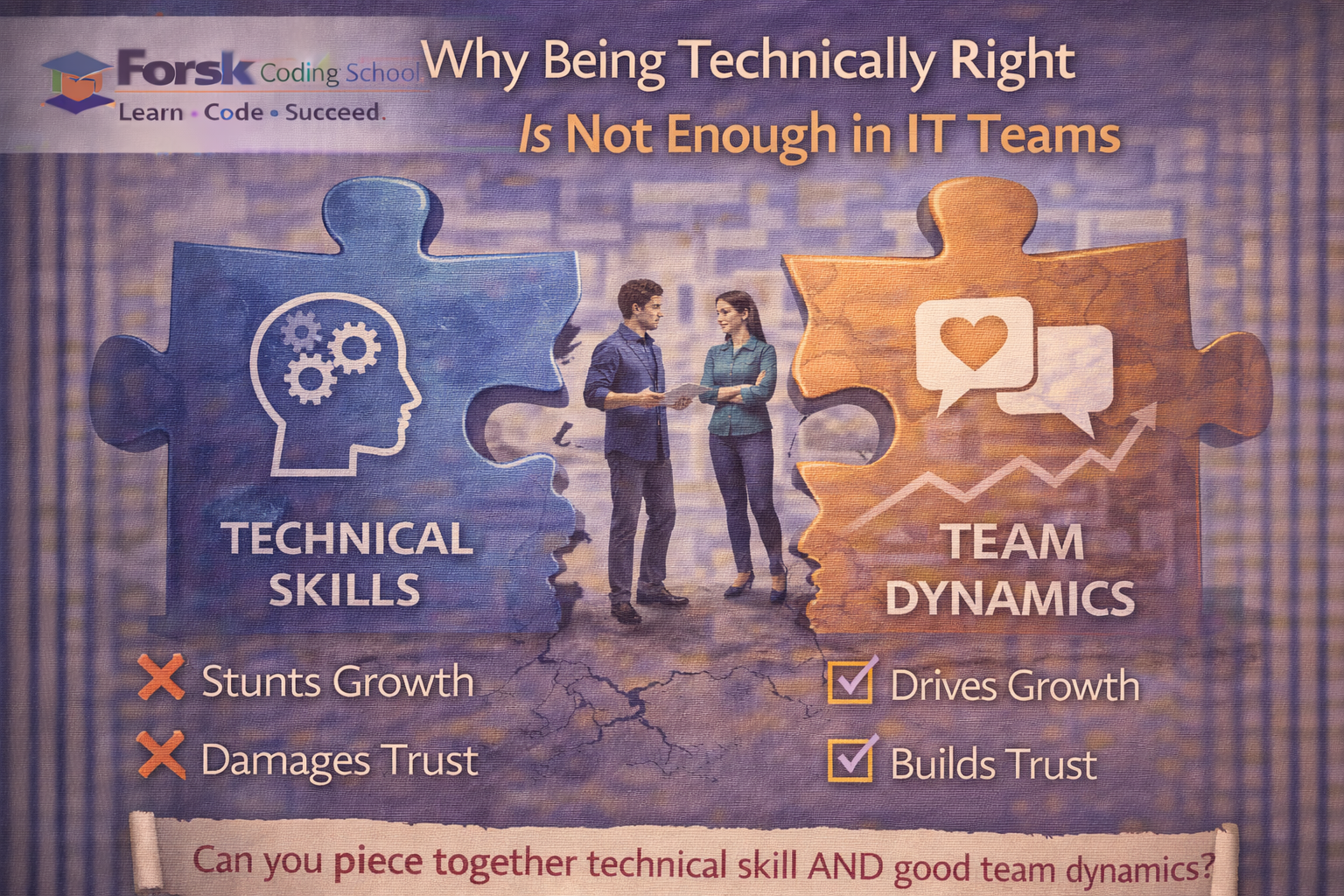
In IT teams, technical correctness is often treated as the ultimate proof of competence. Writing optimal code, choosing the right architecture, or spotting flaws in others’ logic feels like winning. Yet, many technically strong professionals struggle to grow, influence teams, or move into leadership roles. The reason is simple: being technically right is important, but it is not enough.
The Hidden Gap Between Skill and Impact
IT work is rarely done in isolation. Software is built by teams with different roles, pressures, and perspectives. When a professional focuses only on being technically correct, they may overlook how their communication affects collaboration. A solution delivered with poor tone, rigid attitude, or lack of empathy often creates resistance—even if the solution itself is perfect.
In real workplaces, impact matters more than intention. If your idea cannot be accepted, implemented, or trusted by the team, its technical value is lost.
How Technical Ego Damages Team Dynamics
Technical ego develops when professionals start identifying their self-worth with being right. This often leads to behaviors like:
- Dismissing others’ opinions
- Over-correcting teammates publicly
- Prioritizing logic over people
Such behavior slowly damages team dynamics. Teammates may stop sharing ideas, avoid discussions, or resist collaboration. Over time, the technically right person becomes isolated, not influential.
Communication Conflicts in IT Teams
Many IT conflicts are not about technology—they are about communication. Words, tone, and timing matter. A blunt message in a code review, a harsh comment during a meeting, or an inflexible stance during planning can escalate small disagreements into long-term friction.
Professionals who succeed understand that communication is a technical skill of its own. Explaining complex ideas simply, listening actively, and choosing the right moment to push back are critical team skills.
Emotional Intelligence as a Career Multiplier
Emotional intelligence (EQ) is the ability to understand your emotions and respond effectively to others’. In IT teams, EQ helps professionals:
- Handle disagreements without ego clashes
- Read team stress and adjust communication
- Influence decisions without authority
High EQ professionals may not always be the loudest or most technically dominant, but they are often the most trusted. Trust opens doors to leadership, ownership, and long-term growth.
Team-Readiness vs Individual Brilliance
Being team-ready means balancing correctness with cooperation. It involves knowing when to insist, when to compromise, and when to stay silent. Leaders value professionals who can protect technical quality without breaking team morale.
Individual brilliance shines briefly. Team readiness sustains careers.
Final Thought
In IT teams, success belongs to those who combine technical strength with emotional intelligence. Being right wins arguments, but being understood builds products. Professionals who master both become indispensable—not just as engineers, but as team leaders.