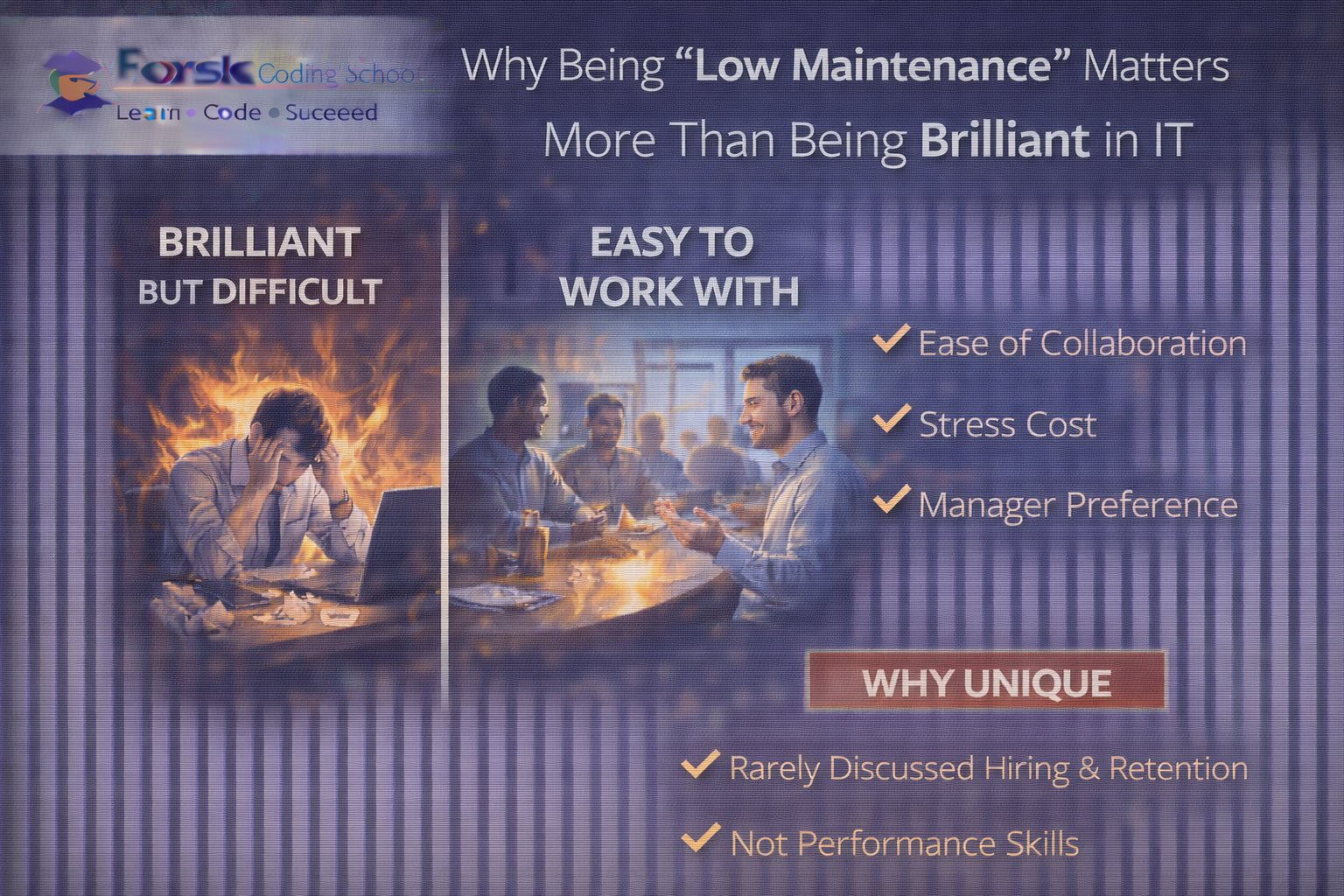
In IT careers, brilliance gets attention—but low maintenance gets trust. Many professionals assume standout intelligence or technical excellence will drive long-term success. In real teams, however, managers often prefer people who are easier to work with, calmer under pressure, and predictable in delivery.
This is not about lowering standards. It is about understanding the hidden cost of stress inside teams and how it shapes hiring, retention, and promotion decisions.
Ease of Collaboration Beats Individual Brilliance
IT work is deeply collaborative. Systems are built by groups, not solo performers. When a brilliant individual creates friction—through rigidity, defensiveness, or constant escalation—team velocity drops.
Low-maintenance professionals:
- Communicate clearly and early
- Adapt without drama
- Resolve issues without spreading stress
Teams scale around ease, not ego.
The Stress Cost Managers Try to Avoid
Managers manage risk, timelines, and people energy. High-maintenance brilliance increases stress:
- Frequent escalations
- Emotional volatility during incidents
- Constant negotiation around scope or timelines
Even when output is strong, the stress tax is real. Over time, managers quietly optimize for calm reliability.
Why Managers Prefer Predictability
Predictability reduces coordination overhead. Managers value people who:
- Set realistic expectations
- Deliver without surprises
- Require minimal supervision
A predictable professional frees managerial bandwidth—an invisible but powerful advantage.
Low Maintenance Is Not Low Ambition
Being low maintenance does not mean being passive or average. It means:
- Choosing clarity over confrontation
- Solving problems without theatrics
- Taking responsibility without demanding constant validation
These traits signal maturity and leadership readiness.
How Brilliance Becomes a Liability
Brilliance becomes a liability when it is paired with:
- Resistance to feedback
- Preference for heroics over process
- Dependence on special treatment
Organizations avoid building systems around fragile excellence.
Retention Reality Few Talk About
During restructuring or tough phases, companies retain people who stabilize teams. Low-maintenance professionals:
- Keep delivery steady
- Reduce burnout risk in others
- Act as force multipliers
They are harder to replace—not because they are flashy, but because they are dependable.
Final Thought
In IT, brilliance may open doors—but low maintenance keeps them open. Ease of collaboration, low stress cost, and predictability quietly shape who is hired, trusted, and retained. Professionals who combine competence with calm reliability build careers that last—even when markets tighten.