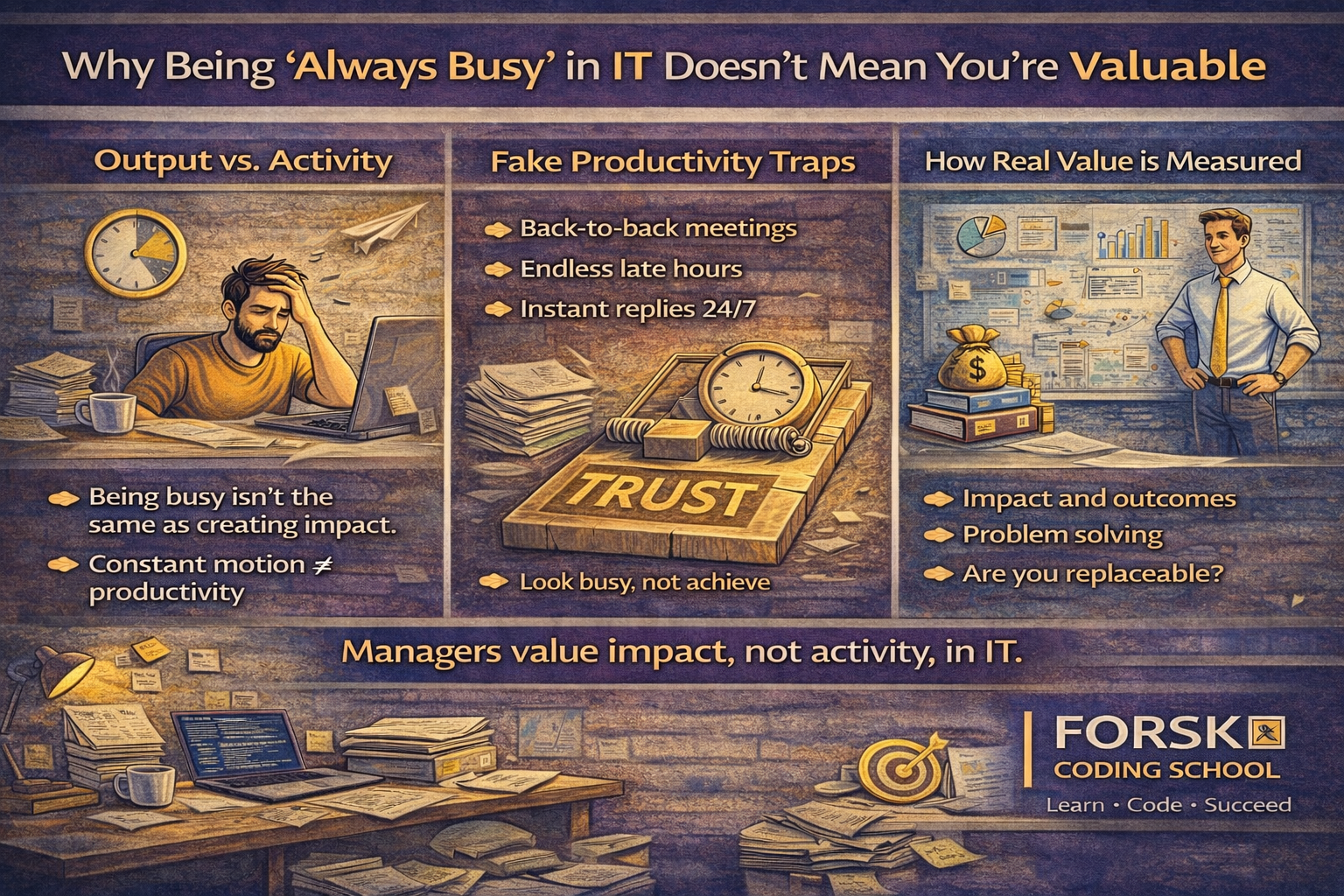
In many IT teams, being busy is often mistaken for being important. Long hours, endless meetings, constant messages, and packed task lists are worn like badges of honor. But here’s the uncomfortable truth:
Being busy in IT does not automatically mean you are valuable.
This blog breaks the IT productivity myth, explains why many professionals are busy but not productive in IT, and shows how managers actually measure value at work. This is not about learning or upskilling—it’s about workplace productivity illusion.
The Biggest IT Productivity Myth
The most common belief in IT workplaces is:
“If I’m always busy, I must be doing well.”
In reality, busyness often hides:
- Poor prioritization
- Lack of clarity
- Fear of saying no
- Absence of measurable impact
Activity creates noise. Value creates results.
Output vs Activity: What Really Matters
Activity
- Attending meetings
- Replying instantly on Slack
- Updating tickets endlessly
- Working late hours
Output
- Solving the right problems
- Delivering impact on time
- Reducing future work
- Improving systems or processes
Managers don’t promote activity.
They promote output.
Why Busy People Often Grow Slower
Professionals who are always busy usually:
- Say yes to everything
- Avoid deep work
- Spend time reacting instead of thinking
- Confuse motion with progress
They look involved—but remain replaceable.
This is the core of the busy but not productive IT problem.
Fake Productivity Traps in IT
1. The Meeting Trap
Too many meetings create the illusion of contribution, while delaying real work.
2. The Instant-Reply Trap
Fast replies feel responsible, but constant interruptions destroy focus.
3. The Ticket-Close Trap
Closing many small tasks looks productive, but may add little long-term value.
4. The Long-Hours Trap
Late nights often signal inefficiency, not dedication.
How Managers Actually Measure Value
Most IT managers evaluate value based on:
- Impact on business or users
- Reliability of delivery
- Ability to reduce complexity
- Ownership and accountability
They ask silently:
“If this person were absent for a week, would it hurt?”
Busyness doesn’t answer that question.
Value does.
Why Quiet Workers Often Get Ahead
High-value professionals:
- Work fewer hours but deliver more
- Ask better questions
- Eliminate unnecessary work
- Focus on outcomes, not appearances
They may look less busy—but they’re harder to replace.
How to Move from Busy to Valuable
To escape the productivity illusion:
- Prioritize work with visible impact
- Reduce low-value meetings
- Protect deep work time
- Communicate outcomes, not effort
Being valuable is about results, not exhaustion.
Final Thoughts: Stop Chasing Busy, Start Building Value
The IT industry doesn’t reward who looks busiest.
It rewards who:
- Solves the right problems
- Delivers consistently
- Makes others’ work easier
If you’re always busy but not growing, it’s time to question what you’re busy with.
Key Takeaway
In IT:
- Activity creates visibility
- Output creates value
- Value creates growth
Stop measuring your worth by how busy you are.
Start measuring it by what actually changes because of your work.