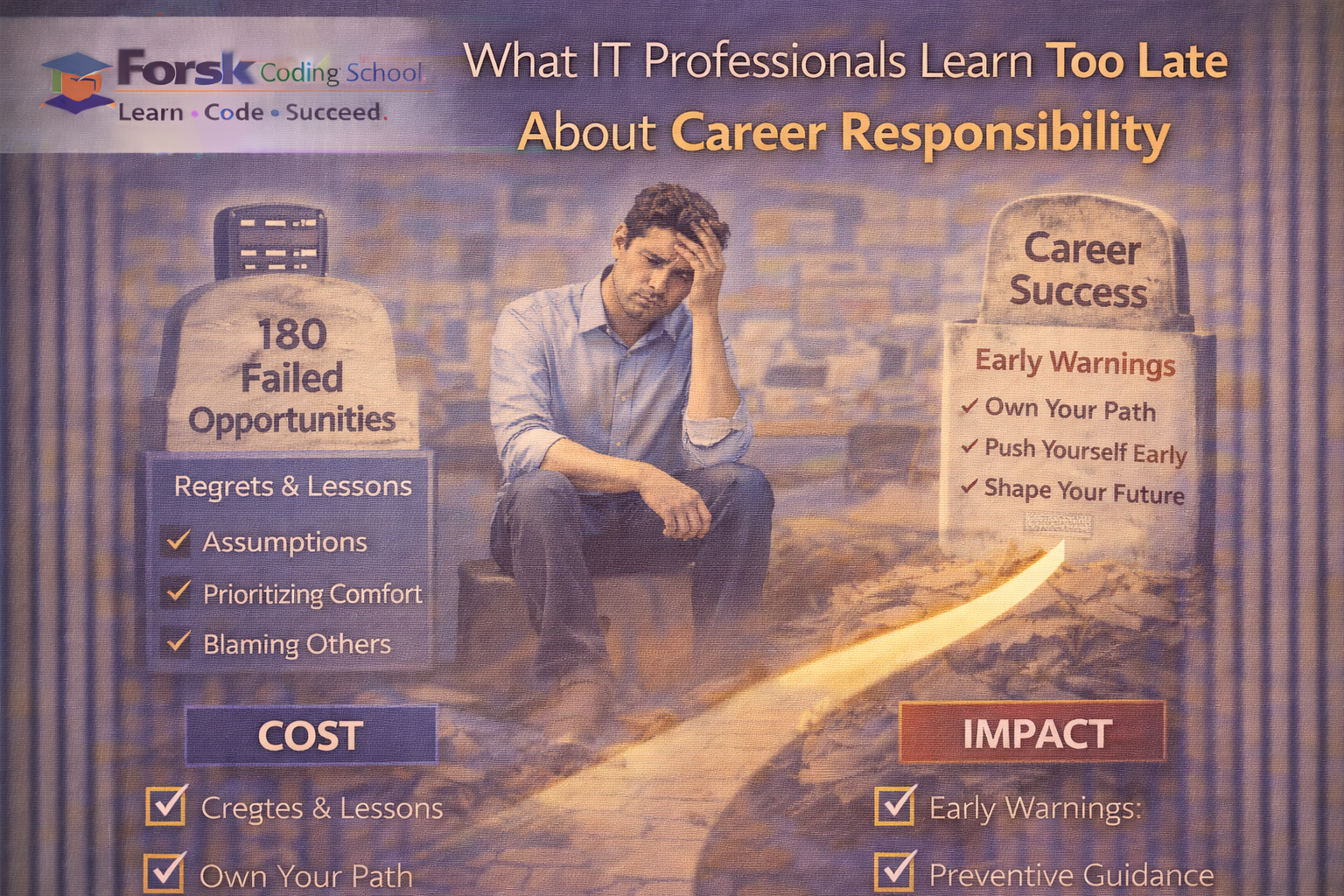
Many IT professionals spend years focusing only on skills, tools, and job changes, assuming career growth will naturally follow. Unfortunately, some of the most important lessons about career responsibility are learned late—after missed opportunities, stagnation, or burnout. These lessons are not about technology; they are about ownership of one’s professional journey.
Career Responsibility Is Personal, Not Organizational
A common early mistake is believing that companies, managers, or mentors are responsible for long-term growth. While support systems matter, careers do not grow on autopilot. Organizations optimize for business needs, not individual futures.
Professionals who grow early understand this truth: your career is your responsibility—even when the environment is supportive.
Skill Accumulation Without Direction Creates Regret
Many professionals collect skills without a clear career narrative. Over time, this leads to confusion about positioning, relevance, and value. Learning randomly feels productive, but without alignment, it rarely translates into growth.
Late realizations often sound like:
- “I know many things, but I’m not strong at anything.”
- “I worked hard, but my career didn’t move.”
Direction matters as much as effort.
Ignoring Early Warning Signs
Career decline rarely happens suddenly. It sends signals early:
- Repeating the same role for years
- Avoiding responsibility-heavy work
- Discomfort with feedback or change
Professionals who ignore these warnings often regret not acting sooner. Responsibility begins with awareness.
Prevention Is Easier Than Recovery
Fixing a drifting career requires more energy than maintaining alignment early. Preventive habits include:
- Regular self-review of skills and relevance
- Seeking feedback before problems grow
- Taking ownership of outcomes, not just tasks
Those who practice prevention rarely face career shocks.
Responsibility Builds Authority and Trust
Professionals who take responsibility early earn credibility faster. They are trusted with decisions, not just execution. Over time, this trust converts into authority, influence, and leadership opportunities.
Responsibility is not pressure—it is control.
Final Thought
Most IT professionals do not fail because they lack talent. They struggle because they delay taking responsibility for their careers. Those who learn this early avoid regret. Those who learn it late wish they had started sooner. Career responsibility is the foundation of long-term success.