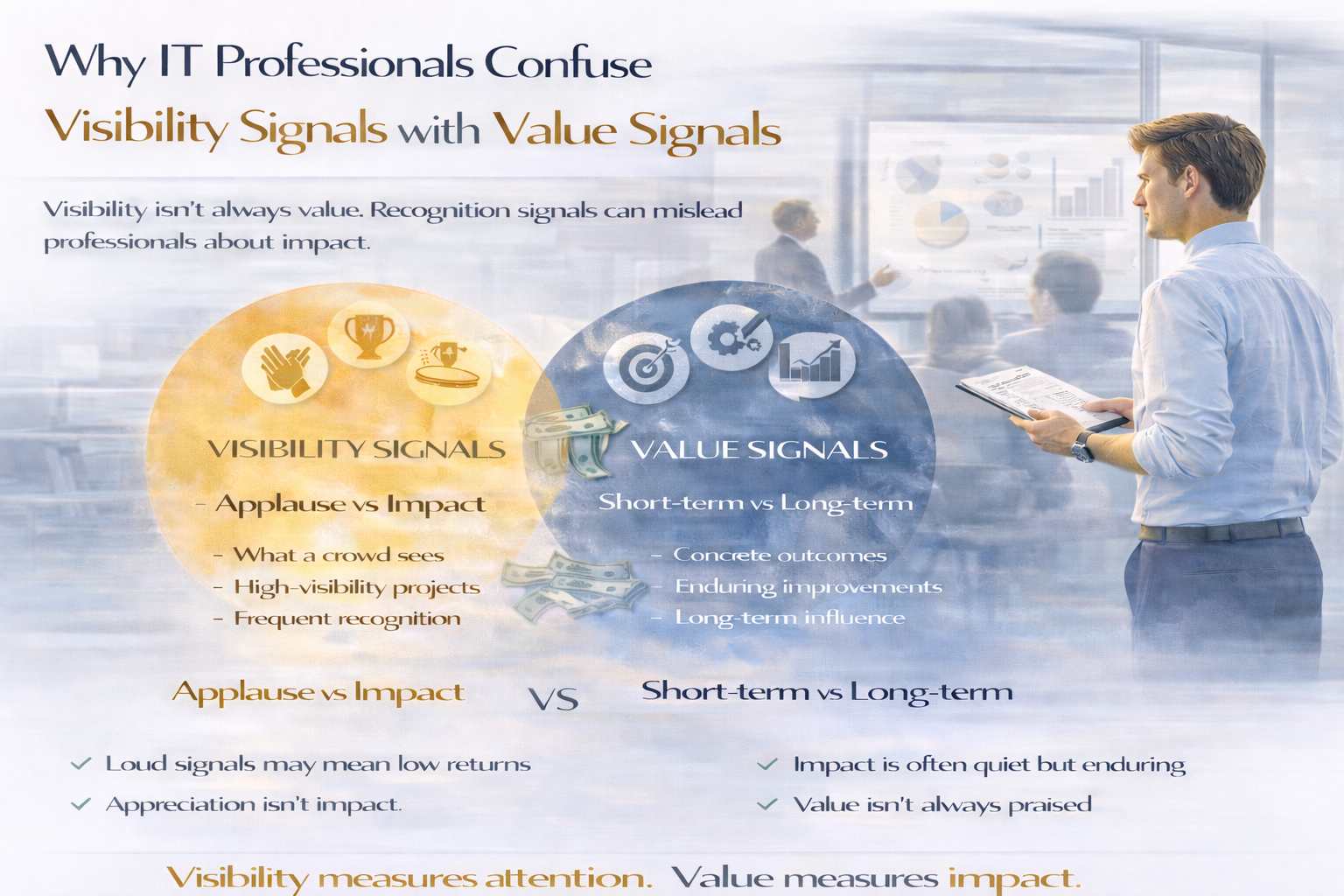
In modern IT organizations, visibility is seductive.
Being noticed.
Being praised.
Being publicly associated with success.
These moments feel like progress.
But visibility is not the same as value.
Many IT careers stall because professionals optimize for being seen, instead of being valuable in ways that compound.
What Visibility Signals Look Like
Visibility signals are loud and immediate:
- Public praise in meetings
- High-traffic projects with short timelines
- Frequent updates to leadership
- Recognition without expanded responsibility
These signals create a sense of momentum — even when long-term value doesn’t increase.
What Value Signals Look Like
Value signals are quieter:
- Being trusted with ambiguous problems
- Having input sought before decisions
- Work that influences future direction
- Responsibility that grows without announcement
Value compounds.
Visibility often spikes — then fades.
Why Professionals Chase Visibility
Visibility provides fast feedback:
- Validation
- Social proof
- Reduced uncertainty
Value signals are delayed.
They require patience and tolerance for ambiguity.
Under pressure, professionals default to what feels safer — visibility.
Applause vs Impact
Applause feels like impact.
But applause does not change trajectory.
Impact does.
Many highly visible professionals:
- Stay busy but replaceable
- Receive praise without leverage
- Are recognized — but not relied upon
Their careers sound successful.
They don’t always scale.
Short-Term Recognition vs Long-Term Trust
Organizations reward differently over time:
- Short-term: speed, availability, responsiveness
- Long-term: judgment, reliability, decision quality
Visibility aligns with short-term rewards.
Value aligns with long-term trust.
Confusing the two leads to misaligned effort.
How to Distinguish Signal Types
Ask different questions:
- Does this work increase future decision access?
- Would the organization struggle if I stopped doing this?
- Am I being praised, or being depended on?
Dependence is a stronger signal than applause.
Rebalancing Toward Value Signals
Visibility is not bad.
But it should be a byproduct, not the goal.
Practical shifts:
- Prioritize problems with downstream impact
- Trade some visibility for deeper responsibility
- Measure influence, not mentions
Value-first careers look quieter — but grow faster.
Final Thought
Not all signals deserve attention.
Some are noise.
IT professionals who confuse visibility with value optimize for attention.
Those who learn the difference optimize for long-term relevance and trust.