Introduction: Why Data Structures Matter in Programming
If you want to grow from a beginner to a confident software developer, understanding data structures is non-negotiable. Data structures decide how data is stored, accessed, processed, and optimized inside a program.
From simple apps to large-scale systems like Google, Amazon, or Netflix—data structures are everywhere.
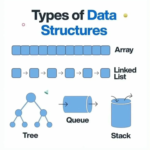
What Is a Data Structure?
A data structure is a way to organize and store data so that it can be used efficiently.
Think of data structures like different types of containers:
- Some store items in a line
- Some stack items on top of each other
- Some connect items like a family tree
- Some allow super-fast searching
Classification of Data Structures
Broadly, data structures are divided into two main categories:
1. Linear Data Structures
Data is stored in sequence, one after another.
Examples:
- Array
- Stack
- Queue
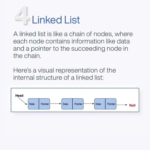
- Linked List
2. Non-Linear Data Structures
Data is stored in a hierarchical or network form.
Examples:
- Tree
- Graph
- Hash Table
- Trie
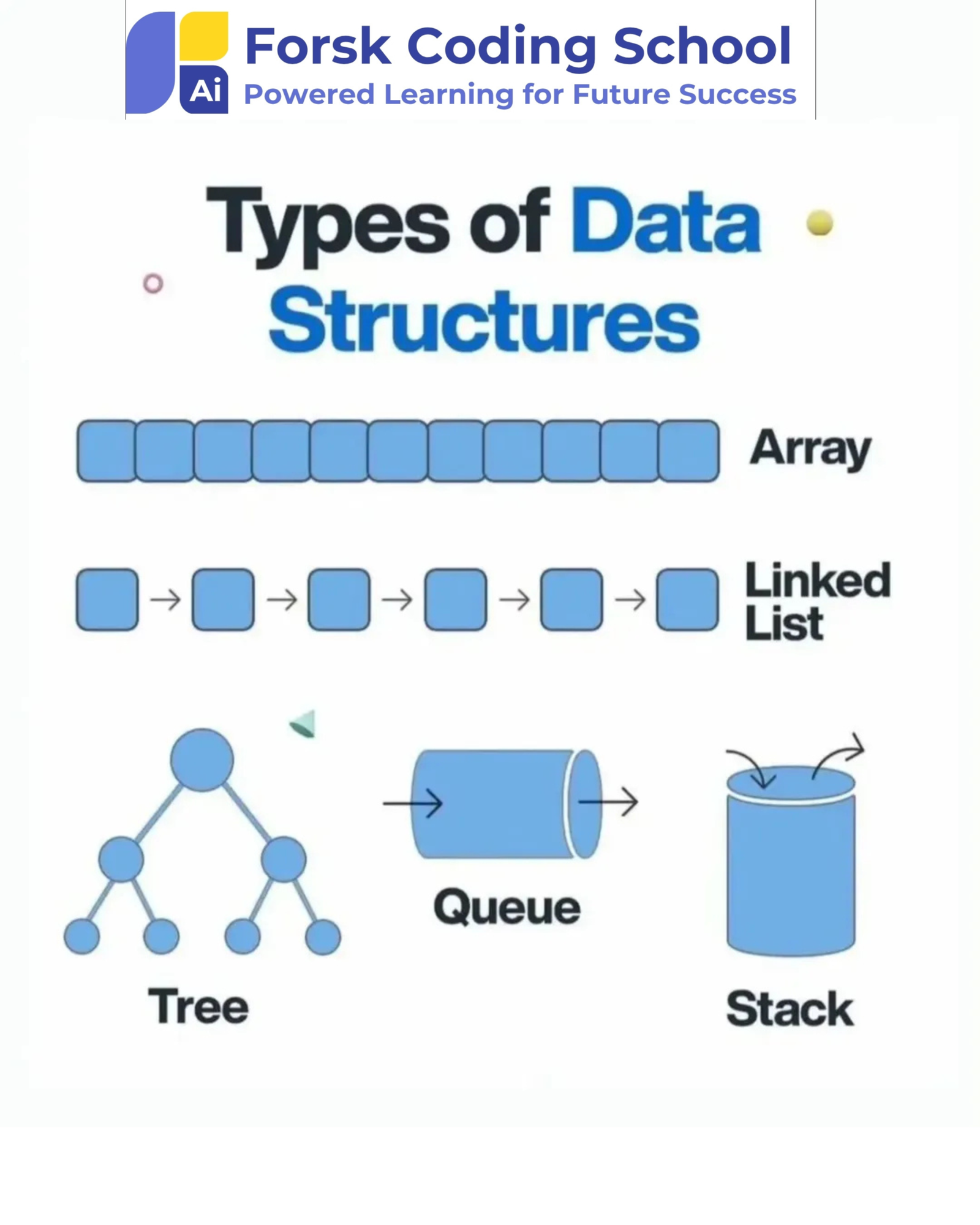
1. Array – The Simplest Data Structure
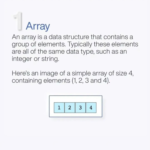
An array stores elements of the same type in a continuous block of memory.
Real-life example:
A row of lockers where each locker has a number.
Key features:
- Fast access using index
- Fixed size
- Simple and memory-efficient
Used in:
Lists, tables, matrices, basic data storage
2. Stack – Last In, First Out (LIFO)
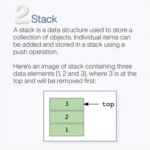
A stack works like a stack of plates.
Rule:
➡️ Last item added is the first one removed
Operations:
- Push (add)
- Pop (remove)
Real-life example:
- Undo/Redo
- Browser history
- Function calls (call stack)
3. Queue – First In, First Out (FIFO)
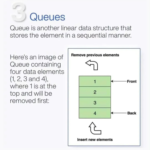
A queue works like a line at a ticket counter.
Rule:
➡️ First item added is the first one removed
Operations:
- Enqueue (insert)
- Dequeue (remove)
Used in:
- CPU scheduling
- Task queues
- Print spooling
4. Tree – Hierarchical Data Structure
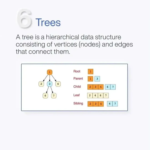
A tree stores data in a parent-child relationship.
Real-life example:
- Family tree
- Folder structure in a computer
Key terms:
- Root
- Parent
- Child
- Leaf
Used in:
- File systems
- Databases
- Search algorithms
5. Graph – Network-Based Data Structure
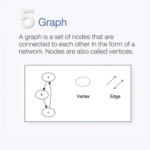
A graph is a collection of nodes (vertices) connected by edges.
Real-life example:
- Social networks
- Maps & navigation
- Internet connections
Used in:
- Shortest path algorithms
- Recommendation systems
- Network analysis
6. Hash Table – Fastest Data Access
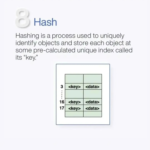
A hash table stores data in key-value pairs using a hash function.
Why it’s powerful:
- Very fast search, insert, delete (O(1) average time)
Real-life example:
- Phone contacts
- Username → User data mapping
Used in:
- Databases
- Caching
- Authentication systems
7. Trie – Perfect for Searching Words
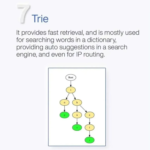
A trie is a special tree used for prefix-based searching.
Best example:
- Auto-complete in search engines
- Dictionary word lookup
Used in:
- Search engines
- Spell checkers
- IP routing
Why Data Structures Are Important for Careers
If you want to:
- Crack technical interviews
- Write optimized code
- Become a senior developer
- Work on scalable systems