The IT industry changes faster than almost any other field. New frameworks, languages, and tools appear every year, while older ones quietly fade away. For many professionals, this creates constant anxiety: “What should I learn next to stay relevant?”
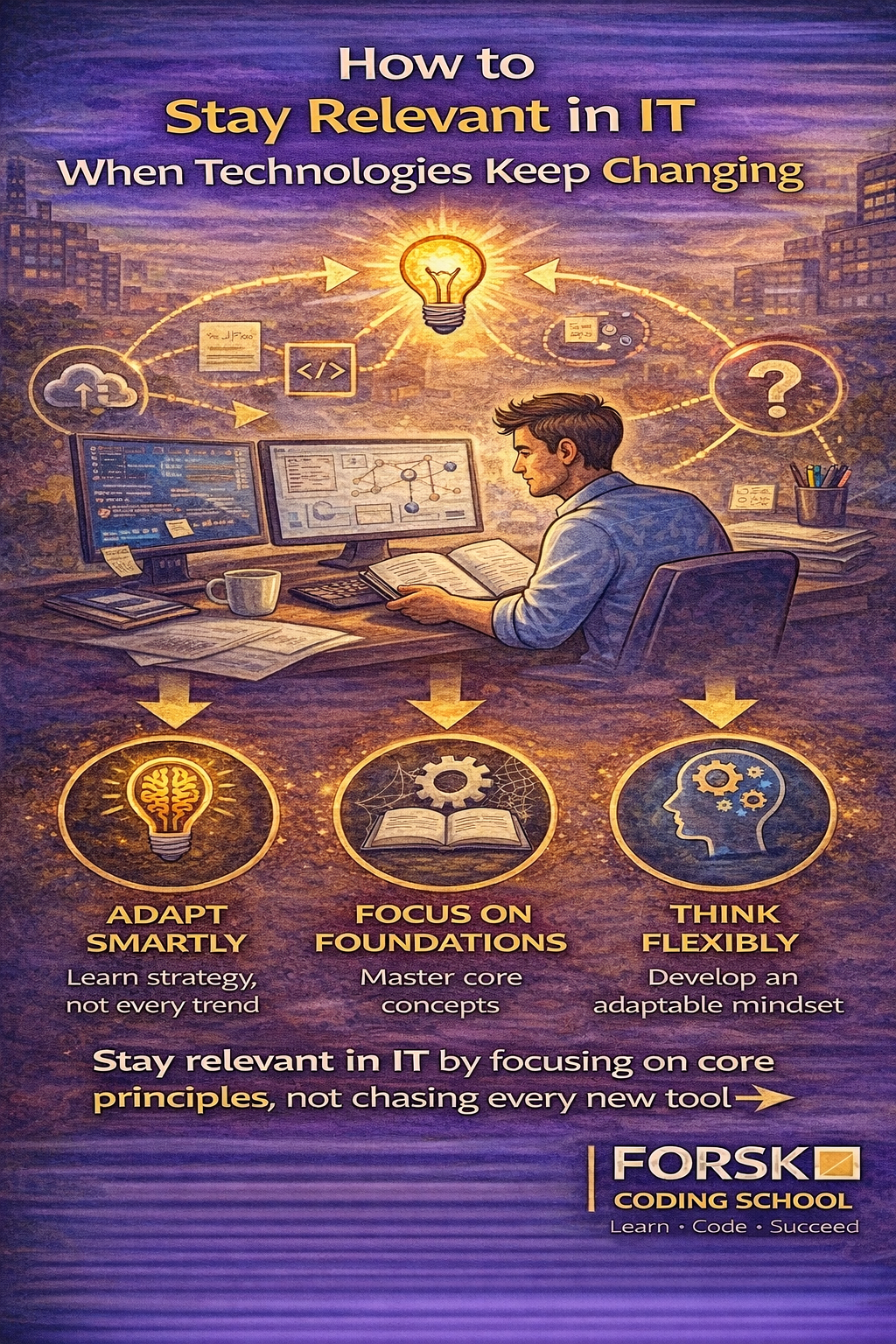
The truth is, staying relevant in IT is not about chasing every new technology. It’s about building the right learning strategy, focusing on core concepts, and developing an adaptability mindset that survives change.
This blog explains how to future-proof your IT career without falling into the endless trap of trend-chasing.
The Real Problem With Rapid IT Technology Changes
Technology itself is not the problem. The problem is how professionals respond to change.
Many developers:
- Jump from one tool to another
- Start courses but never build depth
- Feel permanently behind
This reactive approach creates confusion, not growth.
Learning Strategy vs Chasing Trends
Why Chasing Trends Fails
Trend-based learning looks exciting but often leads to:
- Shallow knowledge
- Frequent context switching
- Weak fundamentals
Tools change faster than skills mature. By the time you gain confidence, the trend has already shifted.
What a Learning Strategy Looks Like
A strong learning strategy focuses on:
- Long-term relevance
- Transferable skills
- Conceptual clarity
Instead of asking “What’s hot right now?”, ask:
“What will still matter five years from now?”
Core Concepts vs Tools
Tools Are Temporary
Frameworks, libraries, and platforms come and go. Knowing only tools makes your relevance fragile.
Core Concepts Are Durable
Core concepts stay valuable across technologies:
- Data structures and algorithms
- System design
- Databases and networking
- Operating systems
- Problem-solving and debugging
Professionals strong in fundamentals adapt faster to any new tool.
The Adaptability Mindset
Relevance Is a Habit, Not a Skill
Staying relevant is not about knowing everything. It’s about:
- Learning continuously
- Unlearning outdated practices
- Relearning with better context
Adaptability turns change into an advantage.
Curiosity Over Fear
Fear makes professionals defensive. Curiosity makes them flexible.
When you treat new technology as:
- An extension of what you know
- Not a replacement of your worth
Learning becomes easier and faster.
How to Stay Relevant in IT (Practically)
1. Build Strong Fundamentals
Fundamentals reduce relearning time when technologies change.
2. Learn One Tool Deeply
Depth in one ecosystem teaches patterns that apply elsewhere.
3. Review Your Skills Regularly
Ask every 6–12 months:
- Which skills are still useful?
- Which ones need upgrading?
4. Solve Real Problems
Projects force you to think beyond syntax and trends.
Future-Proofing Your IT Career
Future-proof professionals don’t panic during change. They:
- Trust their fundamentals
- Adapt tools quickly
- Think in systems, not versions
This mindset keeps careers relevant for decades.
Final Takeaway
Technologies will keep changing. That’s guaranteed.
But IT careers stay relevant when professionals focus on learning strategy, core concepts, and adaptability—not endless tools and courses.
In IT, relevance belongs to those who can learn anything, not those who know everything.
Future-proof your mindset, and technology changes will never threaten your career.