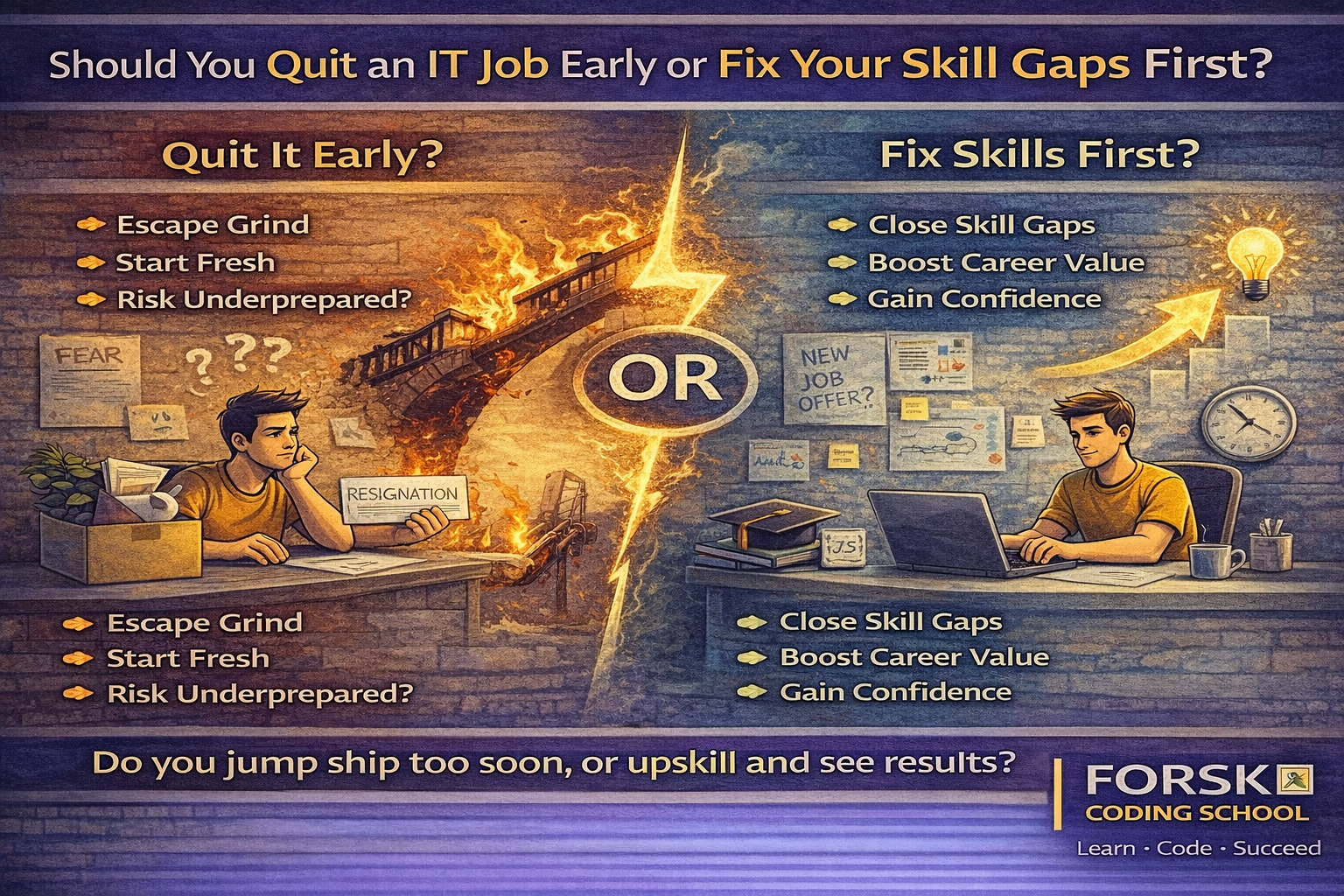
One of the most confusing questions IT professionals face is:
“Is this the right time to take a career risk?”
Switching domains, quitting a job, rejecting an offer, starting a startup, moving abroad, or staying put — every IT career is shaped by risk decisions. But what most people miss is this:
👉 Not all career risks are bad — and not all timings are right.
This blog breaks down the IT career risk timing, explains how IT career decisions should change with age and experience, and shows how to balance ambition with financial and mental stability.
Why Timing Matters More Than the Risk Itself
Two people can take the same career risk and get very different outcomes.
The difference is rarely talent.
It is:
- Financial readiness
- Mental bandwidth
- Responsibility load
- Career stage
Understanding timing is what separates smart risks from career damage.
Early Career (0–3 Years): High Risk, Low Damage
This is the best phase to take calculated risks.
Why early risks work:
- Fewer financial responsibilities
- Faster learning ability
- Lower expectation pressure
- Easier recovery from mistakes
Good risks in this phase:
- Switching domains (e.g., support → development)
- Trying startups
- Taking pay cuts for learning
- Exploring different tech stacks
Common mistake:
Not taking enough risk due to fear.
Early comfort often leads to long-term stagnation.
Mid Career (3–8 Years): Strategic Risk Zone
This phase requires precision, not impulsiveness.
You usually have:
- Stable income
- Some savings
- Growing responsibilities
Smart risks here:
- Switching roles with clear growth logic
- Moving from execution to ownership roles
- Upskilling aligned with experience
Dangerous risks here:
- Blind resignations
- Random certifications
- Emotional job switches
This is where most IT career decisions go wrong — not because risk was taken, but because timing was ignored.
Late Career (8+ Years): Stability-First Decisions
At this stage:
- Family responsibilities increase
- Financial obligations are high
- Recovery time from mistakes increases
Risk is not wrong — but must be buffered.
Smart late-stage risks:
- Consulting or freelancing with backup
- Leadership or architecture transitions
- Business moves with safety nets
High-risk jumps without planning here can create long-term stress.
Financial Balance: The Silent Risk Multiplier
Career risks feel very different when:
- You have 6–12 months of savings
- You don’t depend on one salary
Before taking risks, ask:
- Can I survive without income for 6 months?
- Do I have a fallback skill?
Money doesn’t buy success — but it buys decision clarity.
Mental Balance: The Risk Nobody Talks About
Even good risks fail when:
- Stress is unmanaged
- Burnout is ignored
- Expectations are unrealistic
If risk costs peace, health, or family stability — it’s poorly timed.
Smart IT Career Risk Timing Checklist
Before taking a big step, check:
- Am I growing or escaping?
- Is this risk reversible?
- What’s the worst-case impact?
- What’s my backup plan?
Smart risks are planned. Impulsive risks are emotional.
Why Most People Regret Career Decisions
People rarely regret taking calculated risks.
They regret:
- Staying too long in comfort
- Taking risks too late
- Acting without preparation
Timing defines outcome.
Final Thoughts: Take Risks — But at the Right Time
There is no universal age for risk.
But there is a right timing mindset:
- Early career → Explore aggressively
- Mid career → Decide strategically
- Late career → Protect stability
Mastering IT career risk timing is one of the most valuable career skills — yet one of the least discussed.
Key Takeaway
Career success in IT is not about avoiding risks.
It’s about taking the right risks at the right time.