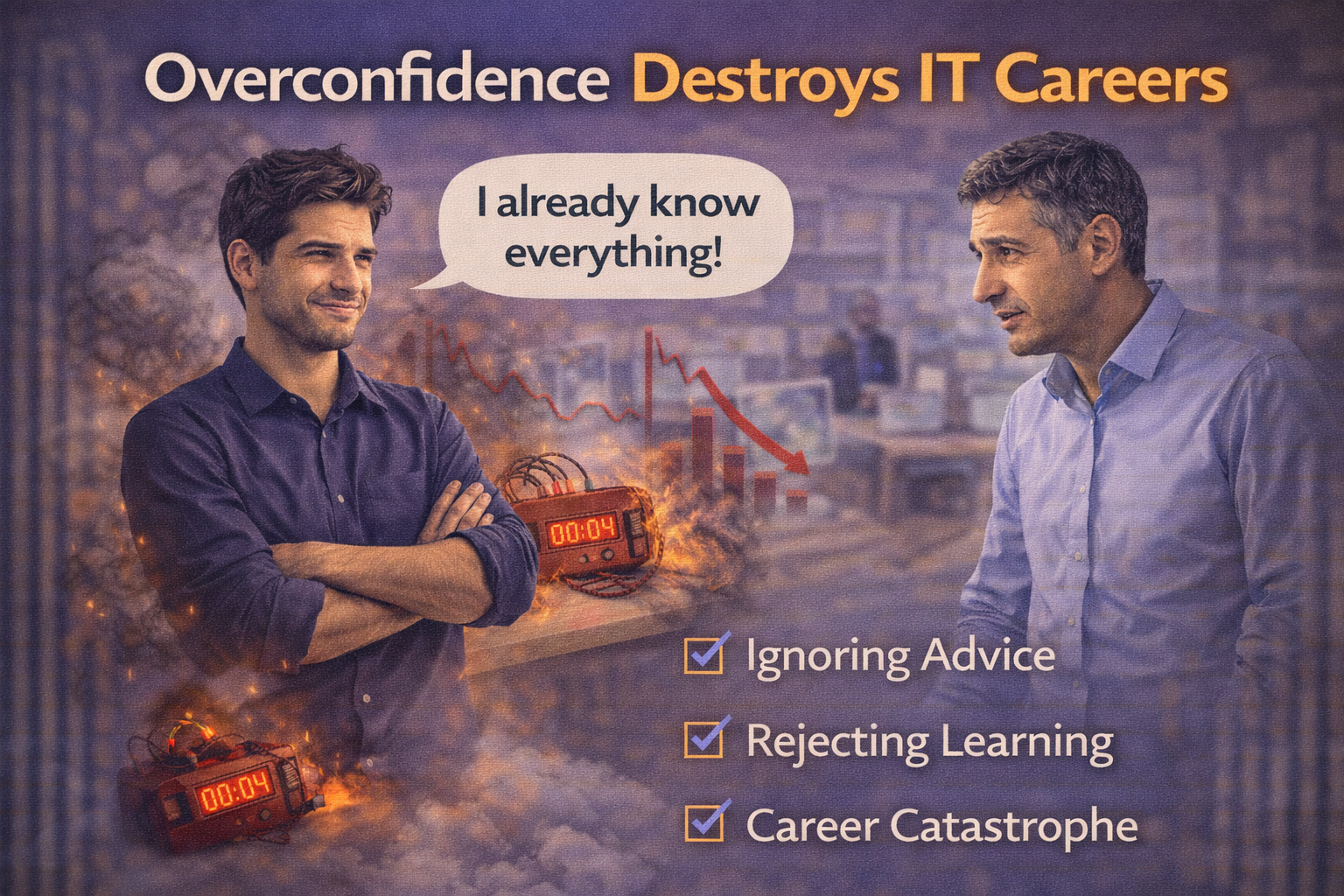
In IT careers, lack of skills is visible and usually fixable. Overconfidence, however, is silent—and far more dangerous. Many IT professionals don’t fail because they are incapable. They fail because they stop listening, stop learning, and stop questioning themselves.
This blog explores how overconfidence quietly damages IT careers, the ego traps professionals fall into, why feedback resistance slows growth, and how careers stagnate long before people realize what went wrong.
Why Overconfidence Is More Dangerous Than Skill Gaps
Skill gaps are obvious:
- You don’t know something
- You feel uncomfortable
- You seek help
Overconfidence hides problems:
- You assume you already know enough
- You dismiss feedback
- You blame systems or people instead of reflecting
This mindset blocks growth completely.
The Ego Traps That Destroy IT Careers
1. “I Already Know This” Trap
Professionals stop learning deeply because:
- They’ve used similar tools before
- They’ve worked on related projects
But familiarity is not mastery. This trap prevents skill evolution.
2. Title-Based Confidence
Job titles create false security:
- “I’m already a senior”
- “I’ve been doing this for years”
Experience without reflection often leads to stagnation.
3. Comparing Downward
Some professionals feel confident because they compare themselves only to juniors—not to where the industry is going.
Growth requires upward comparison, not comfort.
Feedback Resistance: The Silent Career Killer
Why Feedback Feels Threatening
Feedback challenges identity, not just skills. Overconfident professionals:
- Defend instead of listening
- Explain instead of understanding
- Ignore patterns in feedback
This slowly erodes trust.
How Feedback Shapes Strong Careers
Professionals who grow:
- Seek uncomfortable feedback
- Act on repeated signals
- Adjust behavior early
They evolve faster—even with average skills.
How Overconfidence Leads to Career Stagnation
Over time, overconfident professionals:
- Stop getting challenging work
- Are excluded from decisions
- Lose relevance quietly
From the outside, nothing looks wrong—until growth stops completely.
Why Smart People Are Most at Risk
Intelligent professionals:
- Learn fast early
- Get praised quickly
- Develop confidence early
Without humility, early success turns into a long-term disadvantage.
The Difference Between Confidence and Overconfidence
- Confidence: I know what I know—and what I don’t
- Overconfidence: I assume I know enough
One invites learning. The other blocks it.
How to Protect Your IT Career From Overconfidence
- Regularly question your assumptions
- Ask for honest feedback
- Learn from people younger than you
- Review mistakes without excuses
Humility keeps careers flexible and relevant.
Final Takeaway
Most IT careers don’t collapse due to lack of skills.
They collapse because overconfidence:
- Blocks feedback
- Stops learning
- Freezes growth
In IT, skills get you started.
Humility is what keeps you growing.
A mature IT career is built on confidence guided by humility—not ego.