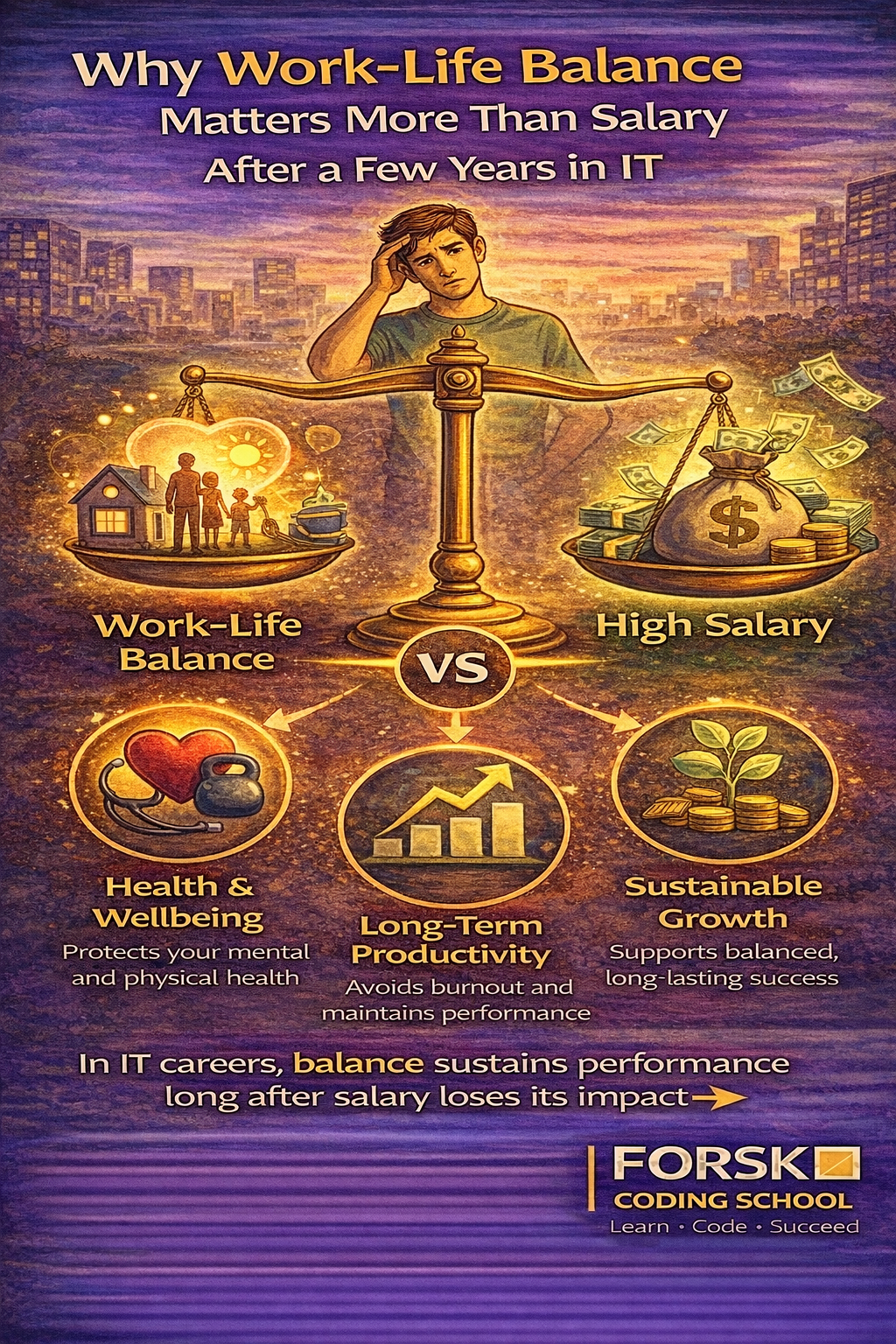
In the first few years of an IT career, salary feels like the biggest motivator. Long working hours, late-night deployments, and constant pressure seem acceptable as long as the paycheck keeps increasing. But after spending a few years in the industry, many professionals realize something important: money alone cannot sustain an IT career.
At this stage, work-life balance becomes more valuable than salary because it directly impacts health, productivity, and long-term career survival. This blog focuses on the life impact of imbalance, not just career tactics, and explains why balance is essential after the early growth phase.
The Early IT Career Phase: Money Over Everything
In the beginning, most IT professionals willingly compromise:
- Personal time for higher pay
- Health for faster growth
- Balance for learning opportunities
This phase often helps build skills and financial stability. However, what works early can become harmful if continued for too long.
When Salary Stops Feeling Rewarding
Money Has Diminishing Returns
After a certain point, salary increments:
- Don’t reduce stress
- Don’t improve sleep
- Don’t restore energy
Many professionals reach a stage where time, peace of mind, and physical health feel more valuable than extra income.
Burnout: The Real Cost of Ignoring Balance
Why Burnout Is So Common in IT
The IT industry often rewards:
- Overworking
- Constant availability
- Speed over sustainability
Over time, this leads to:
- Mental exhaustion
- Health problems
- Loss of motivation
Burnout doesn’t happen suddenly. It builds slowly and quietly until performance and interest decline.
Work-Life Balance and Long-Term Productivity
Balance Protects Performance
Work-life balance is not about working less—it is about working sustainably.
Balanced professionals:
- Think more clearly
- Make better decisions
- Learn faster
- Stay productive for longer periods
In the long run, they outperform burned-out high earners.
Health Is a Career Asset
Without good health:
- Skills become irrelevant faster
- Learning ability drops
- Creativity suffers
Mental and physical well-being are not personal luxuries—they are essential for IT career longevity.
The Life Impact of Poor Balance
Beyond work, imbalance affects:
- Family relationships
- Social life
- Sleep quality
- Overall happiness
Many professionals later regret trading irreplaceable years of life for money that no longer matters as much.
Sustainable Growth in IT Careers
Redefining Success After a Few Years
True success in IT means:
- Stable income
- Continuous learning
- Time for life outside work
Careers that last 20–30 years require balance, not constant sacrifice.
Choosing Balance Is a Smart Decision
Professionals who prioritize work-life balance:
- Avoid mid-career burnout
- Stay motivated longer
- Build healthier, more resilient careers
Balance supports both professional growth and personal life.
Final Takeaway
After a few years in IT, work-life balance matters more than salary because it determines how long and how well you can perform.
Money improves lifestyle, but balance protects health, relationships, and long-term productivity.
In IT, success is not just about earning more—it is about staying healthy, relevant, and fulfilled for decades.
A sustainable IT career is built on balance, not burnout.