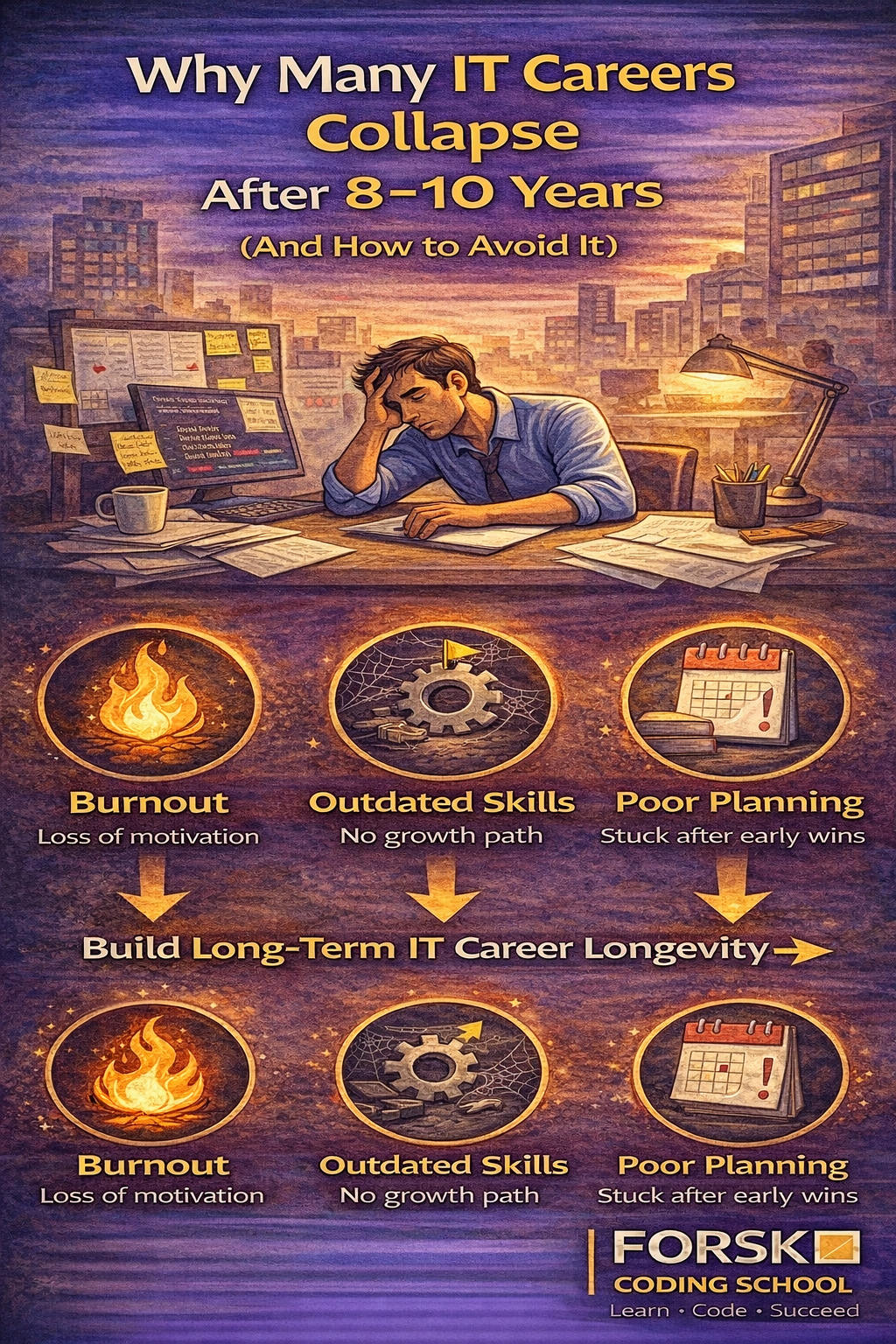
The early years of an IT career often move fast—new skills, better salaries, promotions, and recognition. But somewhere between 8 to 10 years, many professionals hit an unexpected wall. Motivation drops, growth slows, and careers that once looked promising begin to feel fragile.
This is not a talent problem. It’s a mid-career planning problem. This blog explores why IT careers collapse after initial success and how professionals can build long-term IT career longevity instead of burning out or becoming irrelevant.
The Mid-Career Reality Nobody Talks About
In the first few years, learning is automatic. Everything is new. But after a decade, many professionals face:
- Mental exhaustion
- Repetitive work
- Reduced excitement
- Fear of becoming outdated
This phase silently breaks careers—not overnight, but gradually.
Burnout: The First Crack in Long-Term IT Careers
Why Burnout Hits After 8–10 Years
Burnout doesn’t come from hard work alone. It comes from working hard without direction.
Common causes include:
- Long hours without growth
- Pressure to constantly deliver
- Lack of autonomy
- No clear next milestone
When effort no longer feels meaningful, burnout sets in.
Skill Irrelevance: The Silent Career Killer
Technology Changes Faster Than Titles
Many mid-career professionals rely too heavily on:
- One technology stack
- Past achievements
- Old problem-solving patterns
But IT rewards current relevance, not historical success.
Without continuous learning, skills slowly lose market value—even if job titles grow.
Early Success Can Be Dangerous
Comfort Becomes a Trap
Early promotions and salary hikes often create a false sense of security. Professionals stop asking:
- Am I still learning?
- Is my skill set future-proof?
- What’s my next 5-year plan?
Success without reflection leads to stagnation.
Poor Long-Term Planning
Careers Need Strategy, Not Just Effort
Many IT professionals plan:
- Projects
- Releases
- Deadlines
But not their careers.
Without planning:
- Growth becomes accidental
- Role transitions become difficult
- Career shifts feel risky
How to Avoid IT Career Collapse
1. Redefine Growth Every Few Years
Growth after 10 years is not about speed—it’s about depth and direction. Re-evaluate goals regularly.
2. Stay Technically Relevant
You don’t need to learn everything, but you must:
- Update core skills
- Understand system-level concepts
- Keep learning habits alive
3. Build Optionality
Long-term IT careers survive because professionals can:
- Switch roles
- Move into leadership
- Transition into architecture or consulting
Options protect careers.
4. Manage Energy, Not Just Time
Sustainable careers focus on:
- Mental health
- Meaningful work
- Balanced ambition
Longevity beats intensity.
Final Takeaway
Most IT careers don’t fail early—they fade after early success.
Burnout, outdated skills, and lack of planning are the real threats to long-term IT career growth.
If you want a career that lasts 20–30 years, think beyond the next promotion. Plan for relevance, resilience, and renewal.
In IT, longevity is built intentionally—not accidentally.