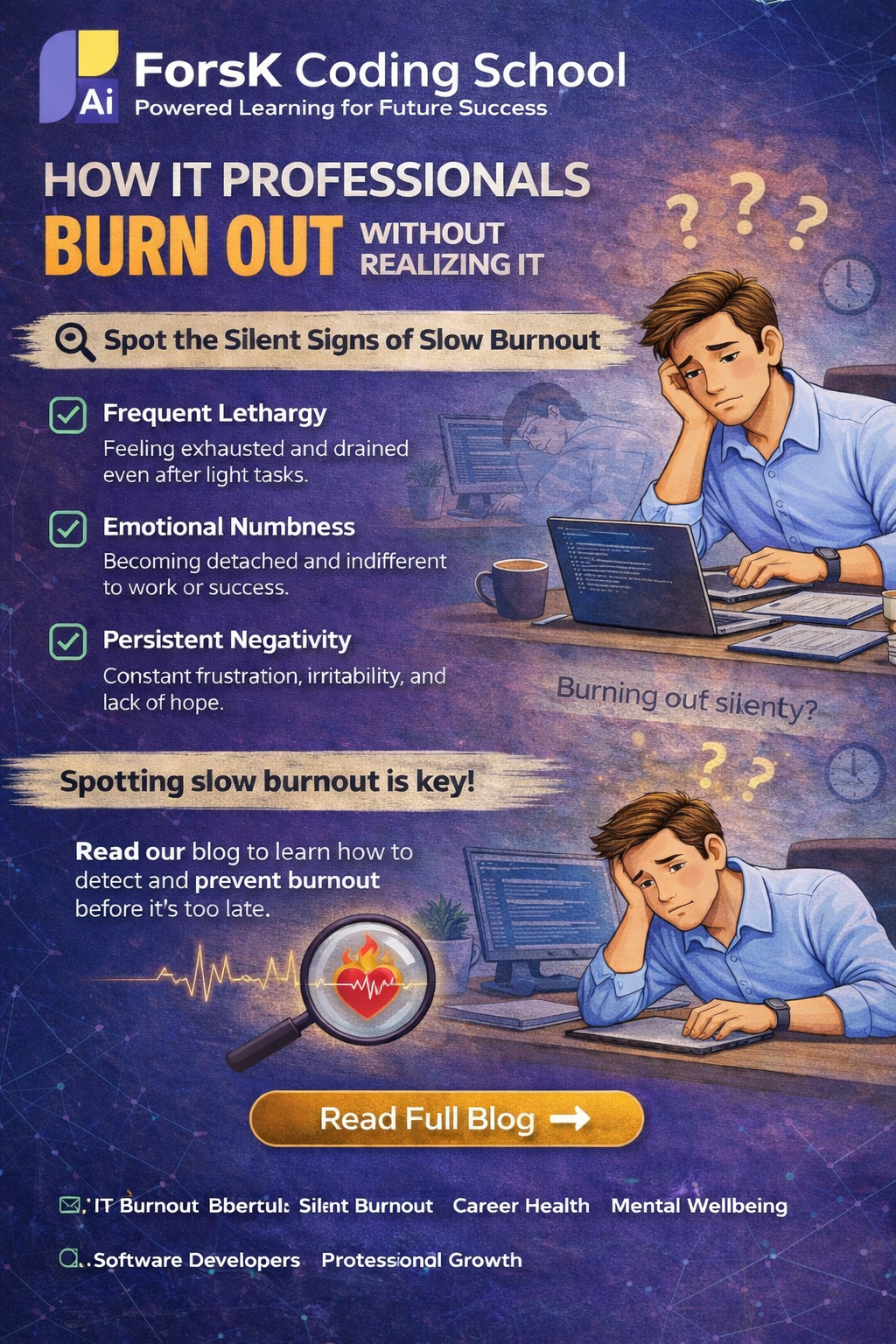
Burnout in the IT industry is rarely sudden. Most professionals imagine burnout as an extreme state of exhaustion that appears overnight. In reality, burnout is usually slow, silent, and invisible—developing gradually while people continue to work, deliver results, and meet deadlines.
This silent form of burnout is more dangerous than obvious exhaustion because it hides behind productivity. By the time many IT professionals realize something is wrong, they are already emotionally drained, disconnected from their work, and questioning their career choices.
Understanding slow burnout and learning how to detect it early can save years of frustration and help you build a healthier, longer-lasting IT career.
The Concept of Silent Burnout
Silent burnout does not look like collapse or complete shutdown. Instead, it shows up as a gradual loss of energy, curiosity, and emotional engagement.
You still go to work.
You still write code.
You still attend meetings.
But internally, something feels off.
This type of burnout grows quietly because IT culture often rewards endurance, long hours, and constant availability. Over time, professionals begin to normalize stress and ignore early warning signs.
Slow Burnout Signs Most People Miss
1. Frequent Lethargy
You feel tired even after a full night’s sleep. Simple tasks feel heavier than they should. The idea of starting work creates resistance instead of motivation.
This is not just physical tiredness—it is mental fatigue.
2. Emotional Numbness
You no longer feel excited about finishing projects or learning new technologies. Achievements feel neutral. Failures feel dull rather than motivating.
Emotional numbness is a strong indicator of burnout.
3. Persistent Negativity
Small issues start feeling big. You become more irritable. You assume the worst about work situations or team decisions.
This constant low-level negativity drains mental energy over time.
4. Loss of Curiosity
Earlier, you enjoyed exploring new tools or concepts. Now, learning feels like a burden rather than an opportunity.
Curiosity fading is one of the earliest signs of silent burnout.
Why IT Professionals Are Especially Vulnerable
- Rapidly changing technologies
- Continuous upskilling pressure
- Tight deadlines
- Long screen time
- On-call or extended working hours
These factors slowly accumulate stress even when individual days do not seem overwhelming.
The Cost of Ignoring Silent Burnout
When silent burnout is ignored, it eventually turns into:
- Severe exhaustion
- Anxiety or depression
- Career dissatisfaction
- Frequent job hopping
- Complete loss of confidence
Early detection prevents long-term damage.
Early Detection: Simple Self-Check
Ask yourself:
- Do I feel energized or drained most mornings?
- Am I learning because I want to, or only because I must?
- Do I still care about the quality of my work?
- When was the last time I felt genuinely interested in a technical topic?
Honest answers reveal a lot.
How to Prevent Silent Burnout
1. Normalize Sustainable Work Pace
Working 10–12 hours daily should not be a long-term strategy. Sustainable careers require sustainable schedules.
2. Set Learning Boundaries
You do not need to learn everything at once. Focus on one skill at a time.
3. Schedule Recovery Time
Rest is not a reward. It is a requirement.
4. Reconnect With Purpose
Remember why you entered IT. Growth, problem-solving, creativity, and impact still matter.
5. Talk About It
Discussing burnout with mentors or peers reduces isolation and provides perspective.
Final Thoughts
Burnout does not always arrive loudly. Most of the time, it whispers.
IT professionals who succeed long-term are not the ones who push the hardest for short periods—they are the ones who learn to listen early, adjust their pace, and protect their mental energy.
Spotting slow burnout is not weakness. It is professional maturity.
Your career is a long journey. Protect yourself so you can walk it with clarity, energy, and purpose.