Many IT candidates walk out of interviews believing success depends purely on giving correct technical answers. While technical accuracy is important, it is rarely the only factor that determines who gets remembered — and who gets selected.
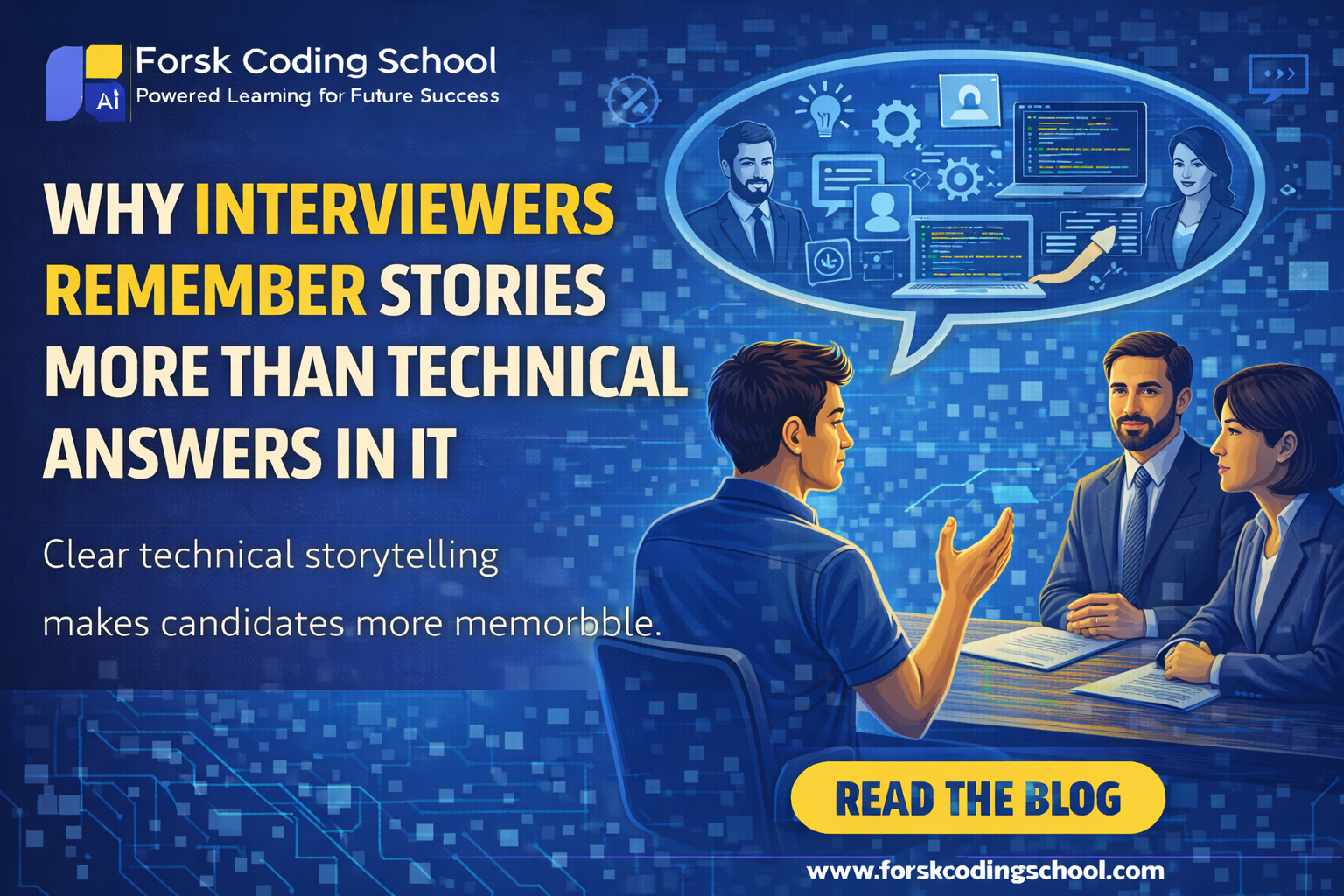
In real hiring scenarios, interviewers often remember candidates who communicate their experience through clear, structured stories rather than those who only provide short technical responses.
Understanding why this happens can significantly improve your interview performance.
The Memory Reality of Technical Interviews
Interviewers typically speak with multiple candidates in a single day. After several rounds of similar technical answers, many responses begin to blur together.
For example, dozens of candidates may correctly explain:
- What is REST?
- How hashing works
- What is normalization?
- How garbage collection functions
Correct answers are expected. Memorable answers are rare.
This is where storytelling creates separation.
How the Brain Actually Remembers Candidates
Human memory is naturally wired to retain structured narratives better than isolated facts. Stories create mental anchors through:
- Context
- Sequence
- Problem-solution flow
- Emotional relevance
When a candidate explains their work through a real scenario, the interviewer’s brain builds a stronger recall pattern.
Compare the difference:
Answer Style 1 (forgettable):
“I optimized API performance using caching.”
Answer Style 2 (memorable):
“We were facing API latency spikes during peak traffic. I analyzed the bottleneck, introduced Redis caching, and reduced response time by 40%.”
Both show skill — but the second creates a mental story.
The Emotional Anchor Effect
Even in technical roles, hiring decisions involve human judgment. Stories create subtle emotional signals such as:
- Ownership
- Problem-solving maturity
- Real-world experience
- Confidence
- Impact awareness
These signals increase interviewer confidence.
Short factual answers rarely communicate depth of thinking.
Where Storytelling Helps Most in Interviews
Structured experience stories are especially powerful in:
- Project discussions
- Behavioral rounds
- System design interviews
- Debugging conversations
- Leadership evaluations
At mid and senior levels, storytelling becomes a major differentiator.
Why Many IT Candidates Miss This Advantage
Most technical training focuses heavily on:
- Syntax accuracy
- Concept definitions
- Algorithm correctness
- Tool familiarity
Very few candidates practice explaining their real work clearly.
As a result, even capable engineers sometimes sound less experienced than they actually are.
The Simple Structure That Works
High-performing candidates often follow a clear pattern when explaining work:
1. Start with the Problem
What challenge existed?
2. Explain Your Approach
What did you specifically do?
3. Highlight the Impact
What measurable result improved?
4. Add a Learning Insight (Optional)
What would you refine next time?
This structure keeps answers both technical and memorable.
Balancing Accuracy and Narrative
Storytelling in interviews does not mean being vague or overly dramatic. The goal is to wrap technical depth inside clear context.
Strong candidates:
- Give correct technical explanations
- Support them with real examples
- Quantify impact where possible
- Keep the story concise and relevant
This balance signals both competence and maturity.
Long-Term Career Impact
Professionals who master technical storytelling often experience:
- Better interview recall
- Stronger hiring confidence
- Faster senior transitions
- Improved stakeholder trust
- Higher leadership visibility
Communication clarity compounds over time.
Final Thoughts
In modern IT interviews, correctness gets you considered — but clarity and storytelling get you remembered.
Candidates who learn to frame their technical work through structured real-world narratives create stronger differentiation in competitive hiring processes.
At Jaipur Engineers and GrootLearning, we train students not just to know the right answers but to communicate their technical thinking with clarity and