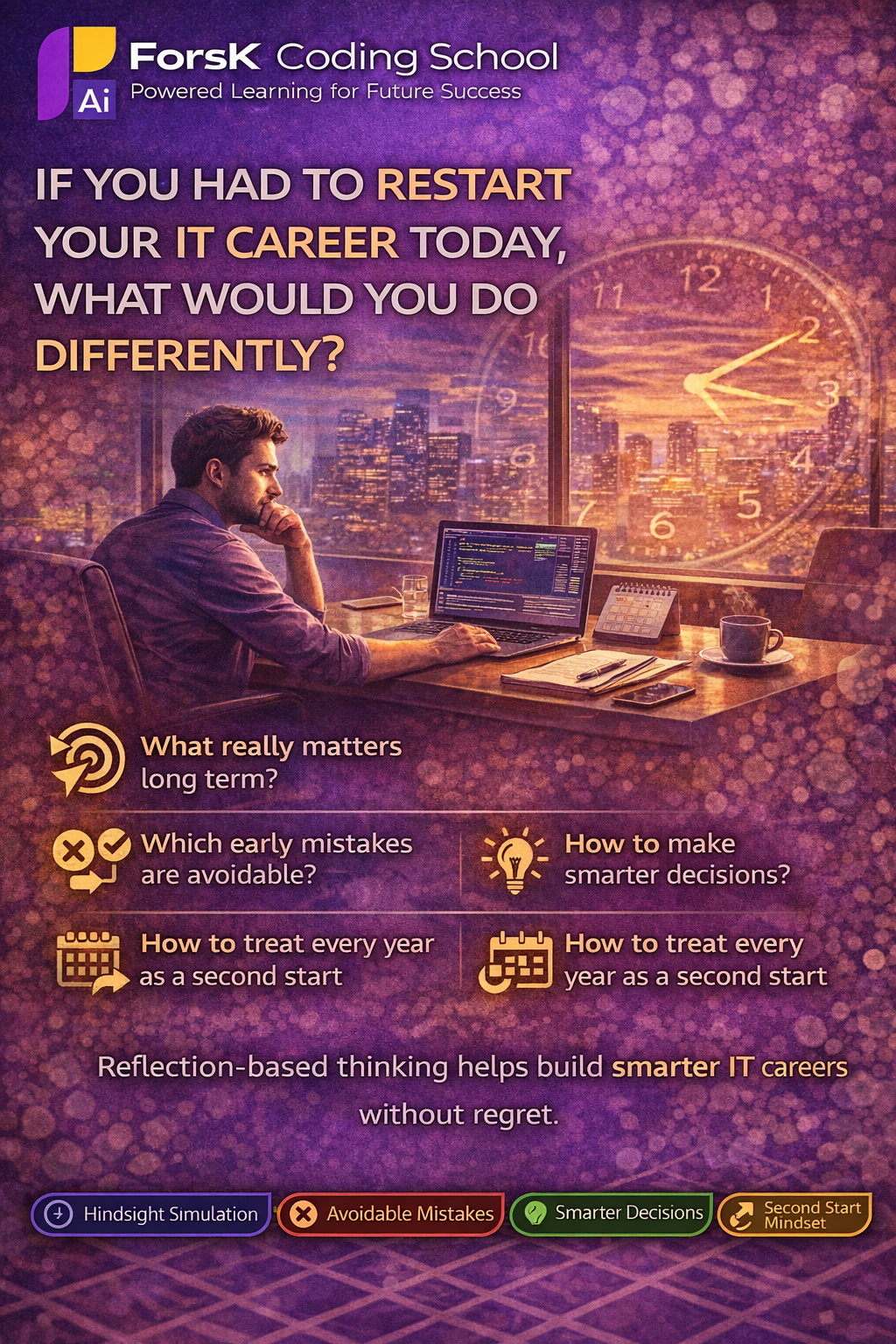
Imagine waking up tomorrow with all your current experience—but starting your IT career from day one again.
No fear of failure. No pressure to impress. Just clarity born from hindsight.
This is not motivational advice. This is reflection-based learning—using simulated hindsight to make smarter decisions today.
The Power of a Second-Start Simulation
Most professionals gain clarity only after years of mistakes.
A restart simulation asks:
- What actually mattered long term?
- What mistakes were avoidable?
- What looked important but wasn’t?
This mental exercise compresses years of experience into insight.
What You’d Likely Do Less of
With hindsight, most professionals would reduce:
- Blind technology hopping
- Overworking to prove worth
- Chasing titles too early
- Ignoring fundamentals
These actions feel productive early—but often slow growth later.
What You’d Likely Do More of
A smarter second start would focus on:
- Strong fundamentals before specialization
- Learning how systems actually work
- Understanding business context early
- Building consistency instead of intensity
These choices compound quietly over time.
Lessons Without Regret
Hindsight is powerful only when it removes regret.
The goal is not to feel bad about the past—but to:
- Recognize patterns
- Avoid repeating silent mistakes
- Make calmer future decisions
Reflection creates direction.
Smarter Decisions From Day One
If restarting today, most experienced professionals would:
- Choose depth over speed
- Optimize for learning quality, not quantity
- Protect health and energy
- Measure progress yearly, not monthly
These decisions feel slow early—but win long-term.
Why This Exercise Matters Now
You don’t need to restart your career to apply this thinking.
You can:
- Pause
- Reflect
- Correct direction
Every year can become a smarter second start.
Final Thoughts
You can’t change your starting point—but you can change your trajectory.
Thinking through a career restart using hindsight is one of the fastest ways to gain clarity without regret.
The smartest IT careers aren’t built by rushing forward.
They’re built by thinking backward—and acting deliberately.