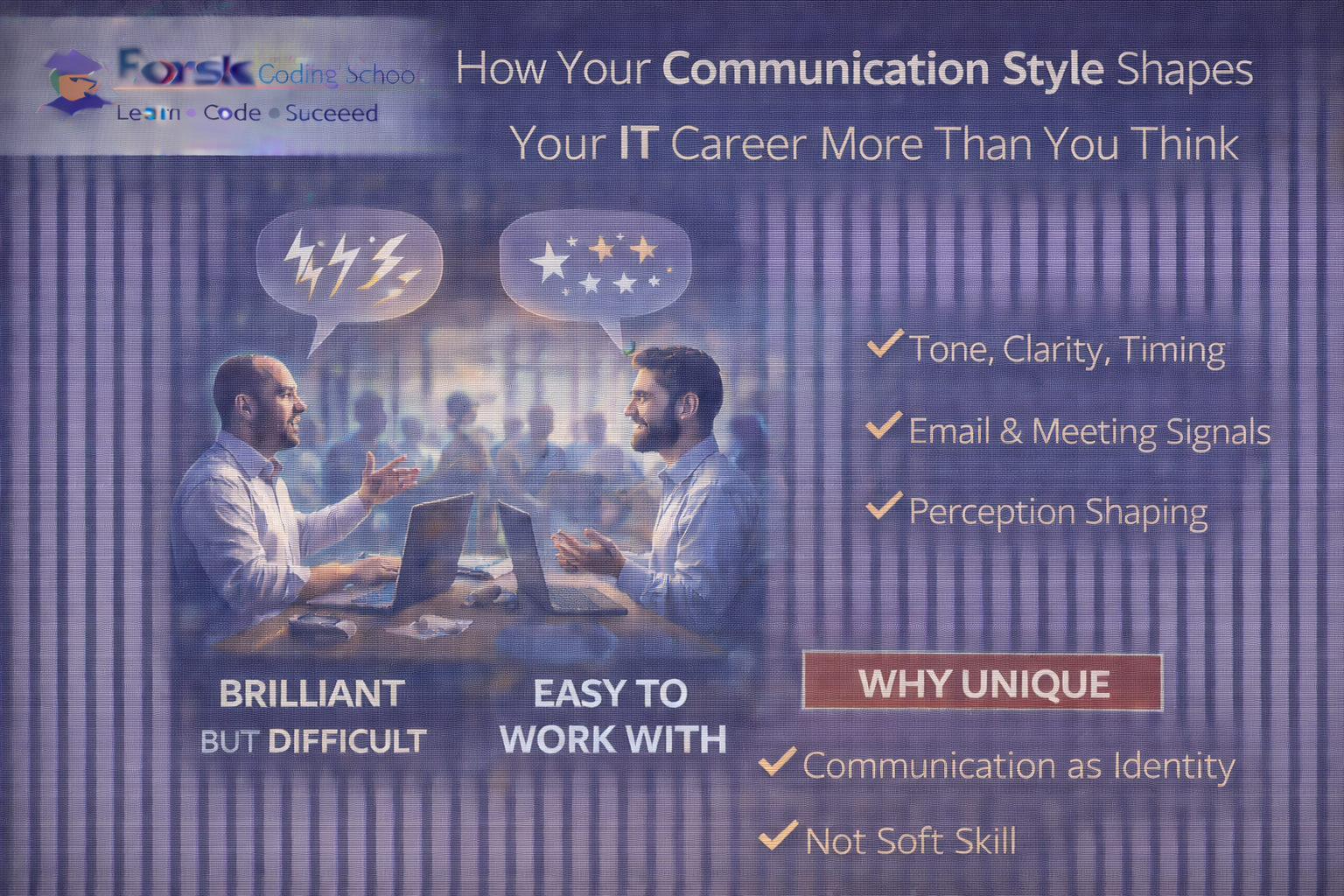
In IT careers, communication is often labeled a “soft skill.” In reality, it functions more like an identity signal. Long before promotions, appraisals, or role changes, teams form judgments based on how you communicate—your tone, clarity, and timing.
This article is not about presentation tips. It examines communication as perception-shaping behavior inside IT teams.
Tone Is Interpreted as Attitude
Tone travels faster than intent. In emails, chats, and meetings, tone shapes how your message is received—even when content is correct.
Common interpretations:
- Calm, neutral tone → dependable, professional
- Defensive tone → hard to work with
- Abrupt tone → impatient or dismissive
These interpretations stick, regardless of your technical ability.
Clarity Reduces Cognitive Load
IT teams operate under constant information pressure. Professionals who communicate clearly reduce mental effort for others.
Clarity shows up as:
- Structured updates
- Explicit assumptions
- Clear next steps
People who reduce confusion are perceived as senior—even without titles.
Timing Signals Judgment
When you communicate matters as much as what you say.
Strong timing includes:
- Raising risks early
- Sharing progress before being asked
- Choosing the right forum (chat vs email vs meeting)
Poor timing—late escalations or unnecessary meetings—creates stress and damages trust.
Emails and Meetings Are Reputation Carriers
Emails and meetings are not neutral tools. They broadcast how you think.
Teams notice:
- Do you ramble or summarize?
- Do you escalate thoughtfully or emotionally?
- Do you respect others’ time?
Over time, these signals shape your professional identity.
Communication Shapes Leadership Perception
Leaders are expected to:
- Translate complexity
- De-escalate tension
- Create alignment
Professionals who communicate with clarity and calm are often treated as leadership-ready—before any formal role change.
Why Technical Strength Can’t Offset Poor Communication
Strong skills may earn tolerance, but poor communication limits scope. Teams hesitate to involve professionals who increase friction—even if they are talented.
Communication does not replace skill. It determines how far skill travels.
Making Communication Intentional
Intentional communication means:
- Choosing precision over volume
- Matching tone to situation
- Treating every interaction as reputation-building
Small adjustments create long-term shifts.
Final Thought
In IT careers, communication is not a soft add-on—it is an identity signal. Tone, clarity, and timing quietly shape how others experience you. Professionals who understand this stop treating communication as a task and start using it as leverage. Over time, communication style becomes career trajectory.