Most IT professionals begin their careers thinking like contributors—focused on tasks, tickets, and technical execution. This mindset is natural at junior and mid levels. However, careers accelerate dramatically when professionals shift from employee thinking to owner thinking. The difference is not about job titles or equity; it is about how decisions are made.
Owner Thinking vs Employee Thinking
Employee thinking asks: What is my task? Owner thinking asks: What problem are we solving and why does it matter? Professionals who think like owners look beyond instructions and start considering outcomes, risks, and long-term impact.
This shift changes how work is prioritized, communicated, and delivered.
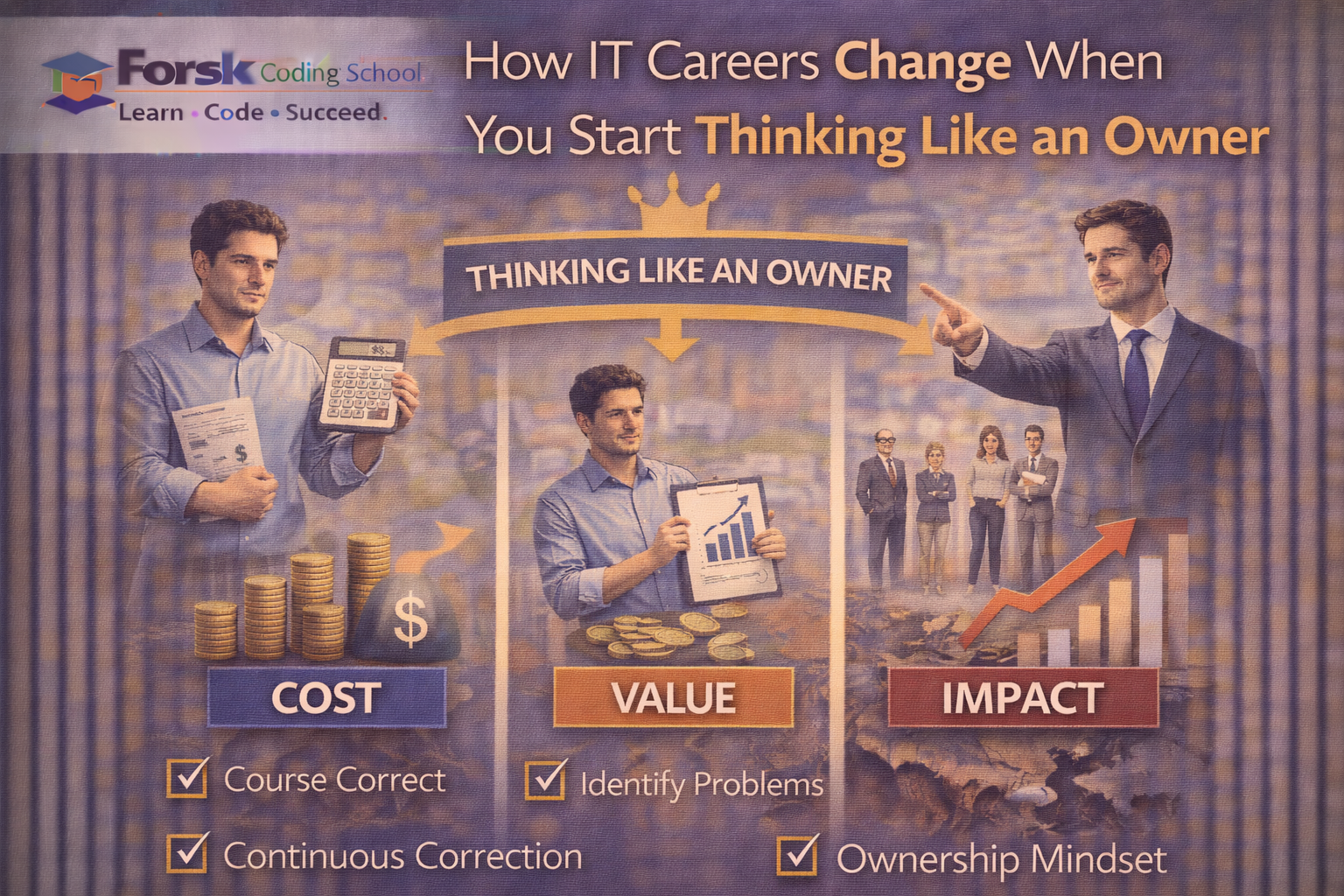
Cost Awareness Changes Decisions
Owners constantly think about cost—not just money, but time, effort, and opportunity. In IT, this means:
- Reducing rework through better planning
- Choosing simple solutions over over-engineering
- Respecting timelines as business commitments
Professionals who understand cost stop wasting resources and start earning trust.
Value Over Activity
Busy work does not equal value. Owner-minded professionals ask whether their work actually moves the business forward. They focus on:
- Features that users will adopt
- Stability over unnecessary complexity
- Outcomes over hours logged
This value-first thinking makes their contributions visible and meaningful.
Impact Thinking Builds Seniority
Impact thinking connects daily work to business results. Instead of saying, “I completed my task,” owner thinkers say, “Here’s how this improved performance, reduced risk, or increased efficiency.”
This language and perspective align naturally with leadership conversations, making the transition to senior roles smoother.
Ownership Creates Leadership Without Authority
Leadership does not start with designation. It starts when professionals take responsibility for problems outside their formal scope. Owner-minded individuals:
- Anticipate issues before they escalate
- Communicate trade-offs clearly
- Take accountability for outcomes
Teams rely on them instinctively—even without a title.
Final Thought
IT careers change when professionals stop asking, “What am I supposed to do?” and start asking, “What should be done?” Thinking like an owner transforms contributors into leaders. Seniority follows those who consistently think in terms of cost, value, and impact.