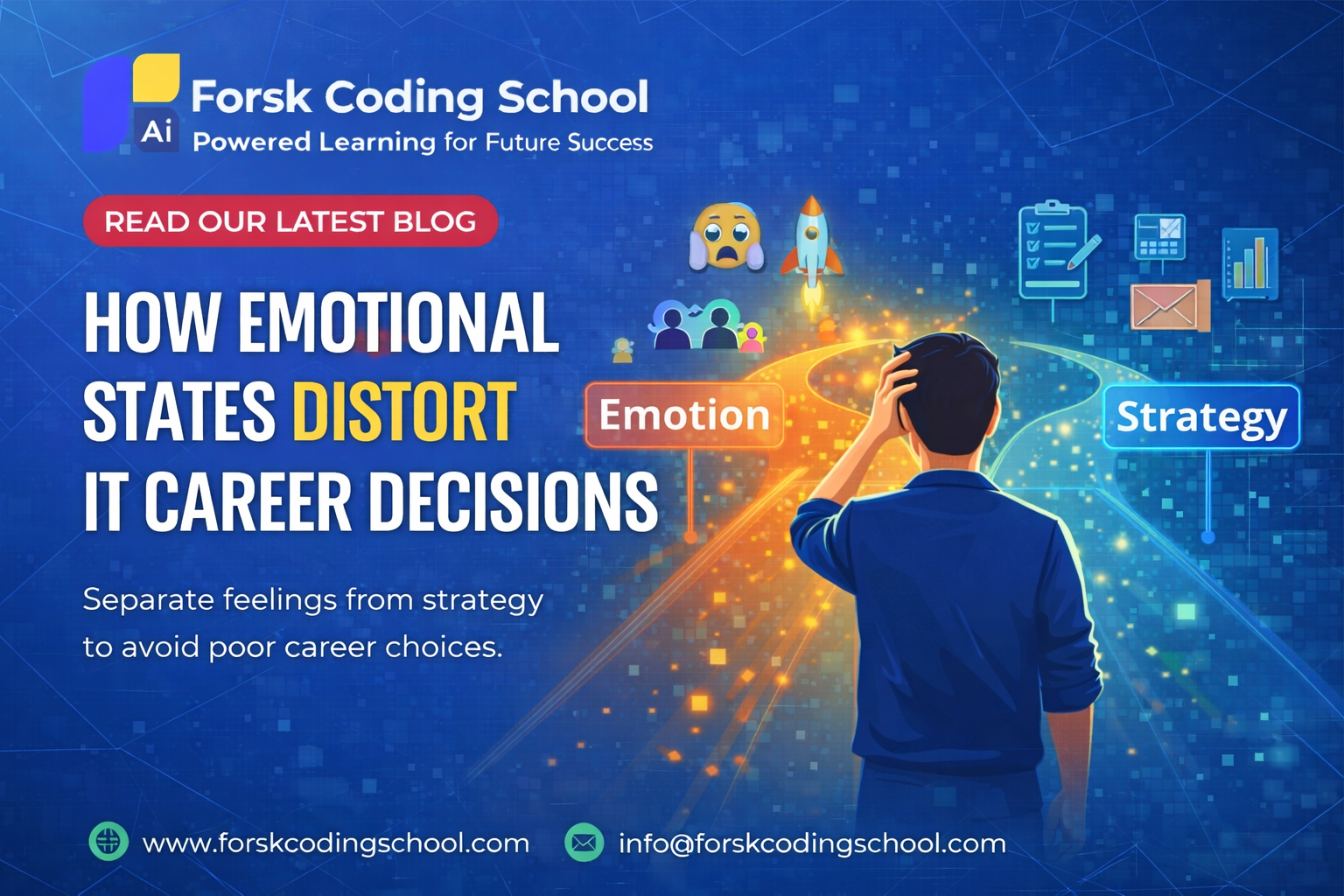
IT career decisions are rarely purely logical.
Behind every switch, resignation, certification purchase, or domain change — there is often an emotional trigger.
Fear.
Excitement.
Ego.
Comparison.
Temporary emotions can create permanent consequences.
1. Fear-Based Decisions
Fear shows up as:
- “AI will replace me.”
- “Everyone else is ahead.”
- “If I don’t switch now, I’ll be stuck.”
Fear pushes urgency.
Urgency pushes impulsive action.
But fear-driven moves often lack strategic alignment.
2. Excitement Bias
New technologies feel exciting.
New salary numbers feel motivating.
Success stories feel inspiring.
Excitement creates overconfidence.
Professionals sometimes overestimate short-term potential and underestimate long-term effort.
What looks glamorous online may require years of disciplined skill-building.
3. Ego & Comparison Traps
LinkedIn announcements.
Promotion updates.
Startup funding news.
Comparison silently alters decision-making.
Instead of asking:
“Is this right for me?”
You start asking:
“Am I behind?”
Career decisions made to match others rarely create satisfaction.
4. Emotional vs Strategic Thinking
Emotional thinking is:
- Fast
- Reactive
- Short-term
Strategic thinking is:
- Calm
- Context-aware
- Long-term focused
The best IT professionals separate emotion from execution.
They pause before acting.
They evaluate alignment.
They commit with clarity.
5. The 48-Hour Rule
Before making any major career decision:
- Wait 48 hours.
- Write down why you want the change.
- Identify the dominant emotion.
- Re-evaluate after calm reflection.
If the decision still makes sense without emotional intensity, it is likely strategic.
Conclusion
Emotions are natural.
But unmanaged emotions distort career clarity.
In IT careers, self-awareness is a competitive advantage.
Pause.
Filter.
Decide calmly.
Your long-term career deserves strategic thinking — not temporary emotion.